

Have you ever noticed that good feeling you get when you take a bite into your favorite food? Or when you’re enjoying your favorite hobby? That’s dopamine being released upon you performing a pleasurable activity!
Though do you know how dopamine works in the body? And the vital role of vitamin B6?
You’ve come to the right place to learn about it all!
This article covers everything you need to know about vitamin B6 and dopamine along with the role they both play in the body.
What is Vitamin B6?
Vitamin B6 (pyridoxine), is one of the many essential B-vitamins involved in several important processes in the body.
The “6” in vitamin B6 refers to the six common forms - pyridoxal, pyridoxine, pyridoxamine, and their phosphorylated forms.1
Some of the more known roles of B6 include helping us:
- Use and store energy from protein and carbohydrates in food
- Form hemoglobin, the substance in red blood cells that carries oxygen around the body.2
Additionally, B6 plays a big role in synthesizing neurotransmitters and regulating homocysteine levels. More on this coming up!
- Beef liver
- Tuna
- Salmon
- Fortified cereals
- Chickpeas
- Poultry
How Does B6 Work in the Brain?
Vitamin B6 is involved in regulating our mood and cognitive function in many ways, but here are the two most significant ways:
- Vitamin B6 is a key player in the synthesis of many neurotransmitters, including GABA, serotonin, dopamine, noradrenalin, and histamine.3 B6 thus helps increase brain serotonin and dopamine levels, regulating symptoms of anxiety, depression, fatigue, and pain.
- Vitamin B6 plays an essential role in the normal functioning of the central nervous system. B6, alongside B12 and folate, help to break down homocysteine.4
Elevated homocysteine can wreak havoc on our body by damaging our blood vessels, increasing heart concerns. High homocysteine levels have even been associated with cognitive dysfunction in a wide range of conditions.5
What Happens if We Become Deficient in B6?
Mild deficiencies may not present many issues. However, more severe and prolonged deficiencies may cause skin conditions, lowered immunity, confusion and depression.
As B6 plays a key role in the synthesis of many neurotransmitters, a deficiency may cause a depletion, potentially leading to cognitive decline. Cognitive decline can result in symptoms such as brain fog, anxiety, depression and overall poor mental performance.6
It has actually been shown that B6 deficiency is associated with symptoms of depression.7
Can We Supplement With B6?
Adults need around 1.7mg of vitamin B6 per day. We can usually get this through diet alone, but are there any additional benefits to supplementing?
It has been shown that supplementing with B6, B9, and B12 helps balance homocysteine levels. There are also potential nootropic benefits, and these vitamins can play a key role in supporting mental performance in relation to cognitive decline, as well as promote mood balance, mental energy and overall brain health!
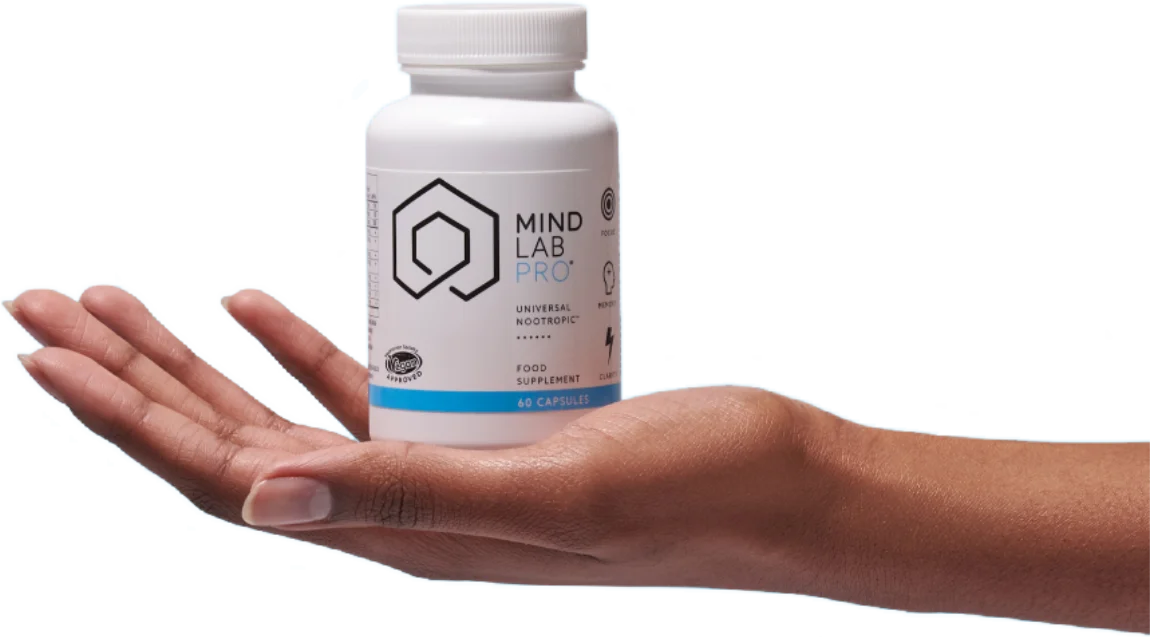
Our Mind Lab Pro supplement is a prime example of an effective nootropic formula containing B6, B9, and B12 as a synergistic trio!
What is Dopamine?
Dopamine is one of the neurotransmitters that B6 helps synthesize. To put it simply, our body makes dopamine so our nervous system can use it to send messages between nerve cells; this is why dopamine is considered to be a “chemical messenger”.
You also may often hear of dopamine being one of the “feel-good” hormones, as it plays a role in our brain's reward system. This is why dopamine is associated with pleasure and can be “boosted” by doing pleasurable activities such as listening to music, exercising, and sleeping well!
Dopamine also affects many other behaviors and physical functions such as:
- Learning
- Motivation
- Sleep
- Kidney function
- Mood
- Attention
- Movement
Low dopamine levels have been linked to a number of ailments and mental health issues.8
While low dopamine levels are not a direct cause of these conditions, it can make us aware that there may be an underlying condition that requires attention!
Some signs of low dopamine levels include:
- Feeling low and fatigued
- Lacking focus
- Feeling demotivated
- Anxiety
- Mood swings
Dopamine Vs. Serotonin
These neurotransmitters often go hand in hand as they both play roles in our mood and overall well-being!
While dopamine is involved mostly in movement along with pleasurable rewards and feelings, serotonin is more involved with regulating our sleep-wake cycle, body temperature, and hormonal activity.
Therefore, while they work closely together, they have slightly different roles in the body!
Frequently Asked Questions
What vitamin increases dopamine?
Vitamin B6 is a key vitamin that increases dopamine levels by playing an essential role in dopamine synthesis in the brain. B6 acts as a cofactor in the production of dopamine and other neurotransmitters like serotonin, GABA, and noradrenalin, helping regulate mood and cognitive function.
Does vitamin B6 increase serotonin?
Yes, vitamin B6 helps increase both serotonin and dopamine levels in the brain by serving as a key player in their synthesis. This dual action helps regulate symptoms of anxiety, depression, fatigue, and pain, making B6 essential for mood balance and mental well-being.
What vitamins help with dopamine production?
Vitamin B6 is the primary vitamin that helps with dopamine production, as it's directly involved in synthesizing this neurotransmitter. B6 works alongside other B vitamins like B9 and B12 to support overall brain health and neurotransmitter function.
What is dopamine and why is it important?
Dopamine is a neurotransmitter and chemical messenger that sends signals between nerve cells in your nervous system. Often called a feel-good hormone, dopamine plays a crucial role in your brain's reward system, affecting pleasure, motivation, learning, sleep, and even kidney function.
How can I increase dopamine naturally?
You can increase dopamine naturally by ensuring adequate vitamin B6 intake through foods like beef liver, tuna, salmon, and chickpeas, as B6 is essential for dopamine synthesis. Additionally, pleasurable activities like exercising, listening to music, and getting quality sleep can boost dopamine levels, as explored in our article on natural ways to boost dopamine.
Does P5P increase dopamine?
P5P (pyridoxal-5-phosphate) is the active, phosphorylated form of vitamin B6 that helps increase dopamine production in the brain. As one of the six forms of B6, P5P serves as a cofactor in neurotransmitter synthesis, making it particularly effective for supporting dopamine and serotonin levels.
What vitamin deficiency causes brain fog?
Vitamin B6 deficiency can cause brain fog along with other cognitive issues like confusion, depression, and poor mental performance. This happens because B6 is essential for synthesizing neurotransmitters like dopamine and serotonin, and a deficiency can lead to their depletion, resulting in cognitive decline and mental fatigue.
Key Points
- Vitamin B6 (pyridoxine) is one of the many essential B-vitamins
- B6 is involved in many vital processes in the body, including energy-yielding metabolism and forming hemoglobin
- B6 is also involved in synthesizing neurotransmitters such as dopamine and metabolizing homocysteine
- B6 supplementation has been shown to be effective, particularly as an ingredient in nootropic formulas such as Mind Lab Pro
- Dopamine is one of our “chemical messengers”, associated with reward, mood, pleasure, and movement
- Low dopamine levels have been linked with several cognitive concerns.
References
- https://ods.od.nih.gov/factsheets/VitaminB6-HealthProfessional/
- https://www.nhs.uk/conditions/vitamins-and-minerals/vitamin-b/
- Clayton PT. B6-responsive disorders: a model of vitamin dependency. J Inherit Metab Dis. 2006 Apr-Jun;29(2-3):317-26. doi: 10.1007/s10545-005-0243-2. PMID: 16763894.
- Miodownik C, Lerner V, Vishne T, Sela BA, Levine J. High-dose vitamin B6 decreases homocysteine serum levels in patients with schizophrenia and schizoaffective disorders: a preliminary study. Clin Neuropharmacol. 2007 Jan-Feb;30(1):13-7.
- Setién-Suero, E., Suárez-Pinilla, M., Suárez-Pinilla, P., Crespo-Facorro, B. and Ayesa-Arriola, R., 2016. Homocysteine and cognition: a systematic review of 111 studies. Neuroscience & Biobehavioral Reviews, 69, pp.280-298.
- Mikkelsen, K., Stojanovska, L., Tangalakis, K., Bosevski, M. and Apostolopoulos, V., 2016. Cognitive decline: a vitamin B perspective. Maturitas, 93, pp.108-113.
- Hvas AM, Juul S, Bech P, Nexø E. Vitamin B6 level is associated with symptoms of depression. Psychother Psychosom. 2004 Nov-Dec;73(6):340-3. doi: 10.1159/000080386. PMID: 15479988.
- Brisch R, Saniotis A, Wolf R, et al. The role of dopamine in schizophrenia from a neurobiological and evolutionary perspective: old fashioned, but still in vogue. Kumaritlake, Jaliya. Front Psychiatry. 2014;5:47. Published 2014 May 19.