
Theanine with caffeine is legendary nootropic stack for people who want focused energy without feeling unnecessarily wired. Caffeine brings the boost in alertness and mental energy. L-theanine brings calm, controlled attention that may help smooth some of caffeine’s jitters.
The pairing is not new. L-theanine is found in tea, including green tea and black tea, where it appears alongside caffeine. According to the Tea Association of the USA, Americans consumed nearly 85 billion servings of tea in 2021, with green tea representing roughly 15% of the total. In other words, millions of people around the world are already consuming nature's original caffeine + L-theanine stack.
So what is the benefit of combining theanine with caffeine? This guide explains how the stack works, what the research says about cognitive performance, the best theanine-to-caffeine ratio, potential negative effects, and the best ways to use the combination for calm focus and mental clarity.
Key Takeaways
- Caffeine and L-theanine have complementary effects: caffeine promotes energized alertness, while L-theanine supports calm clarity.
- Research suggests the combination may help with attention, task switching, processing speed, subjective alertness, and performance during difficult cognitive tasks.
- A commonly used ratio is 2:1 L-theanine to caffeine, such as 100 mg L-theanine with 50 mg caffeine or 200 mg L-theanine with about 100 mg caffeine.
- Effects vary with dose, task, timing, and individual caffeine sensitivity. It's best to know your optimal caffeine dose and stack accordingly.
- Mind Lab Pro is a stimulant-free nootropic with 100 mg L-theanine per serving, making it a strong complement to coffee or tea.
- Performance Lab Caffeine 2 combines 50 mg natural caffeine with 100 mg L-theanine in a convenient 2:1 stack, plus L-tyrosine and B vitamins.
Disclaimer
This article is for educational purposes only and is not medical advice. Caffeine and dietary supplements can affect sleep, anxiety, heart rate, blood pressure, and individual responses. Talk with a qualified healthcare professional before using caffeine, L-theanine, or a nootropic stack if you have a medical condition, take medications, are pregnant or breastfeeding, or are sensitive to stimulants.
What Is L-Theanine?

L-theanine is a natural amino acid found in tea with nootropic properties. It is found primarily in Camellia sinensis, the tea plant used to make green tea, black tea, white tea, and oolong tea. Unlike caffeine, L-theanine is not a stimulant. It is best known for promoting a calm-but-focused state often described as “relaxed alertness.”
L-theanine is especially interesting for focus because its calming effects do not depend on heavy sedation. Research discussed in our complete guide to L-theanine benefits links the amino acid with alpha brainwave activity, stress support, attention, and a calmer mental state.(1)
That makes L-theanine useful on its own, but it becomes especially interesting when paired with caffeine.
What Does Caffeine Do?

Caffeine is a natural stimulant. It mainly works by blocking adenosine receptors. Adenosine is a natural compound that promotes tiredness and relaxation; blocking its action helps increase wakefulness and alertness.(2)
Caffeine can also support focus, vigilance, reaction time, subjective energy, and performance when mental fatigue starts to build. The tradeoff is familiar to many coffee drinkers, however: too much caffeine can also feel jittery, distracting, anxious, or overly stimulating. And, caffeine taken too late can interfere with sleep.(2)
This is where theanine with caffeine becomes more interesting than caffeine alone.
Why Take Theanine With Caffeine?
The idea behind taking caffeine and L-theanine together is complementary. Caffeine pushes alertness upward. L-theanine supports a more relaxed and controlled mental state.
Taken together, the goal is focused energy: enough stimulation to feel awake and engaged, with a smoother subjective experience than high-dose caffeine by itself.(3-6)
Tea provides a natural example of this combination because it contains both caffeine and L-theanine. Supplements and caffeine pills simply allow more precise dosing than a cup of coffee or tea, where the same amount of caffeine is not guaranteed from serving to serving.
For a deeper look at the beverage approach, see our guide to coffee with L-theanine for calmer focus.
Potential Benefits of Combining L-Theanine and Caffeine
The research summarized in our source guides suggests several possible cognitive benefits from the combination:
- Attention: helping direct focus toward demanding cognitive tasks.
- Task switching: supporting accuracy and mental processing when multitasking.
- Distractor control: helping subjects block out distractors during memory testing.
- Alertness: supporting a more awake, engaged mental state.
- Mental fatigue: reducing self-reported tiredness in some studies. Check out top nootropics for energy.
- Mood: improving some subjective ratings when compared with placebo.
- Mental clarity: combining stimulation with a calmer attentional state.
These are useful cognitive enhancing outcomes, but they should not be interpreted as proof that every person will benefit. The key findings vary by study design, dose, cognitive task, and comparison group.(3-8)
Research on Theanine With Caffeine
The caffeine-and-theanine combination has been tested in several placebo-controlled studies. The overall picture is encouraging, but not perfectly uniform—which is exactly what you would expect from cognitive research measuring different outcomes.
Cognition and Mood
Study summary: In a randomized, placebo-controlled crossover study, researchers tested 250 mg L-theanine, 150 mg caffeine, and the combination. The combined treatment improved several cognitive measures, including simple reaction time, aspects of rapid visual information processing, and working-memory-related reaction time. Subjects also reported higher alertness and lower tiredness on some mood measures compared with placebo.(3) This study helps explain the idea of synergistic effects: the combination was not simply about feeling more stimulated.
Attention Switching and Distraction Resistance
Study summary: Another placebo-controlled study compared 50 mg caffeine with and without 100 mg L-theanine. Researchers reported better accuracy and mental processing speed during attention-switching tasks and improved ability to ignore distracting information during memory testing when the compounds were combined.(4) That 100 mg theanine + 50 mg caffeine combination is also notable because it matches the commonly discussed 2:1 theanine-to-caffeine ratio.
Attention (Higher-Dose Research)
Study summary: A placebo-controlled study testing L-theanine 200 mg and caffeine 160 mg found that the compounds appeared to have additive effects on attention at the doses tested.(5) This might support the idea that caffeine and L-theanine can work together at more than one dosage level, though it does not mean higher doses are necessarily better.
Demanding Cognitive Tasks
Study summary: Researchers examining 97 mg L-theanine with 40 mg caffeine reported improved accuracy during a demanding task-switching test, greater subjective alertness, and reduced tiredness. They concluded that the combination helped focus attention during a demanding cognitive task.(6) That is an especially relevant finding for people interested in work, studying, mentally intense projects, or other situations where sustained cognitive function matters more than simply feeling energized.
Task Switching Improved (But Not Every Attention Measure)
Study summary: In another randomized, double-blind, placebo-controlled crossover study, participants received 97 mg L-theanine plus 40 mg caffeine or placebo before completing attention tasks involving visual stimuli and different sensory demands. The combination significantly improved task-switching attention, but it did not significantly improve intersensory attention or subjective alertness.(7)
Key Takeaway: Findings suggest the combination can improve specific components of cognitive performance without acting like a universal boost to every type of attention.
Reality Check: Neutral Research
Not every trial produces positive cognitive benefits. One double-blind, placebo-controlled study found that adding L-theanine eliminated caffeine’s blood vessel-tightening effect, but also eliminated caffeine’s performance benefits in that particular context.(8)
Overall, theanine with caffeine is a well-supported nootropic stack, but its effects depend on dose, outcome measure, and situation. More ingredients do not automatically mean better overall cognitive performance.
What Is the Best L-Theanine to Caffeine Ratio?

A commonly used target is a 2:1 ratio of L-theanine to caffeine. That means roughly twice as much theanine as caffeine. One placebo-controlled trial used exactly 100 mg L-theanine with 50 mg caffeine and reported improved attention-switching performance and reduced susceptibility to distracting information.(4)
- 50 mg caffeine + 100 mg L-theanine
- 100 mg caffeine + 200 mg L-theanine
Many people use 100–200 mg L-theanine alongside caffeine. If you drink coffee, the challenge is that caffeine content can vary from cup to cup, so you may not know the exact ratio you are consuming.
That is one reason a pre-formulated stack can be convenient. If precision is important to you, see our guide to choosing the best caffeine + L-theanine stack.
Ways to Take Caffeine and L-Theanine Together
Coffee + L-Theanine
The most obvious DIY option. Coffee provides caffeine, while a separate L-theanine supplement lets you add the calming amino acid alongside it. If a cup supplies roughly 80–120 mg caffeine, the source guide suggests that 100–200 mg L-theanine is a practical range used by many people.
The drawback: coffee strength varies. But the advantage is if you already enjoy coffee, adding L-theanine can turn an existing ritual into a basic nootropic stack without changing the drink itself.
Green Tea or Black Tea
Tea naturally combines caffeine with L-theanine. Green tea and black tea therefore offer a food-and-drink version of the same basic stack. The exact doses are less controlled than a supplement, but the combination itself has a long history as part of normal tea consumption.
Caffeine Pills With L-Theanine
Caffeine pills offer more control over the amount of caffeine than coffee or energy drinks. A well-designed formula can also lock in the desired L-theanine ratio so you do not have to measure two separate supplements every time. This is the main advantage of Performance Lab Caffeine 2, which we will cover below.
Read more about today's ultramodern caffeine pills.
Energy Drinks
Some energy products combine caffeine with L-theanine, but it is important to look at the actual amounts rather than assuming every caffeine-and-theanine drink is optimized. The combination is paramount, but so is total caffeine intake, ratio, and individual tolerance.
When Is Theanine With Caffeine Most Useful?
The combination makes the most sense when you want stimulation but do not necessarily want more stimulation. It may be especially appealing for:
- focused work sessions
- studying and reading
- mentally demanding projects
- situations involving distractor stimuli
- days when mental fatigue is limiting concentration
- people who enjoy coffee but dislike feeling overly wired
- people seeking more stable alertness and mental clarity
The goal is not sedation. L-theanine is used specifically because it can support relaxation while preserving an alert, functional mental state.
Potential Side Effects and Downsides
L-theanine is generally well tolerated, but that does not mean every dose or stack works equally well for everyone. Possible L-theanine negative effects such as drowsiness, mild headaches, dizziness, digestive discomfort, and feeling “too calm” at higher doses have been reported.
Caffeine brings its own potential negative effects, including jitters, anxiety, irritability, sleep disruption, and excessive stimulation when the dose is too high or taken too late.
Blood pressure and cardiovascular health also deserve attention. One of the combo studies examined cerebral blood flow and caffeine-related vasoconstriction, showing that caffeine and L-theanine can produce physiological effects in addition to focus and mood.(8)
Best Products for Combining Theanine With Caffeine
Mind Lab Pro: A Great Complement to Coffee

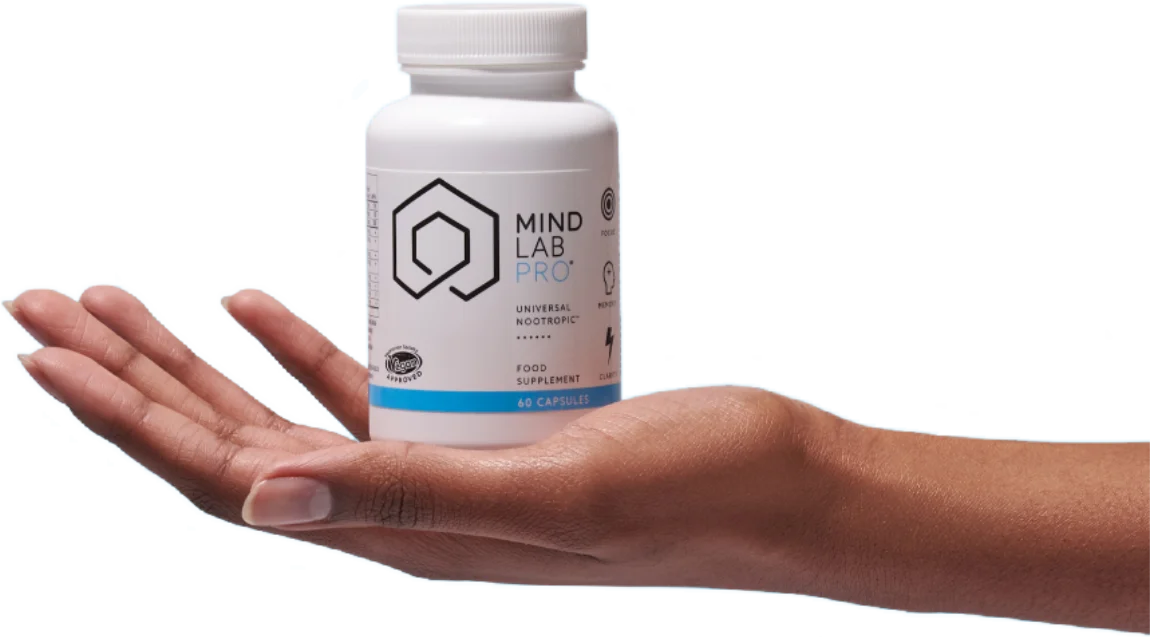
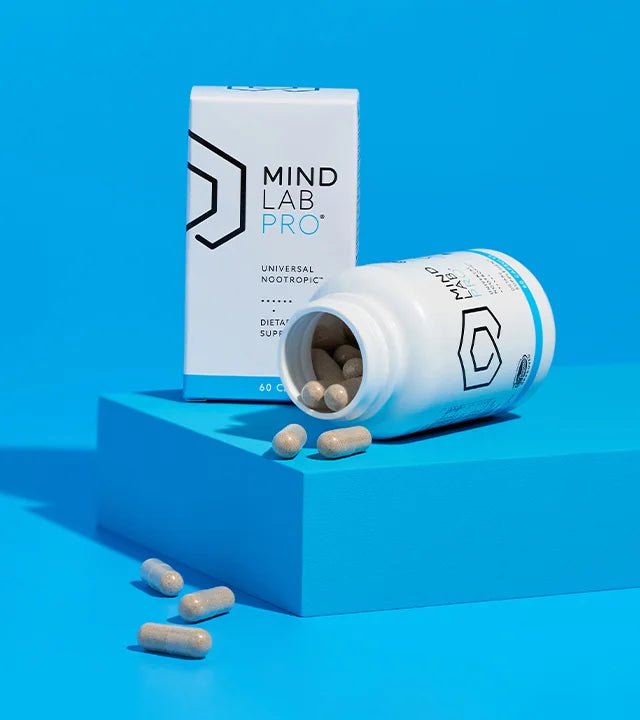
Mind Lab Pro is a popular choice for people who already like their morning coffee. It is caffeine-free, so it does not add another stimulant dose, but each serving provides 100 mg L-theanine along with a full-spectrum nootropic stack designed to support focus, memory, stress resilience, mental energy, and brain health.
The full MLP formula per 2 NutriCaps® serving includes:
- Citicoline, dosage 250mg
- Phosphatidylserine (PS), dosage 100mg
- Bacopa monnieri, dosage 150mg (full-spectrum extract, 24% bacosides with 9 bioactives)
- Organic Lion's Mane Mushroom, dosage 500mg (fruit and mycelium)
- Maritime Pine Bark Extract, dosage 75mg: (Standardized to 95% proanthocyanidins)
- N-Acetyl L-Tyrosine, dosage 175mg
- L-Theanine, dosage 100mg
- Rhodiola rosea, dosage 50mg (Standardized to 3% rosavins and 1% salidrosides)
- NutriGenesis® B-Vitamins: Vitamin B6 (dosage 2.5mg), Vitamin B9 (100 mcg), Vitamin B12 (7.5 mg)
In this context, coffee supplies the immediate caffeine lift; Mind Lab Pro supplies L-theanine plus nootropics without stacking another caffeine dose on top. For people who want far-reaching cognitive support while keeping caffeine intake under their own control, it is a smart pairing.
Mind Lab Pro has also been evaluated in randomized, placebo-controlled human research.
MLP has shown improvements in information-processing measures after 30 days, improvements across multiple memory measures in a separate study, and brain-network changes measured by EEG after 60 days in a third trial.(10-12)
Performance Lab Caffeine 2: Best Caffeine-With-L-Theanine Stack

If you would rather get the caffeine and L-theanine together in one precisely dosed capsule, Performance Lab Caffeine 2 is the strongest fit in these source materials. Each capsule supplies 50 mg natural caffeine from Coffea robusta seeds plus 100 mg L-theanine, delivering the classic 2:1 ratio without having to estimate how much caffeine is in a cup of coffee.
Caffeine 2 also includes:
- L-Tyrosine — 250 mg
- Riboflavin / Vitamin B2 — 500 mcg
- Vitamin B6 — 750 mcg
- Folate / Vitamin B9 — approximately 170 mcg
- Vitamin B12 — 2 mcg
The key advantage is control. One capsule provides a low-to-moderate 50 mg caffeine dose paired with 100 mg L-theanine. That makes it easy to know exactly how much of each substance you are consuming, instead of trying to reverse-engineer the caffeine content of coffee, tea, or energy drinks.
Performance Lab® Caffeine 2
Smooth energy. Clarity. Focus. No jitters. No burnout. No crash.
Shop Now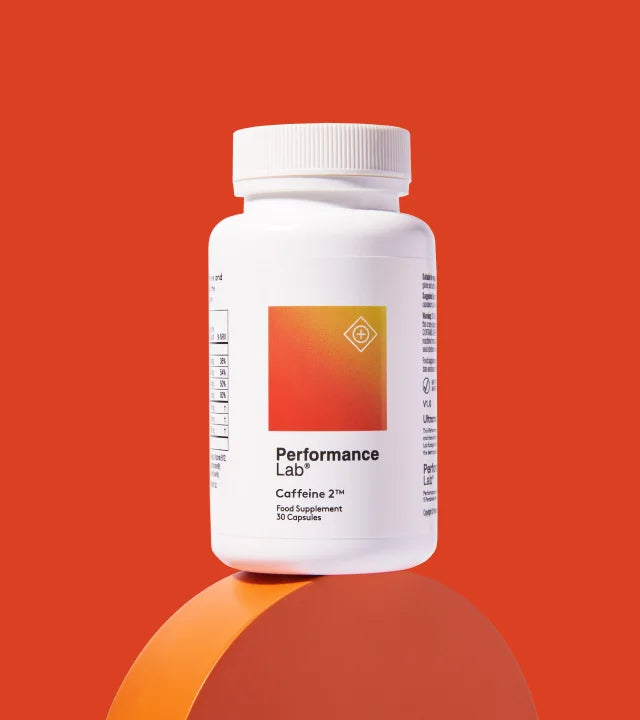
FAQ
Can you take L-theanine with caffeine?
Yes. Caffeine and L-theanine are a widely used nootropic combination. Research suggests that taking them together may support attention, cognitive performance, alertness, and task switching while helping create a calmer subjective experience than caffeine alone.
How much L-theanine should I take with caffeine?
A commonly used target is a 2:1 L-theanine-to-caffeine ratio. One placebo-controlled trial used 100 mg L-theanine with 50 mg caffeine, although that does not establish 2:1 as a universal “best” ratio. Individual sensitivity still matters.
Does L-theanine cancel out caffeine?
Not really. The point of the combination is to preserve caffeine-related alertness while adding a calmer attentional state. However, one study discussed in the source materials did find that L-theanine eliminated caffeine’s behavioral performance effects under the specific conditions tested, so the interaction is not identical across every dose and cognitive task.
Is L-theanine a stimulant?
No. L-theanine is a natural amino acid associated with relaxation and alpha brainwave activity rather than stimulant effects. That difference is exactly why it pairs so naturally with caffeine.
Is theanine with caffeine good for focus?
Research summarized in the source articles suggests the combination can support focus and several related cognitive measures, including task-switching accuracy, processing speed, distractor control, and performance during demanding mental tasks.
Can I get caffeine and L-theanine naturally from food or drinks?
Tea made from Camellia sinensis naturally contains both. Green tea and black tea are two familiar examples. Coffee provides caffeine but little reason to expect the same natural theanine pairing, so people who prefer coffee commonly add L-theanine separately.
What about caffeine and L-theanine for ADHD?
L-theanine has not been established as a treatment for ADHD. One source article discusses research in boys with ADHD where L-theanine (as the premium branded form, Suntheanine) improved aspects of objective sleep quality, but that is different from demonstrating treatment of core ADHD symptoms. ADHD should be managed with qualified medical guidance.(9) Read about nootropics that may support attention.
Is a caffeine pill better than coffee for this stack?
Not necessarily, but caffeine pills offer more precise dosing. Coffee caffeine content can vary, while a pre-formulated option such as Performance Lab Caffeine 2 provides a known 50 mg caffeine dose with 100 mg L-theanine in each capsule.
Summary
Theanine with caffeine works because the two ingredients bring different strengths to the same goal. Caffeine helps boost alertness, energy, and attention by blocking adenosine receptors. L-theanine supports a calmer mental state and relaxed focus. Together, they form a classic nootropic stack designed to promote focused energy, mental clarity, and cognitive performance without simply pushing stimulation higher.
The research is encouraging rather than absolute. Several placebo-controlled studies report benefits for task switching, attention, distractor control, alertness, tiredness, reaction time, and other cognitive outcomes. Other findings remind us that the combination does not enhance every outcome in every context.
A 2:1 L-theanine-to-caffeine ratio is a practical benchmark. Coffee plus L-theanine offers flexibility. Mind Lab Pro is a strong caffeine-free complement to coffee because it supplies 100 mg L-theanine with a broader nootropic stack. And for an all-in-one caffeine-and-theanine option, Performance Lab Caffeine 2 supplies 50 mg caffeine and 100 mg L-theanine in a precise 2:1 ratio.
References
- Nobre, A. C., Rao, A., & Owen, G. N. (2008). L-theanine, a natural constituent in tea, and its effect on mental state. Asia Pacific Journal of Clinical Nutrition, 17(Suppl 1), 167–168. Link
- McLellan, T. M., Caldwell, J. A., & Lieberman, H. R. (2016). A review of caffeine’s effects on cognitive, physical and occupational performance. Neuroscience & Biobehavioral Reviews, 71, 294–312. Link
- Haskell, C. F., Kennedy, D. O., Milne, A. L., Wesnes, K. A., & Scholey, A. B. (2008). The effects of L-theanine, caffeine and their combination on cognition and mood. Biological Psychology, 77(2), 113–122. Link
- Owen, G. N., Parnell, H., De Bruin, E. A., & Rycroft, J. A. (2008). The combined effects of L-theanine and caffeine on cognitive performance and mood. Nutritional Neuroscience, 11(4), 193–198. Link
- Kahathuduwa, C. N., Dassanayake, T. L., Amarakoon, A. M. T., & Weerasinghe, V. S. (2017). Acute effects of theanine, caffeine and theanine-caffeine combination on attention. Nutritional Neuroscience, 20(6), 369–377. Link
- Giesbrecht, T., Rycroft, J. A., Rowson, M. J., & De Bruin, E. A. (2010). The combination of L-theanine and caffeine improves cognitive performance and increases subjective alertness. Nutritional Neuroscience, 13(6), 283–290. Link
- Einöther, S. J. L., Martens, V. E. G., Rycroft, J. A., & De Bruin, E. A. (2010). L-theanine and caffeine improve task switching but not intersensory attention or subjective alertness. Appetite, 54(2), 406–409. Link
- Dodd, F. L., Kennedy, D. O., Riby, L. M., & Haskell-Ramsay, C. F. (2015). A double-blind, placebo-controlled study evaluating the effects of caffeine and L-theanine both alone and in combination on cerebral blood flow, cognition and mood. Psychopharmacology, 232(14), 2563–2576. Link
- Lyon, M. R., Kapoor, M. P., & Juneja, L. R. (2011). The effects of L-theanine (Suntheanine®) on objective sleep quality in boys with attention deficit hyperactivity disorder (ADHD): A randomized, double-blind, placebo-controlled clinical trial. Alternative Medicine Review, 16(4), 348–354. Link
- Utley, A., Gonzalez, Y., & Imboden, C. A. (2023). The efficacy of a nootropic supplement on information processing in adults: A double blind, placebo controlled study. Biomedical Journal of Scientific & Technical Research, 49(1). Link
- Abbott-Imboden, C., Gonzalez, Y., & Utley, A. (2023). Efficacy of the nootropic supplement Mind Lab Pro on memory in adults: Double blind, placebo-controlled study. Human Psychopharmacology: Clinical and Experimental, 38(4), e2872. Link
- O’Reilly, D., Bolam, J., Delis, I., & Utley, A. (2025). Effect of a plant-based nootropic supplement on perceptual decision-making and brain network interdependencies: A randomised, double-blinded, and placebo-controlled study. Brain Sciences, 15(3), 226. Link