A vagus nerve reset is not a literal neurological reboot. It is a practical way to describe using breathing, movement, sensory input, relaxation, and healthy routines to help your autonomic nervous system shift out of prolonged high-alert mode and back toward a calmer, more flexible state.
The appeal of a “reset” is understandable. Gallup’s 2025 global emotional-health report found that 37% of adults experienced a lot of stress during the previous day, while 39% experienced a lot of worry. Those numbers do not mean that anyone’s vagus nerve literally needs rebooting—but they help explain the widespread interest in practical ways to shift out of prolonged "fight-or-flight" high-alert mode.
This guide explains what a vagus nerve reset can realistically mean, how to track changes without obsessing over wearable data, which exercises have the strongest evidence, where humming, cold water, massage, yoga, and social connection fit, and how to build a simple 7-to-28-day routine for feeling calmer and recovering from stress more effectively. Let's get to it!
Key Takeaways
- A vagus nerve reset is a metaphor, not a medical procedure: the goal is better autonomic flexibility, not “rebooting” a nerve.
- Slow breathing has the strongest evidence: a comfortable pace near 5–6 breaths per minute reliably changes vagally mediated HRV.
- HRV can be useful, but it is not a vagus score: breathing, sleep, exercise, illness, alcohol, medications, age, and measurement conditions all affect it.
- Humming, yoga, exercise, and relaxation can help: evidence varies, but these practices can support stress recovery without extreme techniques.
- Cold exposure is not automatically calming: sudden cold can initially raise heart rate, blood pressure, and breathing.
- Avoid risky “vagus hacks”: deep neck pressure, carotid massage, improvised electrical stimulation, and extreme breath-holding are not necessary.
- Consistency beats intensity: a few minutes of repeatable practice each day is more useful than an aggressive one-time reset.
Disclaimer
This article is for educational purposes only and is not medical advice. Vagus nerve exercises are not treatments for epilepsy, treatment-resistant depression, cluster headaches, rheumatoid arthritis, stroke recovery, panic disorder, arrhythmias, vasovagal syncope, chronic pain, or other medical conditions. Talk with a healthcare professional before using cold exposure, electrical stimulation devices, or intensive breathwork if you have heart disease, low blood pressure, a history of fainting, an implanted medical device, pregnancy, or another significant health condition. Stop any practice that causes chest pain, fainting, severe dizziness, palpitations, or unusual shortness of breath.
Quick Overview: The Nervous System and the Vagus Nerve

The vagus nerve is "cranial nerve X" and a major pathway of the parasympathetic nervous system. It connects the brainstem with structures in the neck, chest, and abdomen.(1)
The sympathetic system helps mobilize the body for action ("fight-or-flight"); parasympathetic activity helps it recover ("rest and digest"). Neither is inherently good or bad. The useful target is flexibility: the ability to ramp up when needed and come back down when the challenge ends.
For more detailed information, see our foundational guide to the vagus nerve.
What Does “Reset Your Vagus Nerve” Really Mean?
There is no clinical procedure called a consumer vagus nerve reset. In this article, “reset” means temporarily changing your state—or building habits over time—that favor calmer autonomic regulation.
That distinction matters because medical vagus nerve stimulation is something very different. A vagus nerve stimulator (VNS) is a medical device that sends controlled electrical impulses to the nerve.(2) We are not discussing such medical devices in this article.
Instead, we'll be covering strategies like deep breathing, humming, cold water, yoga, or massage. They are not equivalent to medical devices. They are, however, behavioral tools that can influence heart rate, respiration, muscle tension, attention, and parasympathetic activity.
Why Try a Vagus Nerve Reset?
Most people searching this topic are not trying to alter a cranial nerve for its own sake. They want to feel calmer, recover faster from stress, sleep better, think more clearly, or stop feeling stuck in high alert.
Slow breathing and related practices can influence autonomic regulation, and some studies also report improvements in stress, negative affect, attention, or sleep. They do not prove that every benefit comes from “vagus nerve activation.”
For example, in a randomized study of 40 healthy adults, an eight-week deep-breathing program reduced negative affect and salivary cortisol while improving sustained attention compared with controls.(3) A 2026 meta-analysis of 31 randomized trials involving 2,277 adults found that progressive muscle relaxation improved sleep quality and reduced anxiety, although results were highly variable across populations and studies.(4)
Key takeaway: calming practices can affect both how you feel and measurable physiology. You do not need to claim that one nerve explains everything.
How to Measure Vagus Progress: HRV Without the Obsession
Heart rate variability (HRV) measures the small differences in time between heartbeats. Researchers use certain HRV measurements to estimate the vagus nerve’s calming influence on the heart. However, HRV does not measure the entire vagus nerve and should not be treated as a simple score of your “vagal tone.”(5)
If you already have a wearable that measures heart rate, you can use HRV to track general trends over time. Wearables can provide reasonably useful readings while you’re resting, but accuracy varies and generally decreases during exercise or movement.(6)
A Simple HRV Tracking Method
- Measure under similar conditions each time—ideally after waking and before caffeine, food, or exercise.
- Use the same device, body position, and recording length.
- Look at a 7-day or longer trend instead of reacting to one reading.
- Track sleep quality, stress, illness, alcohol, and hard training alongside HRV.
- Do not compare your raw number with someone else’s and assume higher is always healthier.
If your watch, ring, chest strap, or phone app reports HRV, think of it as one signal among many. Your actual outcomes—sleep, mood, energy, digestion, stress recovery, and how you function—matter just as much.
Did you know? HRV can change simply because your breathing rate changes. That is one reason controlled breathing raises HRV during a session—and one reason a higher number does not automatically mean your nervous system has been permanently “reset.”(5)
How to Stimulate the Vagus Nerve Naturally: Practical Exercises
This reset plan uses a small menu of practices rather than reproducing a complete technique guide. Slow breathing has the strongest evidence; the other options can be added according to your goals and tolerance.
*For full protocols, comparative evidence ratings, and detailed safety guidance, see our guide to the best vagus nerve exercises.
Slow Breathing: The Core Practice

One large meta-analysis found increases in vagally mediated HRV during slow breathing, immediately afterward, and following repeated training.(7) A simple 4-second inhale and 6-second exhale produces about six breaths per minute and avoids the long hold used in 4-7-8 breathing. Small human studies show that 4-7-8 can also change HRV and cardiovascular measures, but comparative research does not show it is any more effective than simpler paced breathing.(8)(9)
Use the 60-second script near the end of this article for a quick state shift, then build toward 5–10 comfortable minutes. Do not force unusually deep breaths; over-breathing can cause lightheadedness.
Optional Add-Ons
Humming: useful if vocalization makes slow exhalation easier. A small pilot study found that both slow breathing and humming breathing increased several HRV measures, with no significant difference between them.(10)
Cold facial exposure

Small studies suggest that cold-water face immersion can increase vagal-related HRV or speed post-exercise parasympathetic recovery.(11)(12) Full-body cold is different: it can produce a cold-shock response that raises breathing, heart rate, and blood pressure, and the American Heart Association cautions people with cardiac conditions about abrupt immersion.(13) Cold is optional; use the conservative cool-water checklist below rather than treating intensity as the goal.
Movement and yoga

Regular exercise has randomized-trial evidence for improving vagal-related HRV measures, while yoga research is more variable.(14)(15) Choose easy walking, gentle mobility, or another sustainable activity rather than searching for a special “vagus pose.”
Massage and gentle touch
A very small crossover trial found autonomic changes after head massage, but that does not establish ear or neck rubbing as direct vagus stimulation.(16) Use touch for tension relief, and never perform deep pressure or carotid sinus massage on the neck; that is a monitored clinical maneuver, not a home reset.(17)
Progressive muscle relaxation
A strong fit for bedtime or physical tension. A 2026 meta-analysis found improvements in sleep quality and anxiety, although results varied substantially across studies.(4)
Emotional Regulation and Social Tools
A nervous system reset does not have to be solitary. Humans regulate stress in social environments, and perceived social support has been studied in relation to cardiac vagal modulation.
An integrative review of eight studies found that perceived social support was generally positively associated with HRV measures linked to parasympathetic activity during rest, stress, and recovery—although the evidence base was small and not perfectly consistent.(18)
Practical “co-regulation” can be simple: call someone you trust, sit with a safe person, take a walk together, laugh, or talk through what is happening instead of trying to force yourself calm in isolation.
Gratitude and compassion practices can also be useful as emotional-regulation tools. In a small randomized trial involving 70 people with stage B heart failure, eight weeks of gratitude journaling increased parasympathetic HRV response during a gratitude task but did not significantly change resting HRV.(19) That is an interesting signal—not proof that gratitude “activates the vagus.”
A quick grounding routine for acute stress:
- Feel both feet against the floor.
- Look around and name three neutral things you can see.
- Take three quiet breaths with a slightly longer exhale.
- Unclench your jaw and drop your shoulders.
- If appropriate, make contact with someone you feel safe around.
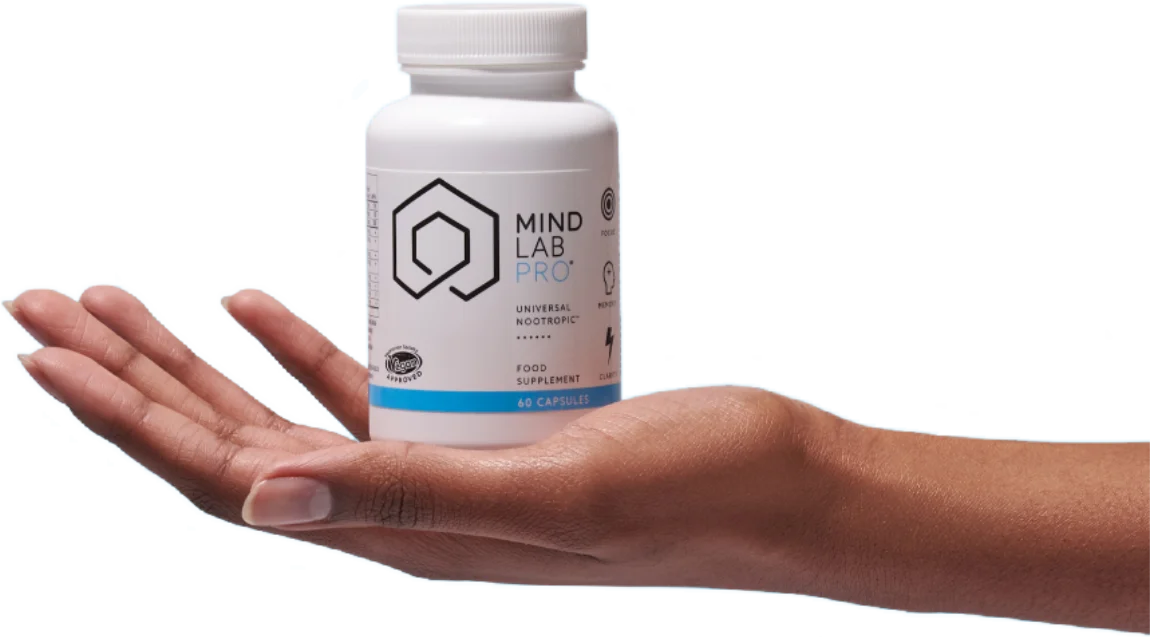
Check out some nootropic supplements that may help with stress.
A 7-Day Vagus Nerve Reset Plan
This is a practical habit-building template, not a clinically validated treatment protocol. The goal is to establish a few repeatable behaviors and see how your body responds.
- Day 1: establish a baseline. Note sleep, stress, energy, digestive comfort, and morning HRV if you already track it. Do 5 minutes of 4:6 breathing.
- Day 2: repeat 5 minutes of breathing and add a 10–20 minute easy walk.
- Day 3: add 2 minutes of humming after your breathing session.
- Day 4: use 5 minutes of progressive muscle relaxation before bed.
- Day 5: repeat the practices you liked best. Optional: brief cool facial splash if you tolerate cold well.
- Day 6: add a social reset—walk, talk, laugh, or spend unhurried time with someone safe.
- Day 7: review your notes. Keep the two or three practices that actually improved how you felt.
Extend It to 28 Days
Weeks two through four are about consistent practice, not adding more hacks.
Week 2: build slow breathing toward 8–10 minutes daily. Keep regular walking or other mild exercise. Use humming, massage, or PMR only if they feel useful.
Week 3: add three or more planned exercise sessions across the week and protect a consistent sleep schedule. If you track HRV, compare weekly averages instead of individual days.
Week 4: practice choosing the right tool for the state: breathing for acute stress, movement for restless energy, PMR for physical tension, and social contact when isolation is amplifying the stress response.
Useful journal prompts:
- What did my body feel like before and after the practice?
- Which technique actually made me feel calmer—not just more distracted?
- Did sleep, alcohol, illness, training, or caffeine explain changes in HRV?
- Am I recovering from stress more quickly than I was three weeks ago?
Vagus Nerve Reset for Better Sleep
Evening slow breathing has direct human research. In a randomized study of 64 healthy young adults, 15 minutes of slow-paced breathing every evening for 30 days improved subjective sleep quality and increased overnight cardiac vagal activity compared with spending the same time using social media.(20)
A simple pre-sleep sequence:
- Dim the lights and put away stimulating media.
- Do 5–10 minutes of slow breathing.
- Follow with 5 minutes of progressive muscle relaxation.
- Finish with quiet humming if you find it soothing.
Skip the cold shower at bedtime if it makes you feel alert. The goal is a smoother transition into a calmer state, not checking every possible vagus technique off a list.
Discover today's top ultramodern sleep supplements.
Where Supplements Fit
Supplements do not perform a vagus nerve reset and should not be treated like a vagus nerve stimulator. Their potential role is indirect—supporting areas such as sleep, stress response, cardiovascular health, gut-brain signaling, or nutrient status while behavioral practices target state regulation.
If you want to explore that separate side of the topic, see our evidence-based guide to supplements and vagus-friendly physiology.
If you prefer a food-first strategy, see the best foods for vagus nerve health and gut-brain support.
Safety, Contraindications, and When to Seek Medical Advice
Most gentle breathing and relaxation practices are low risk for healthy people. The more aggressive the technique, the more safety matters.
- Breathing: stop if you become dizzy, numb, panicky, or air-hungry. Do not force very deep breaths or long breath holds.
- Cold exposure: avoid abrupt cold-water immersion if you have significant heart disease, arrhythmias, poorly controlled blood pressure, low blood pressure with fainting, or a clinician has advised against it.
- Massage: do not perform carotid sinus massage or deep neck pressure as a self-treatment.
- Electrical devices: commercial devices are not interchangeable with breathing exercises. People with implanted electronic devices should consult their healthcare professional before using any electrical vagus-stimulation product.
- Symptoms: recurrent fainting, chest pain, significant palpitations, new neurological symptoms, persistent swallowing problems, or severe digestive issues deserve proper medical care.
If a relaxation practice consistently makes you feel worse, stop using it. A technique does not become healthier simply because it has the word “vagus” attached to it.
Frequently Asked Questions
Can you actually reset your vagus nerve?
Not in the literal sense of rebooting it. “Vagus nerve reset” is a useful shorthand for practices that can shift autonomic state or improve stress recovery. Slow breathing has the strongest evidence for an immediate parasympathetic-related effect.
How often should I practice vagus nerve exercises?
Daily practice is reasonable for low-risk techniques such as slow breathing. Start with 5 minutes and increase toward 10–15 minutes if it feels comfortable. Consistency matters more than long or intense sessions.
How quickly can I feel a vagus nerve reset?
Some people feel calmer within a few minutes of slow breathing, and HRV can change during a single session. Long-term autonomic changes from exercise, sleep, and repeated breathing practice develop over weeks.
Is a cold shower better than splashing cold water on your face?
Not necessarily. Cold facial stimulation has direct human evidence for vagal-related cardiovascular effects, while full-body cold produces a stronger cold-shock response. If your goal is calm, a brief cool facial splash is the more conservative starting point.
Does humming really stimulate the vagus nerve?
Small studies show that humming breathing can increase HRV, but it is difficult to separate the effect of humming from the slow breathing and prolonged exhale that come with it. It is promising, not proven as a unique vagus-stimulation method.
How should a beginner interpret HRV?
Use it as a personal trend, not a score of how healthy or calm you are. Measure under similar conditions and watch weekly patterns. One low day can reflect poor sleep, alcohol, illness, hard training, dehydration, stress, or simple measurement noise.
Can a vagus nerve reset help with anxiety or depression?
Breathing, exercise, relaxation, sleep, and social support can contribute to mental wellbeing, but a home vagus routine is not a treatment for an anxiety disorder or depression. Medical VNS is a separate intervention used in specific clinical contexts, including treatment-resistant depression.
Quick Scripts and Micro-Routines
60-Second Breathing Reset
- Relax your shoulders and jaw.
- Inhale gently for 4 seconds.
- Exhale slowly for 6 seconds.
- Repeat for six breaths.
30-Second Cold-Splash Checklist
- Use cool rather than ice-cold water.
- Splash the cheeks and upper face briefly.
- Keep breathing normally—do not combine it with prolonged breath-holding.
- Stop immediately if you feel dizzy, faint, or unusually uncomfortable.
- Skip cold exposure if you have a relevant cardiovascular condition unless your clinician has cleared it.
2-Minute Humming Routine
- Take a quiet nasal inhale.
- Hum through a long, easy exhale.
- Let the next inhale arrive naturally.
- Continue for about two minutes without forcing volume or vibration.
2-Minute Desk Reset
- Stand up and slowly roll your shoulders five times.
- Take six slow breaths with a longer exhale.
- Look away from the screen and orient to the room.
- Relax your hands, jaw, and abdomen.
- Walk for the remaining minute if space allows.
Summary
A vagus nerve reset is most useful when you treat it as a practical nervous-system routine rather than a literal biological reset. The strongest first-line tool is slow breathing, especially around five to six breaths per minute with a comfortable, slightly longer exhale.
Humming, regular exercise, gentle yoga, massage, progressive muscle relaxation, and supportive social contact can complement that foundation. Cold water may affect vagal pathways too, but it can also trigger a strong sympathetic response, so it deserves more caution than social media “reset” videos often suggest.
If you use HRV, track trends under consistent conditions without turning the number into a verdict on your health. The real goal is broader than a wearable metric: better sleep, steadier emotional regulation, faster recovery from stress, and an autonomic nervous system that can move into high gear when needed—and come back down when the job is done.
References
- Kenny, B. J., & Bordoni, B. (2022). Neuroanatomy, cranial nerve 10 (vagus nerve). StatPearls. Link
- Mayo Clinic. (2026). Vagus nerve stimulation. Link
- Ma, X., Yue, Z. Q., Gong, Z. Q., et al. (2017). The effect of diaphragmatic breathing on attention, negative affect and stress in healthy adults. Frontiers in Psychology, 8, 874. Link
- Donato, K. O., Falcão, L., Nishizima, A., et al. (2026). Progressive muscle relaxation technique improves sleep quality and mental health: A systematic review and meta-analysis of randomized controlled trials. Journal of Psychosomatic Research, 203, 112563. Link
- Carter, J. R., Jenkins, N. D. M., Bigalke, J. A., et al. (2026). Guidelines for rigor and reproducibility of heart rate variability within human cardiovascular research. American Journal of Physiology-Heart and Circulatory Physiology, 331(3), H918–H943. Link
- Dobbs, W. C., Fedewa, M. V., MacDonald, H. V., et al. (2019). The accuracy of acquiring heart rate variability from portable devices: A systematic review and meta-analysis. Sports Medicine, 49(3), 417–435. Link
- Laborde, S., Allen, M. S., Borges, U., et al. (2022). Effects of voluntary slow breathing on heart rate and heart rate variability: A systematic review and a meta-analysis. Neuroscience & Biobehavioral Reviews, 138, 104711. Link
- Vierra, J., Boonla, O., & Prasertsri, P. (2022). Effects of sleep deprivation and 4-7-8 breathing control on heart rate variability, blood pressure, blood glucose, and endothelial function in healthy young adults. Physiological Reports, 10(13), e15389. Link
- Steffen, P. R., et al. (2025). Comparing the effects of square, 4-7-8, and 6 breaths-per-minute breathing conditions on heart rate variability, CO2 levels, and mood. Applied Psychophysiology and Biofeedback. Link
- Kim, T., et al. (2025). Effects of slow-paced breathing and humming breathing on heart rate variability and affect: A pilot investigation. Physiology & Behavior, 114972. Link
- Hayashi, N., Ishihara, M., Tanaka, A., Osumi, T., & Yoshida, T. (1997). Face immersion increases vagal activity as assessed by heart rate variability. European Journal of Applied Physiology and Occupational Physiology, 76(5), 394–399. Link
- Al Haddad, H., Laursen, P. B., Chollet, D., Lemaitre, F., & Ahmaidi, S. (2010). Influence of cold water face immersion on post-exercise parasympathetic reactivation. European Journal of Applied Physiology, 108(3), 599–606. Link
- American Heart Association. (2022). You’re not a polar bear: The plunge into cold water comes with risks. Link
- Amekran, Y., & El Hangouche, A. J. (2024). Effects of exercise training on heart rate variability in healthy adults: A systematic review and meta-analysis of randomized controlled trials. Cureus, 16(6), e62465. Link
- Posadzki, P., Kuzdzal, A., Lee, M. S., & Ernst, E. (2015). Yoga for heart rate variability: A systematic review and meta-analysis of randomized clinical trials. Applied Psychophysiology and Biofeedback, 40(3), 239–249. Link
- Chen, Y., et al. (2016). The effect of head massage on the regulation of the cardiac autonomic nervous system: A pilot randomized crossover trial. Journal of Alternative and Complementary Medicine. Link
- de Lange, F. J., Brignole, M., Benditt, D. G., et al. (2026). Indications, contraindications, and step-by-step methodology for performing carotid sinus massage in patients presenting with syncope. Clinical Autonomic Research, 36(4), 485–497. Link
- Goodyke, M. P., Hershberger, P. E., Bronas, U. G., & Dunn, S. L. (2022). Perceived social support and heart rate variability: An integrative review. Western Journal of Nursing Research, 44(11), 1057–1067. Link
- Redwine, L. S., Henry, B. L., Pung, M. A., et al. (2016). Pilot randomized study of a gratitude journaling intervention on heart rate variability and inflammatory biomarkers in patients with stage B heart failure. Psychosomatic Medicine, 78(6), 667–676. Link
- Laborde, S., Hosang, T., Mosley, E., & Dosseville, F. (2019). Influence of a 30-day slow-paced breathing intervention compared to social media use on subjective sleep quality and cardiac vagal activity. Journal of Clinical Medicine, 8(2), 193. Link