Pattern recognition is the quiet “super-skill” behind a lot of modern performance: spotting what matters in noisy information, noticing trends early, connecting dots across ideas, and making better decisions faster. And it’s getting harder, not easier—because we’re swimming in inputs all day.
In fact, in a Gartner survey cited by Harvard Business Review, 38% of employees said they receive an “excessive” volume of communications at work. When your brain is overloaded, pattern recognition is often the first thing to suffer—everything starts to feel like random data instead of a coherent signal.
If you clicked this article, you’re likely looking for a practical edge: which nootropics can support pattern recognition (better learning, faster insight, stronger working memory, cleaner attention), and how to use them without turning into an overstimulated mess.
Below, we’ll break down what pattern recognition actually is, what blocks it (stress, sleep debt, distraction, weak working memory), how to develop pattern recognition skills, and which evidence-backed nootropics may help. Let's get to it!
Key Takeaways
- Pattern recognition is the brain’s ability to match incoming stimuli with stored memory so you can identify meaning, classify objects, and predict what comes next.
- It relies heavily on working memory + long-term (semantic) memory: you hold information “in mind” long enough to compare it to patterns you’ve learned before.
- Pattern recognition shows up everywhere: faces, language, music, symbols, spatial navigation, decision-making, and skill learning.
- Humans are great at it—but we’re not perfect: false pattern recognition (pareidolia) can make us see meaning where none exists.
- Several brain regions are strongly tied to pattern recognition, including the fusiform gyrus (faces), the hippocampus (learning/memory), and the medial prefrontal cortex (music/emotion-linked recognition).
- Pattern recognition is closely linked with fluid intelligence, reasoning, and problem-solving—especially in domains like chess, complex strategy games, and when you solve puzzles.
- To improve pattern recognition, focus on what strengthens its inputs: attention control, working memory, learning speed, and sleep/recovery. Pattern recognition exercise helps too.
- Nootropics for pattern recognition are best positioned as supporting memory, learning, stress resilience, and information processing—the functions that feed pattern recognition.
Disclaimer
This article is for educational purposes only and is not medical advice. Always consult a qualified healthcare professional before using any nootropic or dietary supplement—especially if you have a medical condition, take prescription medications, have a history of anxiety, mood disorders, sleep problems, high blood pressure, heart rhythm issues, or ADHD, or if you are pregnant or nursing. Supplements are not drugs and are not intended to diagnose, treat, cure, or prevent any disease. Individual responses vary, and cognitive concerns (such as severe brain fog, memory problems, or attention issues) should be evaluated by a clinician to rule out underlying medical causes.
What is Pattern Recognition?
Psychology describes pattern recognition as a cognitive process that pairs information from stimuli with information stored in memory.
Pattern recognition occurs when short-term memory receives and processes information from the environment and triggers activation of specific content stored in long-term memory.
A pattern can be either an abstract notion or a physical object, but it's basically a sequence that repeats. Animal classifications or types of vehicles are examples of object-based pattern recognition.
Common abstract patterns include types of music, facial features, language components, and symbols.
Connecting memories with present stimuli is a step of pattern recognition called identification. Semantic memory, which we access subconsciously and implicitly, is the main type of memory engaged with identification.
Pattern Recognition Skill: How to Build It
Pattern recognition skill is the ability to spot meaning in complexity—seeing what repeats, what changes, what predicts what, and what matters most. It’s the foundation of fast learning and good decision-making, because once you recognize the pattern, you don’t have to “rethink” everything from scratch. You can move straight to the right response.
What Pattern Recognition Skill Looks Like in Real Life
- Work: You quickly see the common thread in a messy project, recognize recurring problems, and know what fixes actually work.
- Learning: You notice the rule behind examples (instead of memorizing one-off facts), which speeds up mastery.
- People: You pick up behavioral patterns—tone shifts, consistency, intention—so you read situations more accurately.
- Creativity: You connect ideas across domains and see combinations others miss.
- Problem-solving: You detect the underlying structure of a problem, not just the surface details.
How to Improve Pattern Recognition Skill
Pattern recognition improves when you train the inputs that feed it: attention, working memory, learning reps, and feedback. Here are the highest-ROI methods:
- Deliberate exposure: Consume lots of examples in the same domain (charts, code, chess positions, songs, faces, writing samples). Quantity builds a pattern library.
- Active recall: After exposure, test yourself: “What’s the rule?” “What would happen next?” “What’s the best explanation?” This forces the brain to form durable models.
- Compare and contrast: Put two similar examples side-by-side and ask, “What’s different?” Contrast is rocket fuel for pattern detection.
- Chunking: Break complexity into repeatable units (phrases in music, tactics in sports, code patterns, story structures). The brain loves chunks.
- Slow down to speed up: Early on, go slower and get it right. Accuracy builds clean patterns; rushing builds noisy ones.
- Feedback loops: Get quick feedback (coach, mentor, tests, benchmarks). Pattern recognition sharpens fastest when you know immediately if you were right.
Biggest Pattern Recognition Killers
- Distraction: Fragmented attention prevents your brain from holding enough information at once to compare patterns.
- Sleep debt: You can’t build or consolidate patterns well when the brain is under-recovered. Discover ultramodern sleep supplements
- Information overload: Too much input without filtering makes everything feel like noise.
- Stress overload: Chronic stress narrows attention and pushes you into “react mode” instead of insight mode. Read more: Nootropics for stress & burnout
Pattern recognition skill isn’t a talent you either have or don’t have—it’s a trainable function. Build a pattern library through exposure, strengthen it through recall and contrast, and protect the fundamentals (sleep, stress, attention) so your brain can actually do its job.
Pattern Recognition and the Brain

Pattern recognition is a crucial skill for human survival and perception. But other animals rely on it as well, like koalas, who use pattern recognition to find their favorite food source – eucalyptus leaves.
The human brain is more developed than most others in the animal kingdom, but it shares similarities with many of them.
Neural networks in the outer layer of the human brain allow for superior processing of visual and auditory patterns. However, both humans and animals use spatial recognition, memory, and identification for pattern recognition related to resources and danger.
Theories of Pattern Recognition
There are six popular theories of pattern recognition:
- Prototype-matching
- Template matching
- Fourier analysis
- Feature analysis
- Recognition-by-components
- Bottom-up and top-down processing
These theories are not mutually exclusive, and we use many of them in everyday life. Each of these theories applies to different activities and domains of pattern recognition related to things like language comprehension, facial recognition, and music appreciation.
Pattern recognition allows us to predict what comes next.
Learning the alphabet in order relies on a type of pattern recognition called seriation. When a teacher repeats ‘A, B, C’ multiple times to a learner, the learner’s brain uses pattern recognition to say ‘C’ after they hear ‘A, B’ in sequence.
Pattern recognition is automatic and subconscious and includes:
- Recognition of familiar patterns
- Recognition and classification of unfamiliar objects
- Recognition of shapes and objects when viewed from different angles
- Recognition of partially hidden patterns and objects
False Pattern Recognition
Pareidolia is the human tendency to see patterns that do not actually exist, like figures in clouds, the Man in the Moon, religious figures in food, and faces or figures in shadows, wood, stone, etc.
Pareidolia influences superstitions, conspiracy theories, misinterpretation of statistics and scientific data, gambling, and some paranormal and religious experiences.
Cognitive Mechanisms
Music and language recognition rely on the encoding of auditory patterns, while facial recognition and seriation use encoding of visual patterns.
Facial Pattern Recognition
Recognizing faces is one of the most common types of pattern recognition. Most people are highly skilled at recognizing faces, but this automatic programming hides a cognitive challenge - all faces share similar physical features.
Normal faces have two eyes, one mouth, and one nose – all of them in predictable locations, yet humans can recognize a familiar face from various angles and in different lighting conditions.
But there’s an interesting twist. While humans can easily recognize faces from various normal viewing angles, we have tremendous difficulty recognizing upside-down faces. This illustrates the inherent challenges of facial recognition and shows how human brains use specialized procedures for recognizing upright faces.
Neuroscientists think facial recognition occurs in three phases.
- The first phase encodes visual information, focusing on physical features.
- Secondly, the brain taps into long-term memory to identity the person behind the face if we know them, or stores the facial features in memory for future use.
- Finally, if the pattern recognition system is fully functioning, recognizing the face triggers a memory of the person’s name.
Neural Mechanisms
The fusiform gyrus is specifically dedicated to processing facial features. A Stanford University study illustrated how the fusiform gyrus influences facial recognition.
- When researchers used electrical impulses to directly stimulate a patient's fusiform gyrus, the patient reported that the faces of the researchers appeared to change and morphed in front of him. This demonstrates a causal link between the fusiform gyrus and the human ability to recognize faces.(1)
Musical Pattern Recognition
The brain arranges and stores information in neuronal networks and retrieves that information when activated by stimuli in the environment.
For music, this constant referencing of information and environmental stimulus from the environment allows the brain to reconstruct individual musical features into a perceptual whole.
Retrieving the memory of a song expresses general recognition of musical pattern, but pattern recognition also occurs when we hear a song for the first time. Rhythm allows the listener to follow a tempo, recognize the pattern, and expect its recurrence.
When the pattern changes abruptly, the brain’s neural networks get excited and go to work trying to fit the new elements in with the expected. This creates a problem-solving opportunity for the brain that solidifies the experience in memory.
Neural Mechanisms
Music activates the medial prefrontal cortex (mPFC), which is usually one of the last areas affected by neurological issues. In turn, the mPFC relies on the hippocampus for learning and memory consolidation.
Music elicits deep emotional experiences from the listener. And potent emotional imprints are stored in long-term memory. So, when we hear the particular song that aroused the initial emotional reaction, that memory is turned on, automatically triggering pattern recognition.(2)
Pattern Recognition and Cognitive Function
Memory
Working memory, sometimes called short-term memory, is essential for pattern recognition. Pattern recognition is a subliminal, automatic response to environmental stimuli. So, without working memory, the brain cannot retrieve or process information in the moment.
For instance, working memory helps accelerate pattern recognition during gameplay. A good working memory amps up the speed of information processing, a huge part of pattern recognition processing.
And quick, accurate pattern recognition gives players a cognitive edge – a cognitive two for one.
Learning
Learning is important for pattern recognition because it is the brain’s preferred means of training itself. Through training over time, learning allows the brain to adapt to varying environments so it can accurately process patterns.
The more patterns the brain learns, the better it gets at pattern recognition overall. For example, language is a type of pattern. People who understand multiple languages find it easier to learn a new language than those who comprehend one.
Learning to recognize various language patterns makes it easier for the brain to recognize other, unfamiliar language patterns.
More on nootropics for learning
Language
But the link between language learning and pattern recognition goes both ways. Research suggests that language acquisition in infants is linked to accurate pattern recognition.
Studies at Hebrew University and the University of Sydney both reveal a strong correlation between the ability to learn a new language and to identify visual patterns.
- These studies conclude that children with high shape recognition displayed better grammar, even when controlling for intelligence and memory variables.(3)
More on nootropics for language
Fluid Intelligence
Fluid intelligence lubricates various cognitive mechanisms, including learning and memory, so they can work together to store and retrieve relevant information.
Learning and memory help store and identify patterns and relationships between different objects or sets of information. In turn, pattern recognition helps improve reasoning and problem solving.(4)
No cognitive function, including pattern recognition, operates from one brain area or mechanism alone, and fluid intelligence makes it easier for complementary cognitive functions to interact seamlessly.
More on nootropics fluid intelligence
Chess
Chess is built on pattern recognition, and Grandmaster players have honed their pattern recognition skills to quickly recognize complex patterns and choose the best response. Though other cognitive functions definitely factor in, fast, flexible pattern recognition skills are paramount for the win.
Best Nootropics for Pattern Recognition
Upgrading the human brain's ability to recognize patterns swiftly and accurately is more important than ever. If we expect to compete with machines for superior functioning in areas once considered solely the domain of humankind, we must speed up information processing and decision-making skills.
Nootropics for pattern recognition can enhance cognitive functions like memory and learning that directly influence the brain's ability to process, recognize and identify patterns.
Bacopa Monnieri

Bacopa monnieri is an adaptogen herb valued in ancient and modern Ayurvedic traditions for its calming properties.
But it also supports learning, boosts working memory, and assists with long-term memory retention, so you can identify new patterns and recognize learned ones faster.
Bacopa may even accelerate visual information processing, helping you recognize visual patterns more quickly.
B. monnieri stimulates the dopaminergic system in the frontal lobes, and studies show that the neurotransmitters dopamine, norepinephrine, and GABA help enhance information processing speed and amplify pattern recognition.(5) More importantly, Bacopa may speed up pattern recognition by expediting neural communication and accelerating the growth rate of nerve endings called dendrites in the nervous system.(6)
N-Acetyl L-Tyrosine

L-tyrosine is a naturally occurring amino acid that regulates dopamine and other neurotransmitters that influence memory, spatial perception, and pattern recognition.
N-acetyl-L-tyrosine (NALT) is a more absorbable and bioavailable form of L-tyrosine, making it even more effective.
High-pressure fields like engineering, mathematics, science, physics, medicine, and computer programming require fast and precise pattern recognition skills.

“It’s an incredibly stressful test that requires focus and being able to process huge amounts of information, in a really small amount of time.”
But stress can deplete tyrosine levels in the brain, affecting memory and decision making - cognitive functions directly involved with pattern recognition. Supplementing with NALT can protect the brain from the effects of stress and protect pattern recognition speed and accuracy.(7)
Caffeine + L-Theanine

If pattern recognition is your goal, you don’t want “more stimulation.” You want better signal detection: steadier attention, faster scanning, and less mental noise. That’s exactly why the caffeine + L-theanine stack is so popular.
Caffeine increases alertness and processing speed, while L-theanine helps smooth the experience.
In practical terms, this stack can help you stay locked in long enough to hold multiple inputs in working memory and compare them—one of the key mechanics behind recognizing patterns in writing, data, music, coding, or strategy.
In placebo-controlled studies, the caffeine + L-theanine combo has been associated with improvements in attention and certain aspects of cognitive performance compared with placebo (and in some cases compared with caffeine alone), including results on demanding tasks that require sustained focus and fast information processing (rapid visual information processing and attention switching).(8,9,10)
Discover the best L-Theanine + Caffeine stack
Great stuff! I won't take caffeine without the L-theanine. This is the perfect blend and also has added B vitamins!Cindy S

Citicoline (Cognizin®, CDP-Choline)

Pattern recognition isn’t just “seeing things”—it’s being able to hold multiple inputs in mind, compare them, and update your model in real time. That’s why citicoline (CDP-choline) tends to fit this goal so well: it supports attention control and memory encoding—two functions that feed pattern recognition directly.
Citicoline supplies choline for acetylcholine pathways (strongly tied to learning/attention) and also supports neuronal membrane metabolism—often described as a “clean mental fuel” effect. In practice, citicoline is the kind of ingredient people use when they want clearer mental organization: less scattered thinking, better ability to track moving parts, and more mental stamina for analysis-heavy work.
Human research suggests citicoline can influence brain bioenergetics/metabolite markers tied to frontal-lobe function,(11) and clinical research in older adults suggests benefits for memory performance versus placebo in age-associated memory impairment contexts.(12)
In theory, Citicoline may promote cognitive “bandwidth” for noticing patterns because the brain can manage more inputs with less friction.
Rhodiola rosea (Pattern Recognition Under Pressure)

Pattern recognition breaks down fastest when you’re tired, stressed, or overloaded. You can have the “skills,” but the brain stops connecting dots because mental fatigue hijacks attention and working memory. That’s the lane where rhodiola rosea shines: it’s an adaptogen with a reputation for supporting mental stamina and performance when demand is high. Read our full list of adaptogen herbs.
For pattern recognition, rhodiola is less about making you “smarter” and more about keeping your cognitive engine online when conditions are unfavorable—long workdays, sleep debt, hard training blocks, or high-stakes decision-making. When you stay calmer and less mentally drained, you keep the ability to notice trends and signals in noisy information.
In a randomized crossover trial in resistance-trained athletes, short-term rhodiola supplementation was associated with dose-dependent improvements in resistance exercise performance and cognitive function.(13) Rhodiola’s value may indirectly improve pattern recognition because you stay focused longer without cognitive collapse.
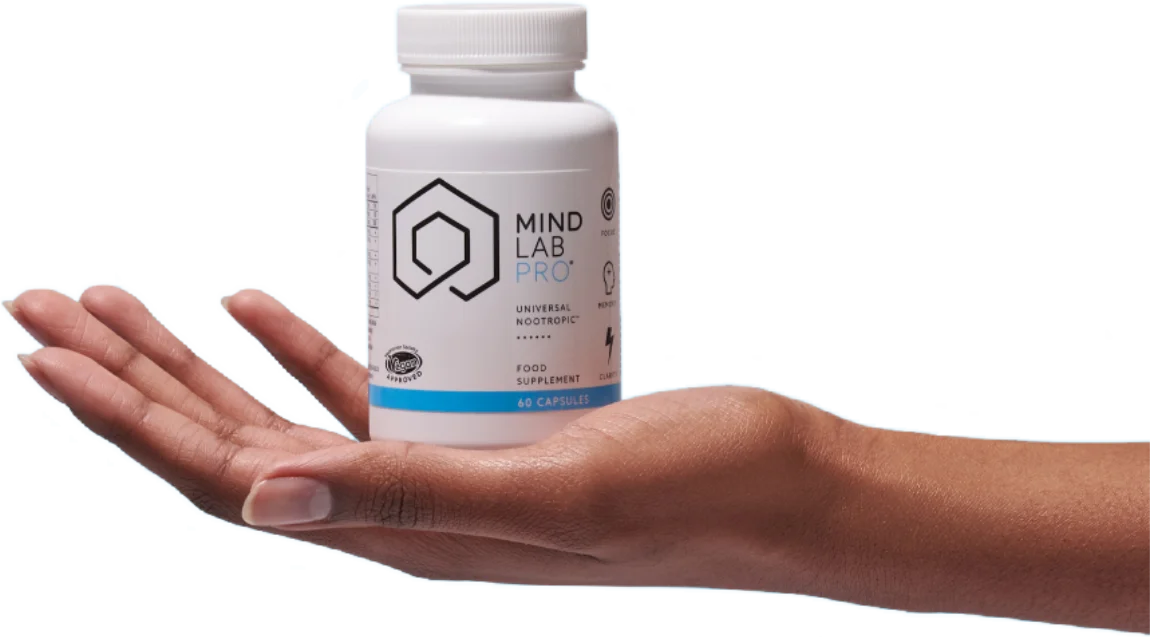
Best Nootropic Stack for Pattern Recognition: Mind Lab Pro®

Mind Lab Pro® Ingredients (per serving): Citicoline (CDP Choline) 250mg, Phosphatidylserine (from sunflower lecithin) 100mg, Bacopa monnieri 150mg (24% bacosides), Organic Lion’s Mane Mushroom 500mg (fruit and mycelium), Maritime Pine Bark Extract 75mg (95% proanthocyanidins), N-Acetyl L-Tyrosine 175mg, L-Theanine 100mg, Rhodiola rosea 50mg (3% rosavins, 1% salidrosides), NutriGenesis® Vitamin B6 2.5mg, Vitamin B9 100mcg, Vitamin B12 7.5mcg.
Pattern recognition isn’t a single brain function. It’s an outcome that depends on several “upstream” cognitive systems working together: attention control (noticing the right signal), working memory (holding multiple inputs in mind), learning + recall (comparing to stored patterns), and stress resilience (staying sharp under pressure). That’s why single-ingredient nootropics can feel hit-or-miss for pattern recognition—because they only support one piece of the puzzle.
Mind Lab Pro® is a strong fit because it’s built like a real stack: it supports multiple pattern-recognition pillars at once. You get “bandwidth” ingredients like citicoline (attention + memory encoding support), long-game learning support like bacopa, calm-focus support like L-theanine and rhodiola, and brain-health-friendly support like lion’s mane and pine bark extract. That combination is ideal for pattern recognition because it helps you stay focused, hold more information in mind, and build a stronger internal library of patterns over time—without relying on heavy stimulation.
Mind Lab Pro® is Research-Backed
Most “brain stacks” are theory and marketing. Mind Lab Pro® is unusual because the finished formula has been evaluated in multiple randomized, placebo-controlled human studies—giving you a more defensible foundation for real-world cognitive outcomes that can support pattern recognition.
- Study 1 (processing speed): In a double-blind, placebo-controlled trial, 30 days of Mind Lab Pro® was associated with improvements in measures tied to information processing and reaction-time performance versus placebo—useful for faster scanning and cleaner signal detection.(14)
- Study 2 (memory): In a double-blind, placebo-controlled trial using a standardized memory battery, 30 days of Mind Lab Pro® improved performance across multiple memory domains versus placebo—including recall-oriented outcomes that support building a stronger “pattern library.”(15)
- Study 3 (brain network efficiency): In a 60-day randomized, double-blind, placebo-controlled study, Mind Lab Pro® did not improve task speed/accuracy versus placebo, but it was associated with EEG network changes consistent with increased coordination between brain regions—positioning it as a longer-range “efficiency” signal that may support complex cognition over time.(16)
If you want nootropic support for pattern recognition, the smartest strategy is a stack that supports attention + memory + calm focus + resilience at the same time. That’s what Mind Lab Pro® is built to do.
Frequently Asked Questions
How can I improve my pattern recognition skills?
Pattern recognition skills can be enhanced through nootropics that support memory processing and cognitive function, as this ability relies on connecting short-term memory with information stored in long-term memory. Since pattern recognition involves both visual and auditory processing, activities that strengthen these neural networks, combined with supplements that support memory enhancement and processing speed, may help develop this crucial cognitive skill.
Can pattern recognition be trained and improved?
Yes, pattern recognition can be trained since it's a cognitive process that pairs environmental stimuli with stored memories, and this connection can be strengthened through practice. The brain's neural networks in the outer cortex that process visual and auditory patterns can be enhanced through targeted exercises and nootropics that support learning acceleration and neuroplasticity.
What is rapid pattern recognition?
Rapid pattern recognition refers to the brain's automatic and subconscious ability to quickly identify familiar patterns, classify unfamiliar objects, and recognize shapes from different angles or when partially hidden. This fast processing relies on semantic memory and the brain's specialized neural networks, which can be optimized with nootropics that enhance reaction time and cognitive focus.
How can you develop pattern recognition abilities?
Pattern recognition develops through the strengthening of connections between short-term and long-term memory, particularly semantic memory which we access subconsciously. Regular practice with activities involving seriation, facial recognition, and music or language comprehension can build these skills, especially when combined with brain training and cognitive enhancement supplements.
What is pattern recognition in humans?
Pattern recognition in humans is a cognitive process where the brain matches information from current stimuli with memories stored in the brain, allowing us to predict what comes next and navigate our environment. This crucial survival skill involves specialized neural networks in the brain's outer layer that process visual and auditory patterns, enabling everything from facial recognition to language comprehension and decision-making.
How can nootropics help with pattern recognition?
Nootropics for pattern recognition work by enhancing the cognitive mechanisms involved in processing information, including memory consolidation and the activation of specific content stored in long-term memory. These supplements may support the neural networks responsible for visual and auditory pattern processing, potentially improving overall intelligence and our ability to keep pace with advancing technology.
Summary
Pattern recognition isn’t a single “brain power” switch—it’s the end result of several systems working together: attention control, working memory, learning speed, recall, and stress resilience. That’s why the best nootropics for pattern recognition tend to support those building blocks rather than claiming to magically create insight.
Stacks like caffeine + L-theanine can improve clean focus and fast scanning, citicoline can support clarity and the ability to hold and compare more information, rhodiola can keep your cognition online under fatigue and pressure, and lion’s mane is better positioned as a long-game support for memory and brain health.
“I was able to pick apart the questions better.”
If you want the simplest “cover the bases” option, a comprehensive stack like Mind Lab Pro® makes sense because it supports multiple pattern-recognition pillars at once—helping you stay focused, build a stronger internal pattern library over time, and perform without relying on heavy stimulation.
References
- Norton, E. (2012). Identifying the Brain's own Facial Recognition System. Science. Link
- Levitin, D. J. (2016). This Is Your Brain on Music: The Science of a Human Obsession. Penguin. Link
- Association for Psychological Science. (2013). Picking Up a Second Language Is Predicted by Ability to Learn Patterns. Psychological Science. Link
- Smith, E. E., & Jonides, J. (1999). Storage and executive processes in the frontal lobes. Science, 283(5408), 1657–1661. Link
- Murley, A. G., & Rowe, J. B. (2018). Neurotransmitter deficits from frontotemporal lobar degeneration. Brain, 141(5), 1263–1285. Link
- Vollala, V. R., Upadhya, S., Nayak, S., & Kalthur, S. G. (2011). Enhancement of basolateral amygdaloid neuronal dendritic arborization following Bacopa monniera extract treatment in adult rats. Clinics (São Paulo), 66(4), 663–671. Link
- Jongkees, B. J., Hommel, B., Kühn, S., & Colzato, L. S. (2015). Effect of tyrosine supplementation on clinical and healthy populations under stress or cognitive demands—A review. Journal of Psychiatric Research, 70, 50–57. Link
- Haskell, C. F., Kennedy, D. O., Milne, A. L., Wesnes, K. A., & Scholey, A. B. (2008). The effects of L-theanine, caffeine and their combination on cognition and mood. Biological Psychology, 77(2), 113–122. Link
- Einöther, S. J. L., Martens, V. E. G., Rycroft, J. A., & De Bruin, E. A. (2010). L-theanine and caffeine improve task switching but not intersensory attention or subjective alertness. Appetite, 54(2), 406–409. Link
- Owen, G. N., Parnell, H., De Bruin, E. A., & Rycroft, J. A. (2008). The combined effects of L-theanine and caffeine on cognitive performance and mood. Nutritional Neuroscience, 11(4), 193–198. Link
- Silveri, M. M., Dikan, J., Ross, A. J., Jensen, J. E., Kamiya, T., Kawada, Y., Renshaw, P. F., & Yurgelun-Todd, D. A. (2008). Citicoline enhances frontal lobe bioenergetics as measured by phosphorus magnetic resonance spectroscopy. NMR in Biomedicine, 21(10), 1066–1075. Link
- Nakazaki, E., Hamada, T., Hayashi, K., Goto, T., Imai, S., Hiwatashi, A., & Kitamura, H. (2021). Citicoline and memory function in healthy older adults: A randomized, double-blind, placebo-controlled clinical trial. The Journal of Nutrition, 151(8), 2153–2160. Link
- Koozehchian, M. S., Kargarfard, M., Lee, J., Candow, D. G., & Wilborn, C. D. (2025). Dose–response effects of short-term Rhodiola rosea supplementation on resistance exercise performance and cognitive function in resistance-trained athletes: A randomized, crossover trial. Nutrients, 17(23), 3736. Link
- Utley, A., Gonzalez, Y., & Imboden, C. A. (2023). The efficacy of a nootropic supplement on information processing in adults: A double blind, placebo controlled study. Biomed J Sci & Tech Res, 49(1). Link
- Abbott-Imboden, C., Gonzalez, Y., & Utley, A. (2023). Efficacy of the nootropic supplement Mind Lab Pro on memory in adults: Double blind, placebo-controlled study. Human Psychopharmacology: Clinical and Experimental, e2872. Link
- O’Reilly, D., Bolam, J., Delis, I., & Utley, A. (2025). Effect of a plant-based nootropic supplement on perceptual decision-making and brain network interdependencies: A randomised, double-blinded, and placebo-controlled study. Brain Sciences, 15(3), 226. Link