


Playing an instrument changes your brain function, activity, and even size. But can it make you smarter? Maybe. The research summarized in this article links musical training with differences in brain structure and activity, as well as cognitive skills such as memory, attention, language, and learning.
In a 2024 meta-analysis of 13 studies and 502 older adults published in Brain and Cognition journal, musical instrument training significantly improved processing speed, with additional benefits for inhibition and cognitive switching.(1)
If you're looking for statistics on the benefits of playing a musical instrument, two of the most striking figures in this article are a study-specific IQ difference of up to 7 points in schoolchildren and reports of substantially greater auditory-cortex gray matter and activity in musicians.(2)(3) These findings are interesting, but they should not be read as guarantees that music lessons will raise IQ or brain volume by a fixed amount.
Key Takeaways
- Whole-skill training: Playing a musical instrument coordinates auditory processing, movement, vision, attention, memory, timing, and feedback at the same time.
- Study-specific statistics: One cited school-age comparison reported an IQ difference of up to 7 points, while neuroscience research has reported structural and activity differences in the auditory cortex of musicians.(2)(3)
- Cognitive benefits: Musical practice may support memory, processing speed, language skills, executive function, problem solving, and other cognitive skills through repeated active engagement.
- Across the lifespan: Music education can challenge the brain in childhood, adulthood, and later life. It may contribute to cognitive reserve, but the evidence in this article does not show that playing an instrument prevents cognitive decline or memory loss.
- Practice matters: The potential benefits come from learning, repetition, feedback, and progressively challenging musical activities—not simply owning an instrument or listening passively.
Disclaimer
This article is for educational purposes only. Playing music, taking music lessons, or participating in music therapy should not be treated as a medical treatment for anxiety, cognitive decline, memory loss, brain injuries, or other health conditions. Study-specific differences between musicians and non-musicians do not prove that musical training caused every observed brain or cognitive difference.
Musical Training Keeps the Brain Sharp
Playing music engages multiple brain systems at once, especially auditory, motor, visual, attention, and memory networks. A musician has to hear what is happening, execute precise movements, track timing, and adjust performance in real time.(4)
Different parts of the brain process these tasks in parallel and coordinate them into fast, seamless sequences. That makes playing musical instruments a form of active engagement rather than passive listening.
Fine motor skills—finger position, rhythmic movement, breath control, posture, and coordination—add another layer of demand. Reading music or sheet music adds visual decoding, while memorizing musical phrases adds memory and sequencing.
Over repeated musical practice, these coordinated demands can strengthen neural connections and may support the formation of new neural connections as skills develop. In practical terms, learning to play is a progressively challenging workout for your brain.
What's the Difference?
Previous research has reported measurable differences between musicians and non-musicians, including during childhood. Research has also examined how the duration of musical training relates to cortical development in young people.(5)
In one elementary-school comparison, children with musical training had IQ scores reported to be up to 7 points higher than children without that training.(2) That is an association from one study—not proof that music lessons alone caused a 7-point IQ increase.

Image credit: Chittka L, Brockmann, Perception Space—The Final Frontier, PLoS Biology. CC BY-SA 2.5, via Wikimedia Commons.(6)
Older comparative findings summarized in this article reported large group differences in the auditory cortex, including greater gray matter and activity in professional musicians and higher activity in amateur musicians than in non-musicians.(3) These are study-specific group differences, not percentages that every person should expect from learning an instrument.
Playing an instrument changes your brain by increasing brain plasticity too. When professor Steven Mithen convinced Larry Parsons, a neurobiologist at the Scripps Research Institute, to conduct a musical experiment for fun, the results showed that everyone can enjoy the brain benefits of playing an instrument. Mithen had never played an instrument, and he was a terrible singer. He took singing lessons for one year, and Parson's scanned Mithen's brain before and after the year of lessons.
After a year of singing lessons, Mithen's scans reportedly showed increased activity in several areas associated with processing music.(7) The example is a useful illustration of brain plasticity, even though it does not establish a universal effect size for everyone who learns to sing.
In music, the voice is considered an instrument. So even if you can't pluck a proper string or hold a steady rhythm, if you have a voice you can be a musician.
Benefits of Playing a Musical Instrument Statistics
The brain benefits of playing a musical instrument are measurable in some studies, although the size and consistency of the effects vary by age, outcome, and study design.
- 13 studies and 502 older adults: A 2024 systematic review and meta-analysis in Brain and Cognition found a moderate improvement in processing speed (d = 0.47), along with smaller significant effects for inhibition (d = 0.27), cognitive switching (d = 0.39), and verbal category switching. No significant effects were found for working memory, verbal memory, or selective visual attention.(1)
- 36% lower dementia risk association: A 2022 systematic review and meta-analysis of three prospective cohort studies found that older adults who played a musical instrument had a lower risk of dementia than non-players (HR = 0.64; 95% CI: 0.41–0.98). Because these were observational studies, the result shows an association—not proof that playing an instrument prevents dementia.(8)
- 200 adults age 70+: In a 2020 observational study, people who had ever played a musical instrument improved by 0.29 points on an adjusted Mini-Mental State Examination score over 12 months, while never-players declined by 0.12 points. The between-group difference was statistically significant (p = 0.007), but the study cannot establish causation.(9)
- 13 studies and 901 children: A 2015 meta-analysis found that music training produced a small but significant improvement in phonological awareness (d = 0.20), a literacy-related language skill. No significant overall improvement was found for reading fluency.(10)
- 156 healthy older adults: A 2021 multisite study randomly assigned participants to six months of piano training or music listening/music-culture instruction. Both groups improved on some speech-in-noise measures, while the piano group showed additional improvements in certain ear-specific conditions; effects were also influenced by study site and sex.(11)
- 4 months of instrument training: A 2021 study of musically naïve adults ages 61–85 enrolled 66 participants, with 63 included after screening. Thirty received keyboard-harmonica training and 33 served as controls. The training group significantly improved verbal-recall memory compared with controls and showed fMRI changes interpreted as greater neural efficiency. Participants were assigned in a pseudo-randomized manner, so this should not be treated as a fully randomized trial.(12)
- 6,984 children in a broader meta-analysis: A 2020 multilevel meta-analysis found that apparent cognitive and academic benefits of music training largely disappeared after study quality was taken into account. Across higher-quality designs using random assignment or active controls, the overall effect was null or near zero.(13)
Key takeaway: Musical instrument training is associated with several promising cognitive outcomes—especially processing speed and some executive-function measures in older adults—but the evidence is not uniformly positive. Some benefits come from observational studies, and higher-quality analyses suggest that broad claims about music making people “smarter” should be treated cautiously.
Brain Benefits for Musicians
Memory
Music and memory share cognitive demands, and musical engagement can remain meaningful even when other memory abilities change. Familiar songs and well-practiced musical skills may sometimes remain accessible to people experiencing memory loss.(14) However, the references in this article do not establish that learning an instrument prevents dementia, Alzheimer's disease, or cognitive decline.
Mood

Listening to and making music can be emotionally engaging, while playing with other musicians adds mastery, attention, expression, and social connection. These experiences may support mood, but this article's current references do not justify assigning that effect to a specific dopamine or oxytocin increase.
Motor Skills
Auditory and motor systems interact closely during music perception and production.(15) When musicians play, they repeatedly coordinate hearing with hand, finger, breath, and other movements. That makes motor control a major part of musical training, but casual instrument practice should not be presented as treatment for a neurological disorder.
Learning

Various studies have explored the "Mozart effect" and the broader relationship between music and learning.(16) For this article, the more relevant distinction is active training: learning to play requires repeated practice, feedback, attention, memory, and problem solving rather than passive listening alone. See also our guide to nootropics for studying.
Language
Playing an instrument can support language skills alongside reading and auditory processing. Reading music and sheet music requires translating symbols into timed actions, while rehearsing musical phrases challenges sequencing, memory, and attention.
These overlapping skills may be relevant to communication skills, verbal memory, verbal fluency, and the demands of learning a foreign language. Music education therefore combines several language-like and memory-based tasks inside one learning process.
Focus and Concentration
Playing an instrument places sustained demands on focus and executive function. Musicians have to monitor timing, detect errors, shift attention, remember what comes next, and keep performing while processing ongoing auditory feedback. Those demands make musical practice a useful cognitive challenge for attention control.
Mental Energy and Active Engagement

Making music is an active task: it combines movement, listening, prediction, memory, and rapid correction. That active engagement can feel mentally energizing, but the references in this article do not establish a fixed increase in cerebral blood flow or an energy effect lasting for a set number of hours.
Stress, Anxiety and Music Therapy
Playing music can be a calming and absorbing activity, and mastering a difficult piece can build confidence. But ordinary musical practice is not the same as clinical music therapy, and this article's references do not establish playing an instrument as a treatment for anxiety.

Creativity and Problem Solving
Musical creativity draws on pattern recognition, memory, timing, prediction, expression, and problem solving. Improvisation adds another challenge because musicians must generate and evaluate musical ideas while continuing to perform.
As musical phrases become more complex, players coordinate technical and expressive skills in real time. That combination helps explain why creativity is one of the many potential benefits people associate with sustained musical practice.
What About the Immune System?

Music research sometimes extends beyond cognition, but the references in this article are not enough to support the stronger claim that musicians have a stronger immune system or are more resistant to colds and flu. For this page, the better-supported focus is on brain, learning, and behavioral outcomes.
Multitasking
Playing an instrument and singing can require many coordinated tasks at once: controlling breath or finger movements, keeping tempo, tracking rhythmic patterns and dynamics, reading or remembering notation, following a conductor or group, and adjusting to what other musicians are doing.
That simultaneous coordination is one reason musical training places broad demands on attention, working memory, timing, and motor control.
Make the Most of Music's Brain-Boosting Power

Playing an instrument will not give you superpowers, but it can provide repeated, progressively challenging practice for memory, attention, coordination, language, and other cognitive skills. It is also never too late to start learning to play.
Music Education Across the Lifespan
Music education can begin with childhood classes, piano lessons, singing, or group music lessons, but musical education does not have to stop after school. Playing piano, guitar, drums, voice, and other different instruments combines listening, movement, reading music, memory, communication skills, and active engagement. From an educational psychology perspective, the value is in the repeated learning process: practice, feedback, correction, and gradually more difficult material.
That makes promoting musical education useful beyond performance itself. Making music can be a valuable part of a broader skill-building routine because musical activities repeatedly challenge attention, processing speed, memory, and problem solving. Many studies in this field ask whether learning to play and continuing to play music can improve cognitive skills or support brain health over time.
Older Adults, Cognitive Health and Cognitive Reserve

Encouraging older adults to continue or begin musical engagement may provide an enjoyable way to keep learning in later life. For older musicians—and people starting at an older age—playing can combine memory, coordination, social interaction, and processing speed in one activity.
Those potential benefits are often discussed in relation to cognitive reserve and cognitive health. However, the evidence presented in this article does not establish that musical training prevents cognitive decline or memory loss. For people recovering from brain injuries or managing medical conditions, structured music therapy is different from ordinary instrument practice and should be guided appropriately.
For additional cognitive support around practice, performance, and learning, see our guide to nootropics for musicians.
Frequently Asked Questions
Does playing an instrument make you smarter and can it raise IQ?
It may support cognitive skills such as attention, memory, processing speed, and learning. One cited school-age comparison reported IQ scores up to about 7 points higher among children with musical training, but that association does not prove that playing an instrument itself caused the full difference.(2)
What happens to your brain when you play an instrument?
Playing an instrument coordinates auditory, visual, motor, attention, and memory systems in real time. The brain has to integrate fine motor control, timing, sound feedback, and error correction into a continuous performance. Repeated musical practice can therefore reinforce the neural connections involved in those skills.
How does learning a musical instrument change the brain over time?
Musical practice repeatedly challenges the brain to learn and coordinate sound, timing, movement, attention, and memory. Research discussed in this article reports brain differences associated with musical training, including in learners and musicians with different levels of experience.(3)(5)(7)
Is playing music better for the brain than just listening to music?
Playing is more active than listening because it adds motor control, timing, memory, prediction, and constant feedback between hearing and movement. Both listening and performance engage the brain, but playing places additional demands on coordinated cognitive and motor skills.
Do musicians have different brains than non-musicians?
Yes, measurable group differences have been reported in brain structure and activity, including in auditory and motor systems.(3) These comparisons show an association with musical training, but they should not be interpreted as a guaranteed amount of brain change for every musician.
What are the biggest brain benefits of playing an instrument?
Potential instrument benefits include support for memory, motor coordination, learning, language skills, focus, executive function, and problem solving. The strongest theme across the article is that playing creates repeated active engagement across several cognitive and motor systems at once.
Does playing guitar affect the brain differently than other instruments?
Guitar training shares many of the same brain demands as other instruments, such as fine motor control, timing, auditory processing, and memory. The specific brain effect depends less on the instrument name and more on how challenging the music is, how often you practice, and whether you are learning new material. Any instrument that pushes coordination, timing, and learning can drive meaningful brain changes.
Which instrument increases IQ the most?
There is no single instrument that is proven to raise IQ more than all others. Brain benefits are more closely tied to the quality and consistency of training, learning new pieces, and engaging both technical and expressive skills. The best instrument is the one you will practice regularly, because repetition and progressive challenge are what drive brain adaptation.
Can playing an instrument help with learning, studying, and focus?
Musical training places repeated demands on attention control, executive function, memory, timing, and error correction—all skills relevant to studying and sustained learning. Reading sheet music adds visual decoding and sequencing. For related learning support, see nootropics for studying and the Mozart effect.
Can nootropics support the brain changes that happen with musical training?
Nootropics can be used to support brain function pathways involved in focus, learning, memory, and stress resilience, which may complement the cognitive demands of musical practice. For a musician-specific overview, see nootropics for musicians, and for a broader approach to building cognitive skills over time, see nootropics brain training.

“It basically took my memories and neatly filed them in the cabinet to my mind. And it was easy for me to access and recall after that.”
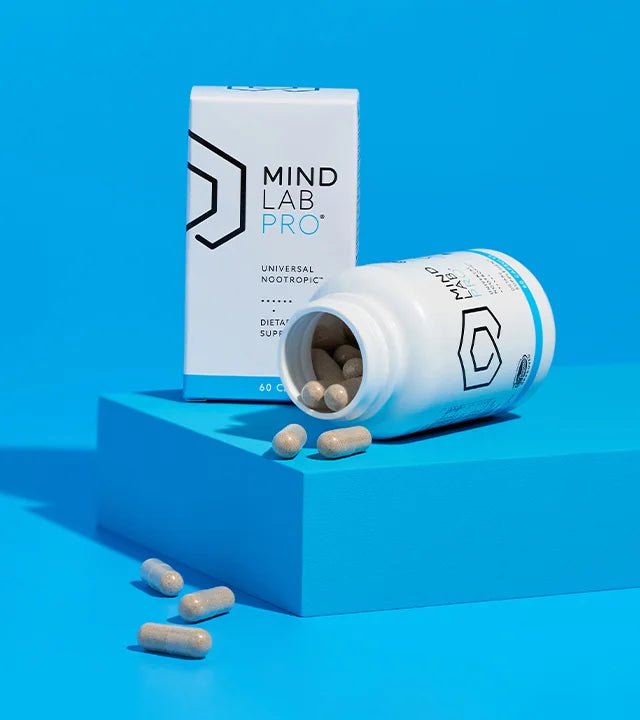
Mind Lab Pro® for Musical Practice, Learning and Performance
Playing a musical instrument places simultaneous demands on focus, memory, processing speed, learning, executive function, and stress management. Mind Lab Pro® is a nootropic supplement designed to support broad cognitive performance, making it a natural fit for musicians who want additional support around demanding practice, study, rehearsal, or performance.
- Focus and executive function: useful cognitive support for reading sheet music, tracking timing, monitoring errors, and staying engaged through long practice sessions.
- Learning and memory: supports the cognitive processes used to learn new pieces, retain musical phrases, and recall technique or notation.
- Mental performance under pressure: broad nootropic support may complement the concentration and composure required for rehearsals, auditions, and live performance.
Mind Lab Pro® does not replace musical training, music education, sleep, or practice. It is best viewed as complementary cognitive support for the same kinds of skills that musicians repeatedly challenge and develop.
Summary
Playing a musical instrument is an unusually rich learning activity because it combines listening, movement, timing, memory, attention, reading, and feedback. The studies and statistics in this article suggest meaningful associations between musical training and cognitive or brain differences, but study-specific percentages and IQ differences should not be treated as guaranteed results.
The broader takeaway is simpler: consistent musical practice provides active, progressively challenging engagement for cognitive and motor skills across childhood, adulthood, and later life. Playing instruments can offer many benefits because the activity combines movement, listening, memory, and real-time feedback. Whether you choose piano, guitar, drums, voice, or another instrument, the most important factor is continuing to learn and practice with an understanding that progress comes from repetition.
References
- Rogers F, Metzler-Baddeley C. The effects of musical instrument training on fluid intelligence and executive functions in healthy older adults: A systematic review and meta-analysis. Brain and Cognition. 2024;175:106137. doi:10.1016/j.bandc.2024.106137. Link
- Wetter OE, Koerner F, Schwaninger A. Does musical training improve school performance? Instructional Science. 2009;37(4):365-374. doi:10.1007/s11251-008-9052-y. Link
- Zatorre RJ, Chen JL, Penhune VB. When the brain plays music: auditory-motor interactions in music perception and production. Nature Reviews Neuroscience. 2007;8(7):547-558. doi:10.1038/nrn2152. Link
- Collins A. How playing an instrument benefits your brain. TED-Ed. 2014. Link
- Hudziak JJ, Albaugh MD, Ducharme S, et al. Cortical thickness maturation and duration of music training: health-promoting activities shape brain development. Journal of the American Academy of Child & Adolescent Psychiatry. 2014;53(11):1153-1161.e2. doi:10.1016/j.jaac.2014.06.015. Link
- Chittka L, Brockmann A. Perception Space—The Final Frontier. PLoS Biology. 2005;3(4):e137. doi:10.1371/journal.pbio.0030137. Image used under the article's open-access license via Wikimedia Commons. Link
- Fauble L. From Neanderthal to neuroscience: healing with sound and voice. Voice and Speech Review. 2017;11(1):72-86. doi:10.1080/23268263.2017.1370838. Link
- Arafa A, Teramoto M, Maeda S, et al. Playing a musical instrument and the risk of dementia among older adults: a systematic review and meta-analysis of prospective cohort studies. BMC Neurology. 2022;22:395. doi:10.1186/s12883-022-02902-z. Link
- Mansky R, Marzel A, Orav EJ, et al. Playing a musical instrument is associated with slower cognitive decline in community-dwelling older adults. Aging Clinical and Experimental Research. 2020;32(8):1577-1584. doi:10.1007/s40520-020-01472-9. Link
- Gordon RL, Fehd HM, McCandliss BD. Does Music Training Enhance Literacy Skills? A Meta-Analysis. Frontiers in Psychology. 2015;6:1777. doi:10.3389/fpsyg.2015.01777. Link
- Worschech F, Marie D, Jünemann K, et al. Improved Speech in Noise Perception in the Elderly After 6 Months of Musical Instruction. Frontiers in Neuroscience. 2021;15:696240. doi:10.3389/fnins.2021.696240. Link
- Guo X, Yamashita M, Suzuki M, et al. Musical instrument training program improves verbal memory and neural efficiency in novice older adults. Human Brain Mapping. 2021;42(5):1359-1375. doi:10.1002/hbm.25298. Link
- Sala G, Gobet F. Cognitive and academic benefits of music training with children: A multilevel meta-analysis. Memory & Cognition. 2020;48(8):1429-1441. doi:10.3758/s13421-020-01060-2. Link
- Help Spread the Music. Music & Memory. Link
- Li J, et al. Primary Auditory Cortex is Required for Anticipatory Motor Response. Cerebral Cortex. 2017;27(6):3254-3271. doi:10.1093/cercor/bhx079. Link
- Music and health. Harvard Men's Health Watch. 2011;15(12):1-5. Link