

Vitamin B6 is a core nootropic for brain chemicals: It catalyzes several neurotransmitter conversions and is used to make serotonin, norepinephrine, GABA and melatonin.*
Brain Support
- Supports synthesis and conversion of cognition-critical brain chemicals*
- Helps form myelin sheaths throughout the nervous system*
- Fights the formation of cerebrovascular-damaging homocysteine*
Nootropic Effects
- May promote healthy memory and attentional performance*
- Supports brain chemicals associated with a bright, healthy mood*
- Contributes to long-range brain health and mental clarity*
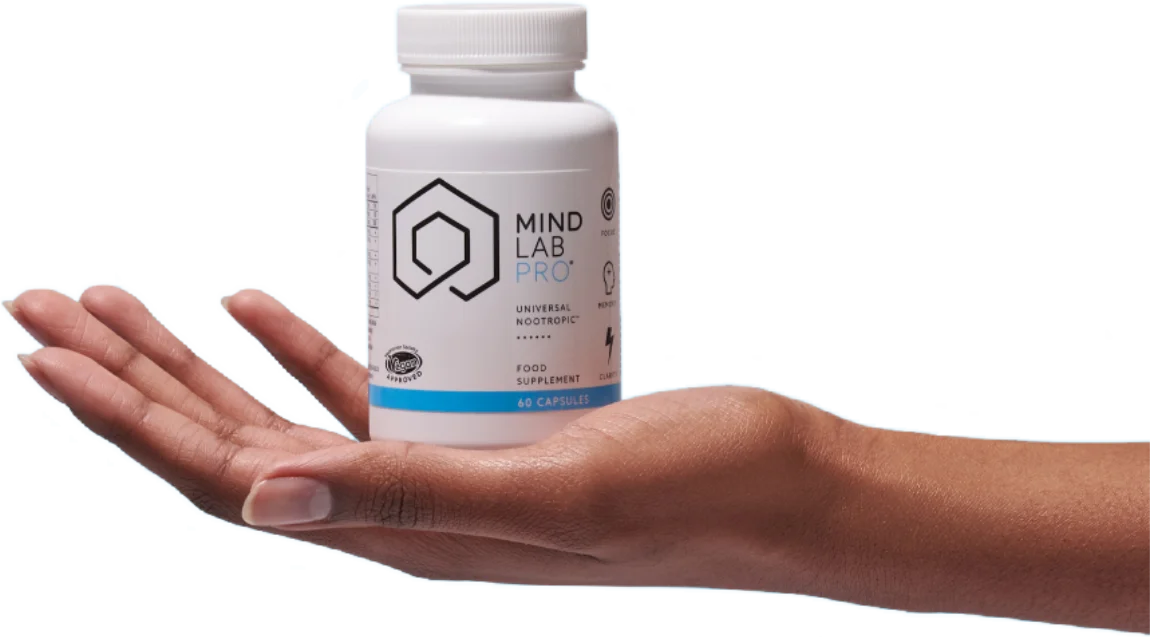
Mind Lab Pro® Vitamin B6
- Premium Vitamin B6 as NutriGenesis® nature-identical
- Clean, eco-friendly B6 grown on cultures in a state-of-the art laboratory
- Complexed with whole-food cofactors to enhance absorption
- Superior to Pyridoxine HCl B6 used in some nootropic stacks
Why Mind Lab Pro® Includes Vitamin B6
Vitamin B6 is critical for life-sustaining actions throughout the body, but is 100X more concentrated in the brain than the bloodstream.
B6's high concentration in the brain reflects its role in the formation and release of brain chemicals, and may underscore its place as an essential foundation nootropic for overall mental performance.
Some people fail to get enough B6, however – a common nutritional shortfall that may be linked to low brainpower.
In animal research, B6 deficiency has been suggested to reduce the brain’s consumption of glucose by 50%, which may increase risk of cognitive decline and emotional imbalance.1
In response to low Vitamin B6 intake concerns, some researchers have called for raising the recommended intake of this nootropic B-vitamin.2
- Mind Lab Pro® supplies Vitamin B6 as NutriGenesis® to help support brain chemicals associated with long-term memory, a calm state of mind, bright mood and attention span.
In addition to supporting serotonin, dopamine, norepinephrine and GABA, B6 plays a role in myelin formation, promotes cerebrovascular function, and helps support blood-brain barrier integrity.3,4
Researchers have suggested that B6 supplementation in elderly populations may improve the storage of information modestly but significantly, especially over the long term.5
Researchers have also suggested that high-dosage b6 may be employed as an anti-stress strategy, with potential mood-balancing effects.6
How Vitamin B6 may support mental performance and brain health
Brain Chemicals
B6 optimizes neurotransmitters, helping to synthesize serotonin, norepinephrine and GABA while supporting Tryptophan → serotonin, 5-HTP → serotonin, and DOPA → dopamine conversions.7
Brain Circulation
B6 may help protect the blood-brain barrier’s microvascular system from the homocysteine that can damage blood vessel linings and contribute to cognitive decline.
Research has linked elevated homocysteine levels to low performance across eight measures of cognitive performance, including memory and learning.8
Brain Protection
B6 helps protect the integrity of the blood-brain barrier. It also helps form myelin, the fatty sheath that surrounds and protects neurons.9
Mind Lab Pro® Stack Strategy: Vitamin B6 and L-Theanine for a Bright, Healthy Mood
Vitamin B6's role in neurotransmitter synthesis and conversion is associated with mood balance; low levels of B6 have been linked to issues with tension and blue moods. Supplemental B6 is suggested to help restore mood balance. L-Theanine supports a bright, relaxed mood via an entirely separate pathway: By increasing Alpha brainwave activity
- Together in Mind Lab Pro®, Vitamin B6 and L-Theanine supply complementary support for a positive, balanced mental state -- raising Alpha brainwaves for immediate mood support and optimizing brain chemical synthesis and conversion for long-range emotional balance. More on L-Theanine
*These statements have not been evaluated by the Food and Drug Administration. This product is not intended to diagnose, treat, cure, or prevent disease.
Frequently Asked Questions
What does vitamin B6 do for the body?
Vitamin B6 supports many essential functions, including amino acid metabolism, immune support, and healthy red blood cell activity. It is also a key helper nutrient for the nervous system because it supports neurotransmitter production and helps maintain healthy nerve signaling through its role in myelin formation.
What are the benefits of vitamin B6 for the brain and nervous system?
Vitamin B6 supports brain function by helping convert and synthesize neurotransmitters used for focus, memory, stress response, and mood. It also supports the formation of myelin, the protective sheath around nerve fibers, and it helps regulate homocysteine, which is important for healthy circulation and brain blood vessel integrity.
Which neurotransmitters does vitamin B6 help produce?
Vitamin B6 supports the production and conversion of several important neurotransmitters, including serotonin, norepinephrine, GABA, and melatonin. It also supports conversion pathways tied to dopamine production, which matters for motivation, attention, and mental drive. For more support on attention-related brain performance, see: Nootropics for attention.
Does vitamin B6 increase serotonin?
Vitamin B6 helps your body make serotonin by supporting the enzyme activity involved in key conversion steps, including the conversion of 5-HTP to serotonin. If B6 status is low, serotonin-related pathways may not run optimally. If B6 status is healthy, adding more B6 does not necessarily mean serotonin will increase beyond normal levels, but it can support healthy production and balance.
Does vitamin B6 increase dopamine?
Vitamin B6 supports dopamine-related pathways by assisting conversion steps involved in neurotransmitter synthesis, including the conversion of DOPA to dopamine. If you are low in B6, restoring healthy intake may support normal dopamine production. If your B6 intake is already adequate, extra B6 is less likely to change dopamine in a noticeable way. For a deeper dopamine-focused overview, see: Dopamine and cognitive performance.
Is there evidence that vitamin B6 affects hypertension or sympathetic nervous system activity?
Vitamin B6 is involved in neurotransmitter activity and stress physiology, so it is reasonable to see questions about sympathetic nervous system activity and blood pressure. Research in this area is mixed and depends on factors like baseline B6 status, dose, and the person being studied. If you have concerns about blood pressure or are considering high-dose B6 for cardiovascular reasons, it is best to speak with a clinician, especially because long-term high-dose B6 can carry risks.
How does vitamin B6 help with homocysteine and brain circulation?
Vitamin B6 helps the body manage homocysteine, which matters because elevated homocysteine can irritate blood vessel linings and may interfere with healthy cerebral circulation. Supporting healthy B6 intake is one part of a broader B-vitamin strategy for vascular support, often alongside folate and vitamin B12.
Why is vitamin B6 paired with L-theanine for mood support?
Vitamin B6 supports long-range mood balance by helping your body synthesize and convert neurotransmitters involved in emotional regulation. L-theanine supports a calm, bright mood through a different pathway by supporting relaxed brainwave activity. Used together, they can provide complementary support for both immediate calm and longer-term neurotransmitter balance. Learn more here: L-Theanine and here: Nootropic stacking strategies.