

CBDA (cannabidiolic acid) is the natural, unheated precursor to CBD—the form the hemp/cannabis plant produces in fresh flower and raw extracts. As more people look for cleaner mood support, smoother focus, and body comfort without sedation or intoxication, interest is shifting from “CBD only” to the whole question of acidic cannabinoids like CBDA.
CBD has clearly gone mainstream: in 2022, 20.6% of U.S. adults reported using CBD in the past 12 months.(1) And the broader hemp/cannabinoid product universe that includes “raw” formulas featuring cannabinoids like CBDA is scaling fast—one market forecast projects the global cannabinoids market will grow by $88.4B from 2023–2028 (CAGR 30.41%).(2)
If you clicked this article, you’re probably trying to answer something practical: What is CBDA? How is it different from CBD? Does it do anything unique? Is it legal? And what’s the safest way to use it? Below is a no-hype guide to what the science actually suggests, what’s still unknown, and how to think about CBDA like a responsible adult—especially if you’re using it for brain or mood goals.
One big theme up front: CBDA is promising, but the strongest evidence today is still largely preclinical (lab + animal studies), with human data emerging but limited.(3) Let's get to it!
Key Takeaways
- Cannabidiolic acid CBDA is the raw, acidic precursor to CBD; heat converts CBDA into CBD through a process called decarboxylation.
- CBDA is most often associated with potential human health benefits including anti-nausea support and may relieve inflammation.
- Human evidence is still limited; one recent paper examining a hemp extract with CBDA reported differences in absorption vs decarboxylated cannabinoids, but CBDA is not “clinically proven” for brain or mood outcomes yet.
- CBDA can convert to CBD with heat—meaning storage, processing, and formulation matter if you specifically want CBDA.
- CBDA is usually sold as part of a full-spectrum help extract that leverages the entourage effect, which suggests cannabinoids work better together.
Disclaimer
This article is for educational purposes only and is not medical advice. Always consult a qualified healthcare professional before using CBDA, CBD oils, or any hemp-derived product—especially if you have a medical condition, take prescription medications, are pregnant or nursing, have liver disease, or are planning surgery. Cannabinoids show potential therapeutic benefits; however they can interact with medications and may affect liver enzymes in some contexts. Legality and product standards vary widely by jurisdiction and by product type; adverse effects are possible. Supplements are not drugs and are not intended to diagnose, treat, cure, or prevent any disease.
What is CBDA?

CBDA stands for cannabidiolic acid. It’s one of the acid forms (“raw”) of cannabidiol that exists in fresh hemp/cannabis before heat changes it. CBDA is a major cannabinoid in cannabis; the plant naturally contains a lot of CBDA.
If you’ve ever heard that “raw cannabis is mostly THCA and CBDA,” this is what that means: the plant primarily produces cannabinoid acids, and heat converts them into the neutral forms (THCA → THC, CBDA → CBD).(4)
That conversion process is called decarboxylation—a chemical change driven by heat and time. This matters because CBDA products only stay “CBDA products” if they’re produced and stored in ways that minimize that conversion.
CBDA vs CBD: what’s the difference?
The simplest difference is structural: CBDA has an added “acid” group that CBD doesn’t. The practical difference is that CBDA is the natural form more common in raw plant material and minimally heated extracts, while CBD products supply the chemical compounds produced after heating or deliberate decarb processing.(5)
The reason people care is that CBDA may not behave exactly like CBD. Researchers have identified CBDA actions that look distinct—especially in COX-2–related inflammation pathways and serotonin receptor linked nausea models.(6,7) More on that in amoment.
CBDA is still early in the “human evidence” timeline compared with CBD, which has far more clinical research overall.
Did you know? CBDA does not appear to strongly activate the cannabinoid receptor CB1 that is associated with cannabis's psychoactive effects. It is the application of heat that converts two cannabinoid acids into forms that do activate CB1 receptors: CBDA to CBD (for psychoactive effects affecting brain and mood) and THCA to Tetrahydrocannabinolic acid (THC, for the plant's "high" effects). Overall, CBDA is believed to work on endocannabinoid receptors (the endocannabinoid system is your body's network for balance, which includes cannabinoid receptors) in a more subtle and indirect way.
Where does CBDA come from?

CBDA is naturally present in:
- Fresh hemp (cannabis plant, marijuana flower) (unheated)
- Raw hemp plants extracts made with minimal heat
- Cold-processed tinctures or “raw” formulations designed to preserve acidic cannabinoids
All cannabinoids start with cannabigerolic acid (CBGA), the "mother cannabinoid" that enzymes convert into cannabinoids like CBDA. Once you apply meaningful heat—smoking, vaping, baking, or aggressive extraction/processing—CBDA begins converting to CBD.
Decarboxylation: how CBDA becomes CBD
If you specifically want CBDA, you need to understand a process called decarboxylation. A 2023 paper examining CBDA decarboxylation describes how heating hemp material across common temperature ranges drives the CBDA → CBD conversion over time.(3) Practical takeaway: heat exposure = less CBDA. That includes manufacturing heat, shipping heat, and “leaving it in a hot car” heat.
This is also why product labels can be confusing. A product might start with meaningful CBDA, but if processing or storage conditions aren’t tight, the cannabinoid profile can drift.
Potential benefits of CBDA (what the research suggests)
CBDA is often positioned as a “functional” cannabinoid with potential benefits in inflammation regulation, nausea, and mood-related pathways. Here’s what that really means in research terms.
1) Inflammation support: CBDA and COX-2
CBDA drew early attention in part because Takeda and colleagues reported CBDA as a selective COX-2 inhibitor in laboratory research.(4) COX-2 is an enzyme linked to inflammatory signaling in the immune system. COX-2 inhibition is one reason certain medications deliver anti-inflammatory effects.
A later paper from the same research group described CBDA as having “dual” COX-2 inhibitory effects (both enzyme inhibition and down-regulation of COX-2 expression) in experimental models. While it is preliminary research, it may be notable that researchers suggested CBDA appeared to inhibit breast cancer cell migration in this in-vitro study, potentially regulating pathological processes.(8)
This is promising mechanism-of-action evidence, with potential therapeutic effect—but it’s not the same as proving CBDA helps with inflammation-related conditions in humans.
2) Nausea and serotonin signaling: CBDA and 5-HT1A
One of CBDA’s most striking preclinical findings is in nausea/vomiting models. Bolognini and colleagues reported that CBDA showed strong potency in reducing vomiting in shrews and nausea-like responses in rats, with results linked to enhancing 5-HT1A receptor activation.(7)
That’s notable because 5-HT1A signaling is deeply connected to nausea regulation, stress pathways and mood pathways.
Again, caveat: these are animal models. They help explain why researchers are interested, but they don’t automatically translate into a consumer “anti-nausea” claim.
3) Brain/neurology interest: why acidic cannabinoids are trending
Acidic cannabinoids are increasingly discussed as a distinct category with potentially different pharmacology than their decarboxylated counterparts. A 2026 review summarizes emerging work on acidic cannabinoids and notes strong interest in their mechanisms and possible therapeutic directions—while also emphasizing that clinical translation is still developing.(3)
In other words: CBDA is not “just CBD-lite.” It may have unique actions—but it’s still early.
What does human research say about CBDA?
Human CBDA-specific outcome trials (for cognition, anxiety, pain, etc.) are still limited. The strongest “human” layer at the moment is more about pharmacokinetics—how CBDA is absorbed and processed—rather than large clinical trials proving outcomes.
Absorption and bioavailability signals
A 2025 paper examining a patented oral cannabinoid product with a full-spectrum extract (including CBDA) reported pharmacokinetic findings suggesting that carboxylated cannabinoids like CBDA can show different absorption patterns compared with decarboxylated cannabinoids.(9)
This helps explain why CBDA is being studied as potentially “highly bioavailable” or faster-absorbing in certain formulations—though the details depend heavily on the product and dose.
Takeaway: human research is moving, but CBDA is not at the “clinically proven for X outcome” stage yet. More research is now underway.
CBDA safety and side effects (practical reality)
Because CBDA consumer use overlaps with CBD/hemp extract use, the most practical safety lens is: treat CBDA like a pharmacologically active compound, not a casual vitamin. Quality, dose, individual sensitivity, and medication interactions matter.
Medication interactions and liver considerations
CBD has far more human safety research than CBDA, and one reason it’s closely watched is liver enzyme effects at certain doses and contexts. For example, a 2025 randomized clinical trial in healthy adults reported CBD-related liver enzyme elevations at specific dosing conditions.(10)
That doesn’t mean CBDA may “do the same thing,” but it supports the broader point: CBDA and other cannabinoids can have meaningful systemic effects and should be used responsibly—especially if you take medications or have liver risk factors.
Quality control matters
With cannabinoids, product variability is one of the biggest real-world risks. If you’re using CBDA, prioritize products with third-party testing that clearly lists cannabinoid acids (CBDA, THCA) rather than only “total CBD.”
Is CBDA legal?
Legality depends on your jurisdiction and the specific product. CBDA is typically derived from hemp extracts marketed under hemp frameworks, but the regulatory environment has been shifting quickly.
For example, reporting in late 2025 described federal action tightening rules around hemp-derived products and total THC limits in certain categories, with changes expected to take effect later (and state-level rules vary widely).(9) Practical takeaway: if you’re selling, shipping, or buying CBDA products, you need to stay aware of ability to do so according to current rules in your state.
How to choose a CBDA product
If you’re exploring CBDA, here’s the “smart buyer” checklist:
- Look for explicit CBDA labeling: Not just “CBD” or “total cannabinoids.”
- Third-party COA: Prefer products that show CBDA and total THC clearly.
- Cold-processed/raw formulation: If it’s heat-processed, you may be getting mostly CBD instead of CBDA.
- Start low: CBDA dosing guidance is not standardized across clinical trials, so conservative self-testing matters.
- Find your form: CBDA oil isn't really a thing; you will however find it in oil-based tinctures and CBDA-rich hemp extracts (alongside other cannabinoids).
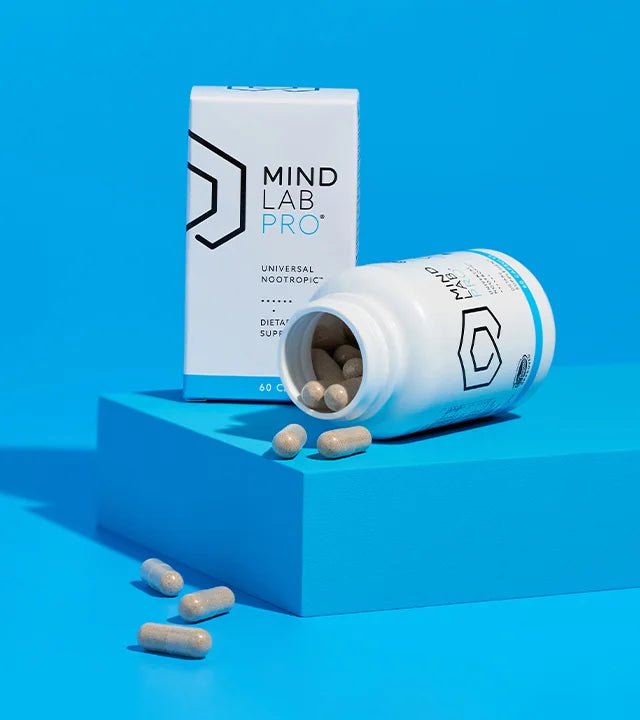
Mind Lab Pro®: Clean cognition routine without cannabinoid uncertainty

If your interest in CBDA is really about brain function and mood stability—but you want a more consistent, mainstream, stimulant-free approach—Mind Lab Pro® is a practical alternative. It’s a non-cannabinoid nootropic stack designed for focus, memory, calm clarity, and long-range brain health—without the variability and legal gray zones that can come with hemp-derived compounds. It also nourishes the brain, promotes growth of new brain cells, and supports long-range brain well being.
Mind Lab Pro® Ingredients (per serving): Citicoline (CDP Choline) 250mg, Phosphatidylserine (from sunflower lecithin) 100mg, Bacopa monnieri 150mg (24% bacosides), Organic Lion’s Mane Mushroom 500mg (fruit and mycelium), Maritime Pine Bark Extract 75mg (95% proanthocyanidins), N-Acetyl L-Tyrosine 175mg, L-Theanine 100mg, Rhodiola rosea 50mg (3% rosavins and 1% salidrosides), NutriGenesis® Vitamin B6 2.5mg, Vitamin B9 100mcg, Vitamin B12 7.5mcg.
How MLP relates to CBDA: CBDA is being explored for unique biochemical pathways that are still early-stage in humans. Mind Lab Pro® takes a different approach: it supports cognition using well-known nootropic nutrients and adaptogens in a stimulant-free daily stack—making it a simpler “daily driver” for focus, clarity, and memory routines.
Mind Lab Pro® is research-backed.
- Study 1: 30 days of Mind Lab Pro® improved information processing speed compared with placebo.(11)
- Study 2: 30 days enhanced several memory functions, including working-memory and visual memory.(12)
- Study 3: 60 days did not improve cognition, but was linked to EEG network changes suggesting improved coordination between brain regions.(13)
Further studies on Mind Lab Pro are now underway. Learn more:Link
Summary
CBDA is the raw, acidic precursor to CBD—and it’s gaining attention for therapeutic applications because it may have unique benefits that differ from CBD, especially in COX-2–related pathways to reduce inflammation and serotonin-linked pathways to reduce nausea.
The key reality is that CBDA is still earlier than CBD in the human-evidence timeline: we have strong mechanistic and preclinical findings, plus emerging human pharmacokinetic research, but not a deep bench of large clinical outcome trials yet.
If you explore CBDA and its potential health benefits, prioritize product quality and third-party testing, understand that heat converts CBDA to CBD, and be cautious with medication interactions and liver considerations. And if your main goal is cognitive support without cannabinoid uncertainty, a stimulant-free, research-backed nootropic stack can be the more reliable daily routine.
References
- Choi, N. G., Marti, C. N., & Choi, B. Y. (2024). Prevalence of cannabidiol use and correlates in U.S. adults. Drug and Alcohol Dependence Reports, 13, 100289. Link
- Technavio. (2024). Cannabinoids Market Analysis North America, Europe, APAC, South America, Middle East and Africa - US, Canada, The Netherlands, Australia, Germany - Size and Forecast 2024-2028. Technavio. Link
- Singh, S. K., & colleagues. (2026). Therapeutic potential of acidic cannabinoids: an update. Journal of Cannabis Research. Link
- Medical News Today. (2024). What is CBDA and how is it different from CBD? Medical News Today. Link
- Fućak, T., & colleagues. (2023). Mechanism and kinetics of CBDA decarboxylation into CBD in hemp samples. Food Measurement. Link
- Takeda, S., Okajima, S., & colleagues. (2008). Cannabidiolic acid as a selective cyclooxygenase-2 inhibitory component in cannabis. Drug Metabolism and Disposition. Link
- Bolognini, D., Rock, E. M., & colleagues. (2013). Cannabidiolic acid prevents vomiting in Suncus murinus and nausea-induced behaviour in rats by enhancing 5-HT1A receptor activation. British Journal of Pharmacology. Link
- Takeda, S., Usami, N., & colleagues. (2014). Down-regulation of cyclooxygenase-2 (COX-2) by cannabidiolic acid in human breast cancer cells. Journal of Toxicological Sciences. Link
- Bonn-Miller, M. O., & colleagues. (2025). The pharmacokinetics and pharmacodynamics of a hemp-derived full-spectrum oral cannabinoid product containing cannabidiol/cannabidiolic acid and THC/THCA. Cannabis and Cannabinoid Research. Link
- Florian, J., & colleagues. (2025). Cannabidiol and liver enzyme level elevations in healthy adults: A randomized clinical trial. JAMA Internal Medicine. Link
- Utley, A., Gonzalez, Y., & Imboden, C. A. (2023). The efficacy of a nootropic supplement on information processing in adults: A double blind, placebo controlled study. Biomed J Sci & Tech Res, 49(1). Link
- Abbott-Imboden, C., Gonzalez, Y., & Utley, A. (2023). Efficacy of the nootropic supplement Mind Lab Pro on memory in adults: Double blind, placebo-controlled study. Human Psychopharmacology: Clinical and Experimental, e2872. Link
- O’Reilly, D., Bolam, J., Delis, I., & Utley, A. (2025). Effect of a plant-based nootropic supplement on perceptual decision-making and brain network interdependencies: A randomised, double-blinded, and placebo-controlled study. Brain Sciences, 15(3), 226. Link
*These statements have not been evaluated by the Food and Drug Administration. This product is not intended to diagnose, treat, cure, or prevent any disease.