
Coffee with L-theanine is one of the most popular “calm focus” pairings in the nootropics world—and for good reason. Coffee delivers caffeine, a fast-acting stimulant that can improve alertness, reaction time, and mental energy. L-theanine is a tea-derived amino acid (especially associated with green tea and black tea) known for “relaxed alertness”: a calmer mind with more controlled attention and less edge.
Globally, tea is the most consumed beverage in the world after water, and one 2024 global market report notes that drinking tea is “a daily ritual for half of the world’s population.” In parallel, the USDA’s latest world coffee outlook estimates global coffee consumption at ~173.9 million 60-kg bags (2025/26). Put together, they’re often described as the best of both worlds: coffee’s mental lift, with fewer jitters and distractions.
If you clicked this article, you’re likely here for a practical answer: How do coffee and L-theanine work? How does this combination affect human cognition? How do you dose the stack without messing up sleep? And—if you want a simple, consistent routine—what’s the best way to add L-theanine to your morning coffee?
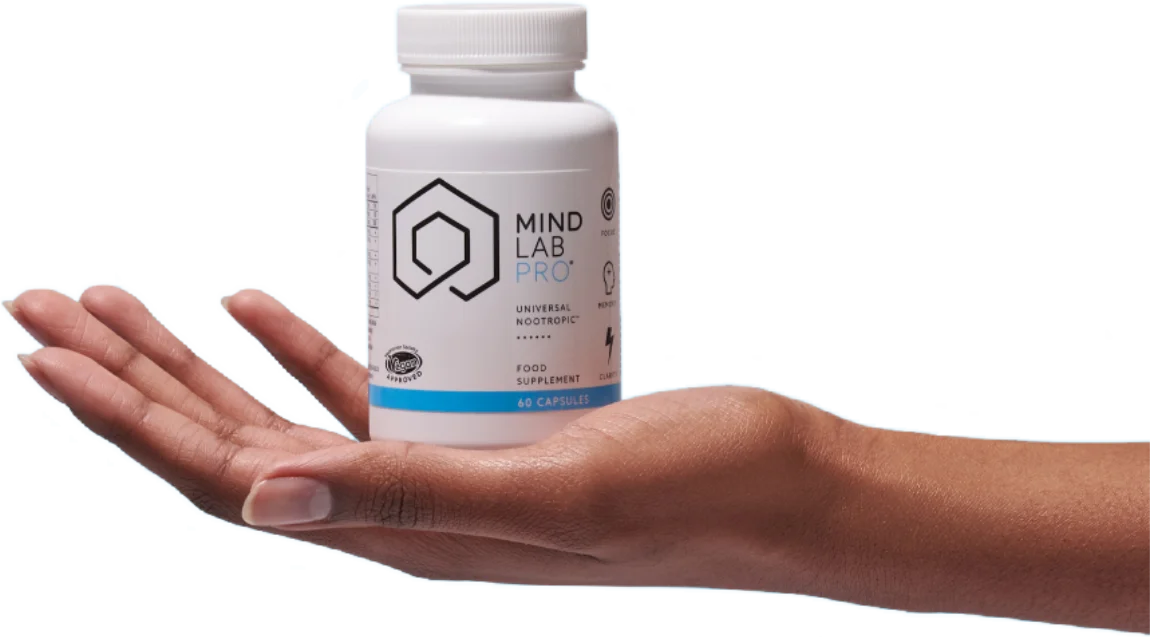
In this guide, we’ll cover L-theanine benefits, coffee’s history and cognitive upside, and the science-backed advantages drinking coffee with a side of the L-theanine—plus a simple way to stack coffee with Mind Lab Pro®, which supplies 100 mg L-theanine per serving. Let's get to it!
Key Takeaways
- Drinking coffee (caffeine consumption) can improve alertness, reaction time, and attention—but too much coffee can also cause jitters, anxiety, and sleep disruption in sensitive people.
- L-theanine is a tea-derived amino acid; it's part of the reason why tea consumption promotes “relaxed alertness” associated with alpha brainwave activity and a calmer mental state.
- The combination is research-backed: multiple placebo-controlled studies report improved attention/task performance and/or smoother mood effects versus caffeine alone in certain contexts and doses.
- A common starting strategy is coffee + 100–200 mg L-theanine taken together in the morning—then adjust based on sensitivity and goals.
- For a simple routine, Mind Lab Pro® provides 100 mg L-theanine (plus other nootropics) and can be taken alongside your morning coffee for a more balanced focus experience.
Disclaimer
This article is for educational purposes only and is not medical advice. Caffeine can affect blood pressure, heart rate, anxiety, and sleep. Consult a qualified healthcare professional before using caffeine, L-theanine, or any dietary supplement—especially if you have a medical condition, take prescription medications, have a history of high blood pressure, anxiety, sleep problems, or heart rhythm issues, or if you are pregnant/nursing or planning surgery. Take caution with how much caffeine you consume; taking caffeine in excess may have significant adverse effects, especially on an empty stomach. Supplements are not drugs and are not intended to diagnose, treat, cure, or prevent any disease.
What Is L-Theanine?

L-theanine is a naturally occurring amino acid found primarily in tea leaves (Camellia sinensis). It’s one of the reasons tea is often described as “calming but clear” rather than wired or edgy. While coffee tends to deliver a more forceful jolt, tea is famous for a smoother mental state—partly because tea naturally contains both caffeine and L-theanine.
In modern nootropics, L-theanine is used as a calm-focus ingredient: it doesn’t typically “push” stimulation. Instead, it supports a steadier mental environment where attention feels more controlled and stress reactivity feels lower. In a clinical report on mental state, L-theanine was associated with increased alpha-band brain activity—commonly linked with relaxation without drowsiness.(1)
If you want a deeper breakdown of L-theanine’s role as a nootropic, see: L-Theanine Benefits.
L-Theanine Benefits (Brain and Cognitive Support)
Calm Focus (Relaxed Alertness)
L-theanine’s signature reputation is described as relaxed alertness. As it works to settle the central nervous system, L-Theanine may improve focus while maintaining a sense of calm. In practical terms, people use it for “mental smoothness”: less tension, decreased mind wandering, and more ability to stay on task without feeling overstimulated.
Stress Resilience and Composure
L-theanine is also suggested to reduce stress and promote greater resilience. In a placebo-controlled study, L-theanine reduced psychological and physiological stress responses during an acute stress task (including changes in heart rate and stress-related markers).(2) That’s part of why many people find L-theanine helpful during high-pressure workdays or when caffeine tends to feel too intense.
Discover top nootropics for stress & burnout relief
Attention and Mental State (Brain Activity Findings)
EEG research has examined how L-theanine affects brain activity during attention tasks. One study measured alpha-band oscillatory activity during a demanding visuo-spatial attention task, in which subjects focused on a visual stimuli while EEG was recorded. Findings suggest report that L-theanine influenced tonic alpha-band activity patterns and appeared to target specific attention "circuitry" in the brain—often interpreted as changes in overall attentional state during demanding cognitive performance.(3)
What Is Coffee (and Why Does It Feel Like a Nootropic)?

Coffee is one of the most widely used cognitive tools in the world. The active compound most responsible for coffee’s “brain boost” is caffeine, a stimulant best known for blocking adenosine receptors—reducing the perception of fatigue and increasing alertness.(4) That’s why coffee can feel like an instant upgrade for cognitive function, especially when it comes to focus, energy, alertness and drive.
Whether coffee “counts” as a nootropic depends on how strict your definition is. Caffeine can improve cognitive performance in several domains, but it can also come with tradeoffs (jitters, anxiety, sleep disruption). For a nootropics-centered perspective, see: Is Caffeine a Nootropic? and Effects of Caffeine on Cognitive Tasks.
A Quick History of Coffee
Coffee’s story is deeply tied to productivity culture—long before modern workplaces existed. According to traditional accounts, coffee’s origins trace to Ethiopia, with cultivation spreading to the Arabian Peninsula (Yemen) and later across the world through trade and culture.(5) Coffeehouses became hubs of conversation, commerce, and intellectual life—earning nicknames like “penny universities” in some historical contexts.
Today, coffee is less a beverage and more a daily performance ritual: a reliable stimulant (along with caffeinated energy drinks) that helps people shift into work mode, social mode, or training mode.
Coffee’s Benefits (Cognition, Mood, and Health Context)
Alertness, Reaction Time, and Attention
As an adenosine receptor antagonist, caffeine is widely recognized for improving vigilance, reaction time, and attention—especially when fatigue is present.(6) Many people feel this as a cleaner ability to stay awake, stay engaged, and push through mentally demanding tasks.
Read more: Nootropics for ADHD
Mood and Motivation (Acute Lift)
Caffeine can improve subjective energy and motivation, especially at low-to-moderate doses. But mood benefits are dose-dependent: too much caffeine can increase anxiety or irritability in sensitive individuals.
Long-Range Health Context
Coffee is one of the most studied beverages in public health research. An umbrella review of meta-analyses found coffee consumption was consistently associated with reduced risk of significant health issues in observational research (association does not prove causation, but the pattern is notable).(7)
Where Coffee Backfires
Coffee’s main downside is that caffeine is powerful. Too high a dose—or caffeine too late in the day—can disrupt sleep, and sleep loss reliably harms working memory, attention control, and mood. If coffee makes you feel edgy, scattered, or anxious, the problem often isn’t coffee itself—it’s dosage, timing, and individual sensitivity.
For practical caffeine guidance, see: Caffeine for Studying and Caffeine and Memory.
L-Theanine + Coffee (Caffeine): Why the Stack Works

This is the core idea: caffeine can sharpen attention and energy, but it can also increase jitteriness, distractibility, and “wired” feelings. L-theanine is often used to smooth that stimulation curve—supporting calm focus so you get coffee’s benefits with fewer downsides.
In a sense, this “stack” isn’t new. Tea naturally contains caffeine and L-theanine, which is why tea has long been associated with smooth, composed mental clarity. The modern twist is simply taking L-theanine as a supplement alongside coffee for more precise dosing.
Research-Backed Benefits of L-Theanine + Caffeine
1) Cognition + Mood: Better Performance Together
In a randomized, placebo-controlled crossover study, researchers tested L-theanine (250 mg), caffeine (150 mg), and the combination on cognition and mood. The combination produced improvements on several cognitive measures (including simple reaction time, aspects of rapid visual information processing, and working-memory-related reaction time) and also improved certain mood ratings (such as higher alertness and lower tiredness) compared with placebo.(8) This is one of the most cited studies supporting the “calm focus” synergy concept.
2) Task Switching and Attention Control (Lower Doses)
Not all benefits require high doses. Might caffeine improve task switching at a low-to-moderate dose? In a placebo-controlled study comparing 50 mg caffeine with and without 100 mg L-theanine, researchers reported improvements on demanding attention-switching task performance in healthy adults when the two were co-ingested. One of the key measures was critical flicker fusion threshold (CFFT).
Researchers concluded their combined effects may improve task performance in attention switching accuracy under cognitive load.(9) This supports the idea that even modest coffee-like caffeine can pair well with a moderate L-theanine dose.
3) Attention Effects at Higher Doses
In another placebo-controlled study on acute attention outcomes, researchers compared theanine, caffeine, and the combination. They concluded that theanine and caffeine appeared to have additive effects on attention at higher doses—supporting the concept that the combination may enhance attention more than either alone in certain dosing contexts.(10)
4) Demanding Cognitive Tasks + Subjective Alertness
A placebo-controlled study testing 97 mg L-theanine + 40 mg caffeine reported improved accuracy on a demanding task-switching measure and improvements in subjective alertness/tiredness ratings. Researchers concluded this combination helped focus attention during a demanding cognitive task.(11)
5) L-Theanine + Caffeine Improves Task Switching (But Not Intersensory Attention)
In a randomized, double-blind, placebo-controlled, cross-over study, subjects were administered a tea-like dose of L-theanine (97 mg) + caffeine (40 mg) or placebo. Participants completed two attention tasks plus a self-report questionnaire at baseline, then 10 and 60 minutes after consumption.
The main finding was specific: the L-theanine + caffeine combo significantly improved attention on a task-switching (“switch”) task compared with placebo. However, it did not significantly improve “intersensory attention” (attention across different sensory modalities) and did not significantly boost subjective alertness—supporting the idea that the combo may sharpen certain types of executive attention without necessarily making people feel more alert.(12)
6) Cerebral Blood Flow Context (A Useful Reality Check)
Not every study is a slam dunk, and that’s important. In a double-blind, placebo-controlled study examining caffeine and L-theanine alone and together, researchers reported that adding L-theanine eliminated caffeine’s vasoconstrictive effect at the tested levels—and also eliminated caffeine’s behavioral performance effects in that context.(13) The takeaway is not “don’t stack them”—it’s that effects depend on dose, outcome measures, and context. The combination is not a guaranteed performance multiplier in every setting.
How to Take Coffee with L-Theanine (Simple Dosing Guide)
There is no universal perfect dose, but a practical starting point for most people is:
- 1 cup of coffee (often ~80–120 mg caffeine, depending on brew and serving size)
- 100–200 mg L-theanine taken at the same time
Many people prefer using more L-theanine than caffeine to reduce jitteriness. A commonly discussed ratio is 2:1 theanine:caffeine (for example, 200 mg L-theanine with ~100 mg caffeine). If you’re sensitive to caffeine, start smaller: half-caff coffee or a smaller serving + 100 mg L-theanine.
Timing tip: If sleep is a priority, keep caffeine earlier in the day. If caffeine disrupts your sleep, it will quietly erase many of the cognitive gains you’re trying to create.
For stacking strategies, see: Best Caffeine + L-Theanine Stack and Nootropics vs Coffee.
Best L-Theanine Companion to Coffee: Mind Lab Pro®

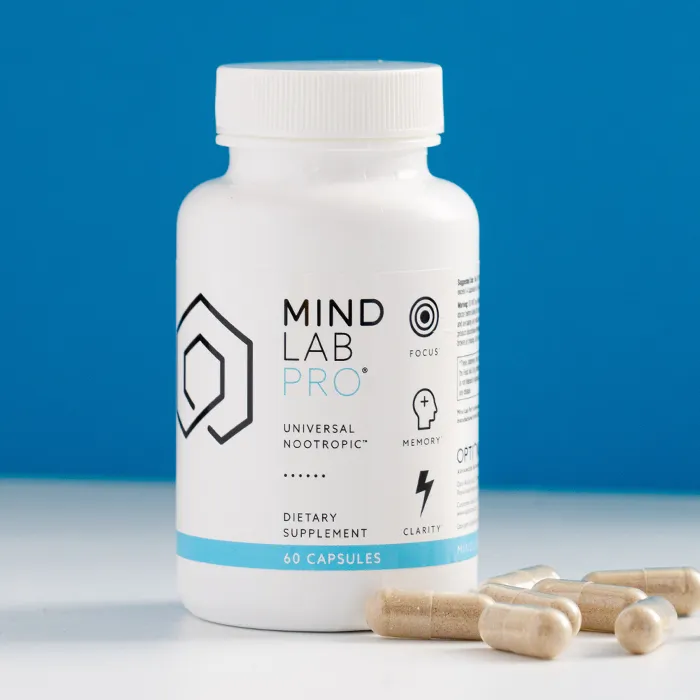
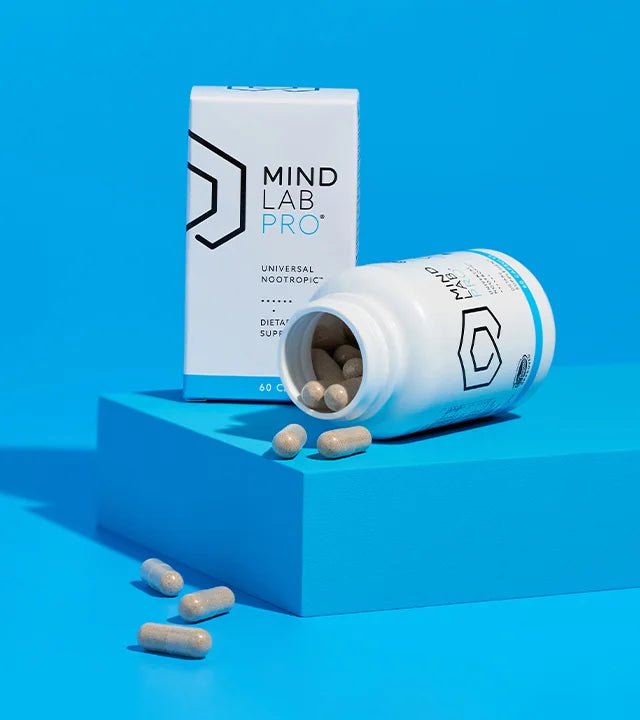
If your goal is to make coffee feel smoother and more productive, Mind Lab Pro® is a particularly clean companion because it supplies 100 mg L-theanine per serving—right in the “stackable” range—and it’s stimulant-free, meaning it won’t add extra caffeine on top of your first cup of coffee.
Mind Lab Pro® Ingredients (per serving): Citicoline (CDP Choline) 250mg, Phosphatidylserine (from sunflower lecithin) 100mg, Bacopa monnieri 150mg (24% bacosides), Organic Lion’s Mane Mushroom 500mg (fruit and mycelium), Maritime Pine Bark Extract 75mg (95% proanthocyanidins), N-Acetyl L-Tyrosine 175mg, 100 mg of L-Theanine , Rhodiola rosea 50mg (3% rosavins and 1% salidrosides), NutriGenesis® Vitamin B6 (2.5 mg), Vitamin B9 (100 mcg), Vitamin B12 (7.5 mcg).
For coffee drinkers, this is a practical daily move: coffee provides the immediate “wake up and go” effect, while Mind Lab Pro® supports broader cognitive foundations (memory, focus, stress resilience, and brain health) in a stimulant-free way that can extend beyond the caffeine window.
Mind Lab Pro® Is Research-Backed
Unlike most brain supplements on the market, Mind Lab Pro® has been tested in multiple randomized, placebo-controlled human studies—giving it a stronger evidence foundation than typical “brain pills.”
- Study 1 (processing speed): In a double-blind, placebo-controlled trial, 30 days of Mind Lab Pro® was associated with improvements on reaction-time and anticipation-type measures versus placebo in healthy volunteers—an outcome many people interpret as “sharper mental speed.”(14)
- Study 2 (memory, including working memory): In a double-blind, placebo-controlled memory study using a standardized battery, 30 days of Mind Lab Pro® improved performance across multiple memory domains versus placebo, including working-memory-related outcomes—especially relevant if your “coffee problem” is that you feel awake but still scattered or forgetful.(15)
- Study 3 (EEG network efficiency): In a 60-day randomized, double-blind, placebo-controlled study, Mind Lab Pro® did not improve speed/accuracy on the behavioral task versus placebo, but was associated with EEG network changes interpreted as increased coordination between brain regions—more of a brain-efficiency signal than an acute performance spike.(16)
Learn more about the Mind Lab Pro studies Link
Top Caffeine + L-Theanine Pill: Performance Lab® Caffeine 2

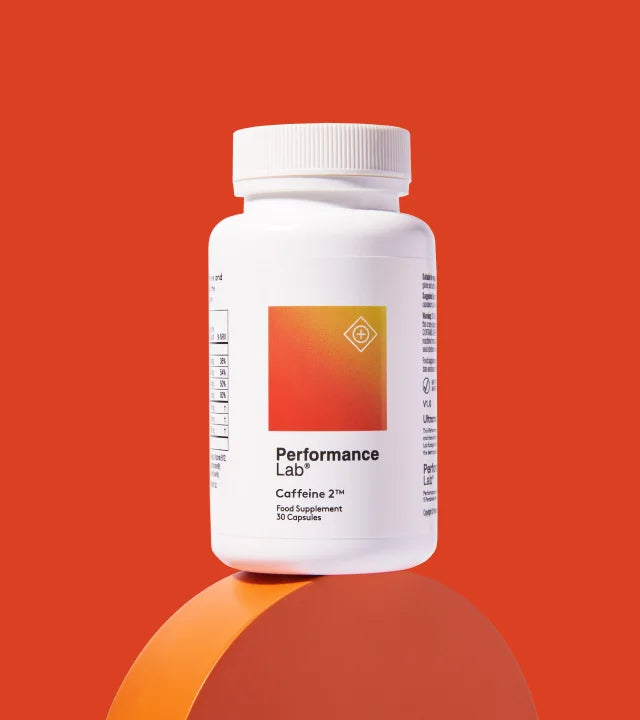
This is an ultramodern caffeine pill that includes L-Theanine and other complementary nootropics to help it work better. The formula:
Ingredients: Natural Caffeine 50 mg (from Coffea robusta seeds), L-Theanine 100 mg, L-Tyrosine 250 mg, NutriGenesis® Caffeine Balance B-Complex (Riboflavin 500 mcg, B6 750 mcg, B9 170 mcg, B12 2 mcg).
Caffeine 2 gives you greater control over your intake so you can optimize stimulation with less risk of side effects. Each capsule is 50 mg of caffeine plus 100 mg L-Theanine. Start with one capsule, see how you perform. Then add capsules incrementally: 2 capsules, 3 capsules, even up to 5 capsules until you hit your performance peak.
In addition, Caffeine 2 includes stimulation balancers (L-theanine, L-Tyrosine and NutriGenesis B-Vitamins). The end result is performance-tuned stimulation: Smoother, cleaner, sharper vitality with fewer risks and side effects.
Great stuff! I won't take caffeine without the L-theanine. This is the perfect blend and also has added B vitamins!Cindy S
Summary
Coffee and L-theanine have a synergistic effect that makes it a classic “calm focus” stack. Positive effects: caffeine provides alertness and mental energy, while L-theanine helps smooth the edge—supporting more controlled attention and a steadier mental state.
Research includes multiple placebo-controlled studies showing the combination can improve aspects of cognition and mood compared with placebo (and sometimes compared with caffeine alone), including during cognitively demanding tasks, while potentially countering the negative effects of overstimulation.
If you want a simple morning routine, Mind Lab Pro® is an especially clean companion to coffee because it provides 100 mg L-theanine (plus other evidence-backed nootropics) without adding extra caffeine. Pairing Mind Lab Pro® with your morning coffee is a practical way to get coffee’s immediate lift while supporting broader cognitive foundations beyond the caffeine window.
References
- Nobre, A. C., Rao, A., & Owen, G. N. (2008). L-theanine, a natural constituent in tea, and its effect on mental state. Asia Pacific Journal of Clinical Nutrition, 17(Suppl 1), 167–168. Link
- Kimura, K., Ozeki, M., Juneja, L. R., & Ohira, H. (2007). L-theanine reduces psychological and physiological stress responses. Biological Psychology, 74(1), 39–45. Link
- Gomez-Ramirez, M., Kelly, S. P., Montesi, J. L., & Foxe, J. J. (2009). The effects of L-theanine on alpha-band oscillatory brain activity during a visuo-spatial attention task. Brain Topography, 22(1), 44–51. Link
- McLellan, T. M., Caldwell, J. A., & Lieberman, H. R. (2016). A review of caffeine’s effects on cognitive, physical and occupational performance. Neuroscience & Biobehavioral Reviews, 71, 294–312. Link
- Encyclopaedia Britannica. (2026). History of coffee. Britannica. Link
- McLellan, T. M., Caldwell, J. A., & Lieberman, H. R. (2016). A review of caffeine’s effects on cognitive, physical and occupational performance. Neuroscience & Biobehavioral Reviews, 71, 294–312. Link
- Poole, R., Kennedy, O. J., Roderick, P., Fallowfield, J. A., Hayes, P. C., & Parkes, J. (2017). Coffee consumption and health: Umbrella review of meta-analyses of multiple health outcomes. BMJ, 359, j5024. Link
- Haskell, C. F., Kennedy, D. O., Milne, A. L., Wesnes, K. A., & Scholey, A. B. (2008). The effects of L-theanine, caffeine and their combination on cognition and mood. Biological Psychology, 77(2), 113–122. Link
- Owen, G. N., Parnell, H., De Bruin, E. A., & Rycroft, J. A. (2008). The combined effects of L-theanine and caffeine on cognitive performance and mood. Nutritional Neuroscience, 11(4), 193–198. Link
- Kahathuduwa, C. N., Dassanayake, T. L., Amarakoon, A. M. T., & Weerasinghe, V. S. (2017). Acute effects of theanine, caffeine and theanine-caffeine combination on attention. Nutritional Neuroscience, 20(6), 369–377. Link
- Giesbrecht, T., Rycroft, J. A., Rowson, M. J., & De Bruin, E. A. (2010). The combination of L-theanine and caffeine improves cognitive performance and increases subjective alertness. Nutritional Neuroscience, 13(6), 283–290. Link
- Dodd, F. L., Kennedy, D. O., Riby, L. M., & Haskell-Ramsay, C. F. (2015). A double-blind, placebo-controlled study evaluating the effects of caffeine and L-theanine both alone and in combination on cerebral blood flow, cognition and mood. Psychopharmacology, 232(14), 2563–2576. Link
- Einöther, S. J. L., Martens, V. E. G., Rycroft, J. A., & De Bruin, E. A. (2010). L-theanine and caffeine improve task switching but not intersensory attention or subjective alertness. Appetite, 54(2), 406–409. Link
- Utley, A., Gonzalez, Y., & Imboden, C. A. (2023). The efficacy of a nootropic supplement on information processing in adults: Double blind, placebo controlled study. Biomed J Sci & Tech Res, 49(1). Link
- Abbott-Imboden, C., Gonzalez, Y., & Utley, A. (2023). Efficacy of the nootropic supplement Mind Lab Pro on memory in adults: Double blind, placebo-controlled study. Human Psychopharmacology: Clinical and Experimental, e2872. Link
- O’Reilly, D., Bolam, J., Delis, I., & Utley, A. (2025). Effect of a plant-based nootropic supplement on perceptual decision-making and brain network interdependencies: A randomised, double-blinded, and placebo-controlled study. Brain Sciences, 15(3), 226. Link
*These statements have not been evaluated by the Food and Drug Administration. This product is not intended to diagnose, treat, cure, or prevent any disease.