

Methylene blue is having a moment in the nootropics world — but it’s not a trendy new supplement. It’s a century-old medical dye and medication that appears on the World Health Organization Model List of Essential Medicines.(1) It has surged in popularity as a nootropic in recent years; R&D World reported that Google Trends showed a dramatic jump in searches for “methylene blue” in February 2025 due to viral attention.
So why is it being talked about as a “brain booster”? The short answer: at low doses, methylene blue has been studied for its effects on brain energy metabolism and neural network activity. In a study in healthy adults, a single low oral dose was associated with increased brain activity during attention and short-term memory tasks and a 7% increase in correct responses during memory retrieval versus placebo.(2)
If you clicked this article, you’re likely here for clarity: Is methylene blue a legit nootropic? What does the research actually show? What are the risks — especially with antidepressants? And if you decide it’s not worth the medical complexity, what’s a safer, more reliable approach to cognitive support? Let’s break it down.
Key Takeaways
- Methylene blue is a long-used medical compound and is on the World Health Organization (WHO) Essential Medicines List.
- It is used as a medical dye in clinical settings, and is valued for its deep blue color.
- An FDA-approved form is indicated for a rare blood disorder called methemoglobinemia, but not for “brain enhancement.”
- Human neuroimaging studying methylene blue's effect suggests low doses may modulate brain activity during attention and short-term memory tasks and may improve memory consolidation & retrieval in healthy adults.
- Methylene blue is a potent reversible MAO-A inhibitor — which is why it can be dangerous with serotonergic medications (potential risk of serotonin syndrome).
- This liquid chemical should be avoided in G6PD deficiency due to risk of hemolysis (red blood cells break open, limiting oxygenation).
- If your goal is cognitive support without prescription-drug risk, start with lifestyle and consider evidence-backed nootropic options rather than experimenting.
Disclaimer
This article is for educational purposes only and is not medical advice. Methylene blue is an FDA-regulated medication used under medical supervision for specific human health indications; it is not approved as a dietary supplement for cognitive enhancement. Because methylene blue treatment can interact dangerously with serotonergic medications and may be unsafe in certain medical conditions (including G6PD deficiency), consult a qualified healthcare professional before use. Supplements are not drugs, are not part of medical practice, and are not intended to diagnose, treat, cure, or prevent any disease.
What is methylene blue?

A visually striking blue liquid, methylene blue (methylthioninium chloride) is a synthetic dye with redox (mitochondrial electron transport chain) properties that may help the body's energy systems to run more smoothly.
As it helps mitochondria to shuttle electrons more efficiently, methylene blue is suggested to reduce cell-damaging reactive oxygen species (ROS) in certain conditions. However, precision is key; improper dosing can actually raise ROS levels.
Clinically, methylene blue has been used for decades in multiple settings, and an FDA-approved prescription product (ProvayBlue®) is indicated for the treatment of acquired methemoglobinemia, which is a rare blood disorder where red blood cells can't carry oxygen well leading to oxygen-depleted tissues.(3) Methylene blue health benefits may help restore oxygen-carrying capacity to red blood cells.
It is not one of the commonly used food dyes; however, it is used as a laboratory dye to stain biological tissues to make things easier to see in certain procedures. Outside of its medical uses, methylene blue's effect has been explored in research for mitochondrial function, neuroprotection, and brain metabolism — which is where the “nootropic” conversation begins.
Why methylene blue is considered a nootropic
The nootropic interest is largely built on the fact brain performance relies on energy. When brain energy metabolism is compromised (fatigue, aging, stress, inflammation, poor cerebral blood flow, mitochondrial dysfunction), attention and memory suffer.
Some researchers have proposed that low-dose methylene blue can support mitochondrial efficiency by acting as an “electron cycler,” potentially improving cellular energy dynamics under certain conditions.(4)
Low dose vs high dose matters (hormesis)
One of the most important concepts to keep in mind with methylene blue is its hormetic dose response — meaning low and high doses can have very different (even opposite) effects. A review focused on memory enhancement describes this “low-dose helpful / high-dose harmful” pattern and ties it to mitochondrial activity.(4) This is one reason casual experimentation is risky.
About that blue color...
Methylene blue is a deep blue dye with a few “personality quirks” that make it show up differently depending on concentration, lighting, and chemistry. In solution it’s usually an intense royal / navy blue. Thin layers can look bright cyan, while concentrated solutions look very dark blue (almost black-blue). It can change color with chemistry (the cool part): Methylene blue is a redox dye. In its oxidized form it remained blue; when reduced the blue color faded quickly to become nearly colorless. When oxygen was reintroduced, it turned blue again. Methylene blue isn’t used as a U.S. food color additive. The common food blues are typically FD&C Blue dyes (like Brilliant Blue FCF).
How methylene blue may work in the brain

Methylene blue has been studied for several overlapping mechanisms. Here’s the plain-English version of what researchers have suggested about how it works:
- Supports brain energy metabolism: This might just be methylene blue's chemical superpower. As it improves mitochondrial function and electron transfer, methylene blue may help mitochondria generate energy more efficiently in certain contexts. Read more: top supplements for energy
- Influences oxidative stress balance: At low doses, it’s often discussed as having antioxidant-leaning effects (again: dose matters).
- Modulates neural networks: Human neuroimaging studies suggest changes in brain network activity/connectivity after low-dose administration.(5)
- Acts as an MAO-A inhibitor: This is the “risk mechanism.” Methylene blue is a potent reversible inhibitor of MAO-A, which can raise serotonin levels when combined with serotonergic drugs.
What does the human research show?
Most of the “methylene blue nootropic” hype online is far more confident than the actual evidence. But there is human research worth knowing.
Study 1: fMRI + memory retrieval (healthy adults)
One of the most cited human studies is a multimodal randomized functional MRI study in healthy adults. Researchers reported that low-dose methylene blue increased fMRI activity during sustained attention and short-term memory tasks. The same researchers associated it with a 7% increase in correct responses during memory retrieval versus placebo.(3) This doesn’t prove “methylene blue makes everyone smarter,” but it does suggest measurable brain-network and performance effects in a controlled setting.
Read more: nootropics for memory
Study 2: functional connectivity changes (healthy adults)
In a follow-up line of work, researchers tested whether a single low oral dose modulates functional connectivity in healthy adults. The study reported changes in task-related network activity and stronger resting-state connectivity across regions linked to perception and memory functions, supporting the idea that low-dose methylene blue may modulate neural network behavior.(5)
What the evidence does not establish yet
- Long-term cognitive enhancement in healthy people: One-time or short studies do not equal long-term, real-world benefit, including health concerns related to age-related mild cognitive impairment.
- Best dosing strategy for “nootropic use”: Medical labeling is for medical indications, not biohacking. The nootropic-style dosing conversation is not FDA-validated.
- Safety of chronic use: Especially with the interaction profile, chronic use is not something to casually assume is safe.
If you want a big-picture lens on “which nootropics actually have real human evidence,” see: Nootropics That Actually Work (According to Science).
Potential benefits people pursue (and what’s realistic)
1) Memory and recall
The best human signal for a “memory effect” is the randomized fMRI study showing improved memory retrieval performance alongside increased task-related brain activity.(3) That supports a plausible acute benefit on certain memory retention and retrieval tasks — but it’s not the same as proving it prevents cognitive decline or dramatically improves everyday memory.
2) Attention and mental stamina
In the same research line, methylene blue was associated with increased fMRI activity during sustained attention tasks.(3) That aligns with the “brain energy support” hypothesis — but again, it’s measured in controlled tasks, not in the chaos of real life. Read more: nootropics for attention
3) “Brain energy” and mitochondrial support
This is the most common nootropic framing: methylene blue as a mitochondrial enhancer. The mechanistic and review literature discusses its effects on cellular respiration, cytochrome oxidase activity, and the low-dose/hormesis concept.(6) Just keep the guardrails: mechanisms do not guarantee outcomes, and outcomes do not guarantee safety for your specific situation.
Risks, contraindications, and why this is not a casual supplement
Is methylene blue safe? This section matters even more than the “benefits” section. Methylene blue is pharmacologically active and can be medically dangerous in the wrong context.
1) Serious drug interaction risk: serotonin syndrome
ProvayBlue® labeling includes a boxed warning about serotonin syndrome when used with serotonergic drugs (e.g., SSRIs, SNRIs, MAOIs). This risk is supported by research showing methylene blue's medical uses position it as a potent reversible MAO-A inhibitor.(6)
In real terms: if you’re on antidepressants or other serotonergic agents, methylene blue is not something to “try.”
2) G6PD deficiency: hemolysis risk
Drug labeling and clinical references warn to avoid chemical grade methylene blue in patients with G6PD deficiency (a condition that makes red blood cells more fragile) due to risk of hemolysis and worsening anemia.(7)
3) Other practical adverse effects
Medical labeling also notes common effects like dizziness, headache, nausea, sweating, discoloration of skin/urine, and interference with some monitoring devices/labs. (The blue urine effect is dramatic but not inherently dangerous — the interaction risks are the real issue.)
4) Quality and sourcing problems in “nootropic” marketplaces
Methylene blue sold online as a “supplement” may vary in purity and may not be pharmaceutical grade. With a compound that has meaningful interaction risks, quality control matters.
If you’re considering methylene blue for cognitive support
If you’re still interested after reading the risks, the safest next step is not Reddit — it’s a clinician conversation. Here are the most responsible “screening questions” to think through:
- Are you taking SSRIs/SNRIs, stimulants, migraine meds, or other serotonergic agents? (If yes, this is a hard stop unless a clinician is managing it.)
- Do you know your G6PD status? (If unknown, that’s a risk.)
- Is your “brain fog” actually a sleep problem, stress/burnout, depression/anxiety, thyroid issue, or nutrient deficiency?
For broader context on legality and gray-area compounds, see: Legal Nootropics Guide.
Safer alternatives for “brain energy” and mental performance
If what you really want is cleaner focus, better memory consistency, and mental stamina — without prescription-drug interactions — you’ll usually get better ROI from three steps:
- Fix the obvious bottlenecks: sleep quality, stress load, sedentary lifestyle, and nutrition basics. Discover ultramodern sleep supplements
- Use caffeine strategically: dose and timing matter more than people think.
- Choose evidence-backed supplements: ingredients with human data and reliable manufacturing, rather than compounds with boxed warnings.
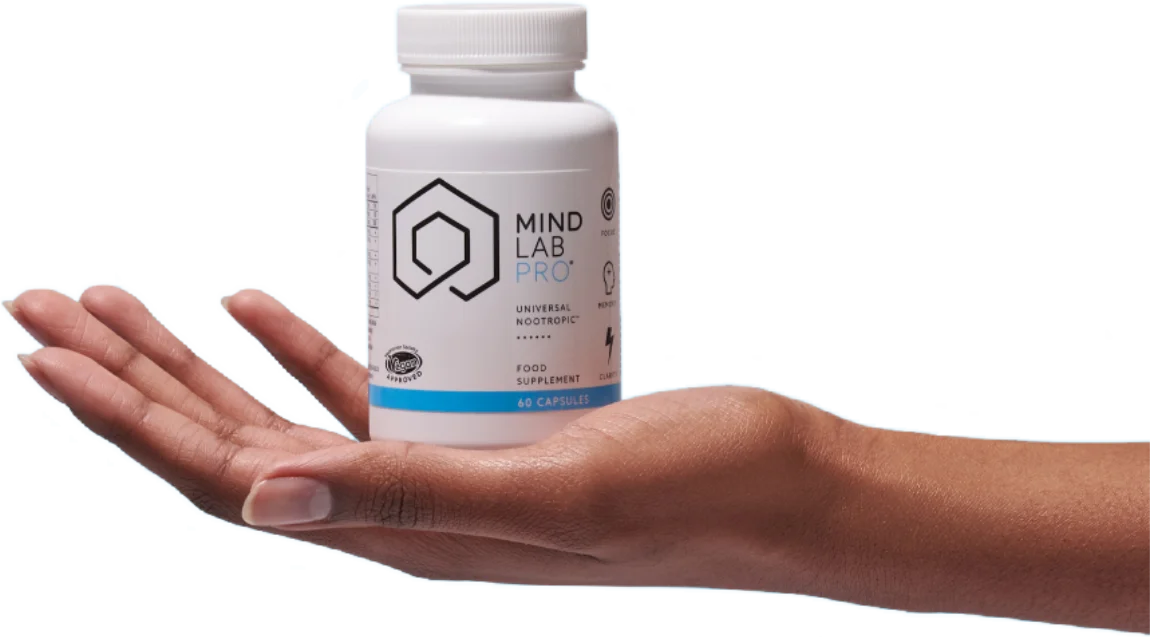
Mind Lab Pro®: Safe and convenient cognitive routine

If you’re drawn to methylene blue because you want “brain energy + performance,” but you’d prefer to avoid a prescription drug interaction profile, a supplement-based approach can be more practical for everyday use.
Mind Lab Pro® is a stimulant-free nootropic & brain health supplement that includes multiple evidence-backed ingredients and has been evaluated in randomized, placebo-controlled human studies as a finished formula.
Mind Lab Pro enhances cognitive function in many ways. It dispels brain fog, sharpens focus, promotes attention, bolsters mood, supports stress resistance, and helps enhance memory in many ways.
Mind Lab Pro® Ingredients (per serving): Citicoline (CDP Choline) 250mg, Phosphatidylserine (from sunflower lecithin) 100mg, Bacopa monnieri 150mg (24% bacosides), Organic Lion’s Mane Mushroom 500mg (fruit and mycelium), Maritime Pine Bark Extract 75mg (95% proanthocyanidins), N-Acetyl L-Tyrosine 175mg, L-Theanine 100mg, Rhodiola rosea 50mg (3% rosavins and 1% salidrosides), NutriGenesis® Vitamin B6 (2.5 mg), Vitamin B9 (100 mcg), Vitamin B12 (7.5 mcg).
Mind Lab Pro® is research-backed
Unlike commonly used nootropic stacks, clinical trials suggest various benefits with MLP usage, including apparent memory enhancing effects:
- Study 1: 30 days of Mind Lab Pro® improved measures tied to information processing speed compared with placebo.(8)
- Study 2: 30 days improved performance across multiple memory outcomes versus placebo using a standardized memory battery (including working-memory-related measures).(9)
- Study 3: 60 days did not improve speed/accuracy on the behavioral task versus placebo, but was associated with EEG network changes interpreted as increased coordination between brain regions.(10)
Learn more about the Mind Lab Pro studies Link
Summary
Methylene blue is not a typical “supplement nootropic.” It’s a powerful, pharmacologically active compound with legitimate medical uses and emerging human neuroimaging research suggesting supposed benefits for attention, memory networks, and memory retrieval.
But it is important to remember Methylene Blue also carries meaningful risks — especially for drug interactions and pre-exiting health concerns — because it is a potent MAO-A inhibitor and has a boxed warning for serotonin syndrome with serotonergic medications in FDA labeling.
If you’re considering methylene blue for cognitive enhancement, treat it like a medication decision, not a wellness trend. And if your goal is reliable, everyday cognitive support without that interaction profile, you’ll usually be better served by lifestyle fundamentals and evidence-backed supplement routines.
References
- World Health Organization. (2019). WHO Model List of Essential Medicines (21st List). Link
- Rodriguez, P., Zhou, W., Barrett, D. W., et al. (2016). Multimodal randomized functional MR imaging of the effects of methylene blue in the human brain. Radiology. Link
- U.S. Food and Drug Administration. (2017). ProvayBlue® (methylene blue) injection: Prescribing information (boxed warning; contraindications including G6PD deficiency). Link
- Rojas, J. C., Simola, N., Kermath, B. A., & Gonzalez-Lima, F. (2011/2012). Neurometabolic mechanisms for memory enhancement and neuroprotection of methylene blue. Progress in Neurobiology. Link-
- Rodriguez, P., Barrett, D. W., Telch, M. J., et al. (2017). Methylene blue modulates functional connectivity in the human brain. Brain Imaging and Behavior. Link
- Ramsay, R. R., Dunford, C., & Gillman, P. K. (2007). Methylene blue and serotonin toxicity: Inhibition of monoamine oxidase A (MAO A) confirms a theoretical prediction. British Journal of Pharmacology, 152, 946–951. Link
- National Library of Medicine. (2026). Methylene blue injection, USP 1% (DailyMed): Contraindication in G6PD deficiency due to hemolysis risk. Link
- Utley, A., Gonzalez, Y., & Imboden, C. A. (2023). The efficacy of a nootropic supplement on information processing in adults: A double blind, placebo controlled study. Biomed J Sci & Tech Res, 49(1). Link
- Abbott-Imboden, C., Gonzalez, Y., & Utley, A. (2023). Efficacy of the nootropic supplement Mind Lab Pro on memory in adults: Double blind, placebo-controlled study. Human Psychopharmacology: Clinical and Experimental, e2872. Link
- O’Reilly, D., Bolam, J., Delis, I., & Utley, A. (2025). Effect of a plant-based nootropic supplement on perceptual decision-making and brain network interdependencies: A randomised, double-blinded, and placebo-controlled study. Brain Sciences, 15(3), 226. Link
*These statements have not been evaluated by the Food and Drug Administration. This product is not intended to diagnose, treat, cure, or prevent any disease.