The Best Sleep Supplements Can Boost Next-Day Brainpower
The fastest “brain booster” is often the least sexy one: better sleep.
In a culture built on constant stimulation, it’s easy to treat recovery like a luxury. But performance doesn’t come from pushing harder forever—it comes from cycles: output, then repair.
This guide is for people who want better sleep and better next-day clarity. We’ll cover what to look for, what to avoid, and which sleep supplement ingredients (and formulas) actually make sense for long-term use.
Not sure which sleep guide you need?
- Want sleep-supporting nootropics (calm focus, stress resilience, timing, REM support)? Read: Nootropics & Sleep.
- Looking for drugstore-style options (common OTC “sleeping pills” + what to watch out for)? Read: Best Over-the-Counter Sleeping Pills.
- You’re in the right place if you want natural sleep supplements designed for deeper sleep + cleaner mornings.
Key Takeaways
- Best goal: fall asleep easier, stay asleep longer, and wake up without “sleep-aid hangover.”
- Most common mistake: overdosing melatonin or stacking too many sedating ingredients at once.
- What to prioritize: transparent dosing, gentle forms, and ingredients that support sleep architecture + recovery.
- Best strategy: combine smart sleep hygiene + a low-dose, consistent supplement plan.
- For day + night: use sleep for recovery, and keep daytime stacks stimulant-free if sleep is a struggle.
The Beginner’s Guide to Sleep Supplements
Most people don’t want a “knockout pill.” They want to fall asleep naturally, stay asleep, and wake up feeling like their brain actually rebooted.
But if you’ve tried random sleep aids before, you already know the two big problems: grogginess (the dreaded next-day fog) and uncertainty (hidden dosages, mystery blends, and inconsistent results).
The good news: when sleep supplements are built correctly—transparent label, purposeful ingredients, sensible timing—they can support deeper sleep without wrecking your morning.
But before diving into all that, let’s first address why so many of us are having trouble sleeping in the first place.
So what’s driving this mess? Usually not one thing—more like a pile-up: late-night screens, stress arousal, inconsistent wake times, caffeine too late, and “revenge bedtime procrastination” that pushes sleep later than your biology wants.
The good news: you don’t need a knockout pill to fix most mild-to-moderate sleep issues. You usually need better timing, better inputs, and (if needed) a targeted supplement that supports your own sleep pathways.
Waking Up to Our Sleep Problems
Was it the invention of the lightbulb that disrupted our sleep patterns?
In the days of yore, when the sun went down, that was more or less it.
However, with the lightbulb, when the sun goes down, the neon lights turn on—and then the real fun starts!
Was it the industrial 9-to-5 workday that ruined sleep? Or is the iPhone the real culprit?
It’s most likely a complicated network of factors, making it difficult to pin down the exact reasons as to why so many of us are failing to achieve adequate sleep.
But the fact remains:
As a point of reference, consider the results of a 2017 National Social Survey on Australian adults.
This study observed that roughly half of the participants (42%) were considered to have suboptimal sleep,2 as per the National Sleep Foundation’s standard of suboptimal sleep, which for adults is less than 7 hours of sleep per night.3
How Much Sleep Should I Be Getting?
Again, as per the National Sleep Foundation’s recommendations, the optimal nightly sleep time recommendations for each age range are:
- Newborns (0-3 months): 14 to 17 hours
- Infants (4-11 months): 12 to 15 hours
- Toddlers (1-2 years): 11 to 14 hours
- Preschoolers (3-5 years): 10 to 13 hours
- School-Aged Children (6-13 years): 9 to 11 hours
- Teenagers (14-17 years): 8 to 10 hours
- Young adults (18-25 years): 7 to 9 hours
- Adults (26-64 years): 7 to 9 hours
- Older adults (65+ years): 7 to 8 hours
Naturally, throughout key stages of early growth, namely during our young adolescence, sleep is incredibly important to the success of our healthy development.
Up until roughly the age of 25, this growth and development continues, though with increasingly less severity, hence the fewer required hours of sleep per night as we age.
Yet, ironically, even though adults require the less amount of sleep per night, they’re frequently getting suboptimal sleep on a massive scale.
How Sleep Impacts Brain Health and Performance
No one needs to be told that sleep deprivation sucks.
Everyone reading this has likely felt the negative impact of poor sleep, and, unless they’re lying, no one would ever claim that being sleep deprived feels better than being well-rested.
But perhaps because we can see the body and not the brain...
...we tend to worry more over how poor sleep negatively impacts our appearances more so than our cognitive processes.
In turn, this influences the quality of our sleep.
We put little thought into understanding how sleep impacts our thoughts, so to speak.
So, with that in mind (no pun intended), here are a few (but not all) brain processes and cognitive measures that are significantly influenced by sleep.
Sleep Affects Cognition by Promoting:
- Memory Consolidation: during sleep, the hippocampus consolidates the day’s events and learned information into memories, which explains why forgetfulness often comes with poor sleep;[5]
- Stress Resistance: stress impairs sleep quality, and poor sleep quality promotes stress, lending to a vicious circle of stress-insomnia exacerbation that may require sleep aid intervention to disrupt;[6]
- Neuroregeneration: animal research suggests that REM (rapid eye movement) sleep is strongly associated with the secretion of neurotrophic factors, such as NGF and BDNF, that co-facilitate neuron growth and development;[7]
- Appetite and Craving Control: associated with lower metabolic energy expenditure and poor craving control, sleep deprivation strongly correlates with an average increase in BMI (body mass index), making sleep an important factor in sustaining a healthy relationship to food;[8]
- Attention and Concentration: a key function of sleep is to regulate attentional performance and, likewise, attention-demanding tasks increase the demand for deeper sleep—the two are so important to each other that some researchers theorize that attention and sleep co-evolved to regulate each other;[9]

Tips on How to Achieve Better Sleep
Altogether, both left-brain (logical) and right-brain (creative) types of thinkers suffer with sleep deprivation.
If you’re thinking that maybe you’re a part of that elite class of human mutants who can thrive on only a few hours of sleep per night, odds are you’re wrong.
Most successful professionals will tell you: Sleep is the secret to success.
And so here are a few ways to achieve better sleep at night and, thus, greater success in life:
Wake up at a consistent time every morning
Establishing a consistent circadian rhythm, a patterned 24-hour cycle of our physiological processes, is at root of a stress-free, well-organized lifestyle.
And one of the best ways to “get a rhythm,” as Johnny Cash says, is to wake up at a consistent time every morning.
Falling asleep is much fickler than waking up.
We can set an alarm for waking, that will actually wake us up, but there’s no app on our phone that can guarantee sleep in such a reliable, timely pattern.
So, if you set your alarm for, say, 6 A.M. and you do this every morning, naturally you’ll also feel tired at a consistent time every night. Thereby establishing a solid sleep-wake cycle and way more structure to your life.
Stay active during the day
Better sleep must be earned.
No doubt, with so many options of lazing around available to us, from zoning out to Netflix to scrolling through social media to staring at the ceiling for hours, staying active during the day now requires an exceptional amount of willpower.
But by not staying active—exercising, walking to destinations, working on our feet, etc.—we fail to expend enough energy to feel sleep-ready tired at night.
Likewise, by failing to achieve adequate sleep, we end up in a constantly groggy state of being too tired to be active while being too inactive to fall asleep, which can be a metabolic nightmare for the body.
This cycle may be disrupted by committing to a reasonable amount of physical activity on a daily basis.
Limit your blue light exposure before bedtime
Daytime is measured by exposure to sunlight, the largest source of non-visible UV light and visible blue light.
As part of the visible light spectrum, blue light pierces deep into the eye and signals to the brain to maintain daytime physiological processes. This is very convenient during the daytime.
However, thanks to the increased prevalence of blue light-emitting screens and electric lights, we remain exposed to blue light well into the evening.
Too much pre-bedtime blue light exposure is a problem.
Even if we manage to fall asleep, exposure to evening blue light disrupts certain sleep-time brain processes from efficiently occurring, impairing the brain and body from completely falling asleep.
Take a natural sleep supplement
Of course, getting better sleep and abiding by all of the aforementioned tips is easier said than done.
Even with the ambition of getting better sleep, many of us remain stubborn against going to bed at a reasonable time.
This is where a natural sleep supplement comes into play.
If you feel your circadian rhythm, your sleep-wake cycle, is far too inconsistent to begin committing to a healthier sleep ritual, a natural sleep supplement may help by overriding your psychological and physiological stubbornness against falling sleep.
And, unlike synthetic sedatives, a natural sleep supplement may do this without impairing your daytime cognition, your neurochemical balance, or your memory performance.
Quite the opposite... in fact: the best sleep supplements may actually boost daytime brainpower.
What’s the Difference: Natural Sleep Aids vs. Synthetic Sedatives?
“Sleep aid” can mean very different things depending on what you’re buying.
- Natural sleep supplements typically support sleep by supplying or encouraging the body’s own sleep pathways (relaxation signaling, stress balance, circadian timing, and key nutrients).
- Synthetic or drug-based sedatives tend to force sleep by overpowering brain signaling—often with a higher tradeoff in next-day cognition, mood, or rebound sleep quality.
If you’re specifically comparing drugstore “sleeping pills” (like antihistamine-based options) and want safety notes + tradeoffs, go here: Best Over-the-Counter Sleeping Pills.
For most mild-to-moderate sleep issues, you don’t need a heavy sedative strategy. You usually need a smarter one: targeted ingredients that help you wind down, stay asleep, and wake up clean.
What we’re optimizing for in this guide
- Faster sleep onset (quiet the mind and ease the transition)
- Better sleep quality (deeper, more restorative sleep architecture)
- Minimal morning hangover (no “drugged” wakeup, no fog)
- Long-term compatibility (supports routine without pushing dependence-style patterns)
Best Sleep Supplements in 2026 (By Goal + Ingredient)
Being “natural” isn’t the only thing that makes a sleep supplement worth buying. What matters is how it’s built: transparent dosing, complementary mechanisms, and a result you can actually live with the next day.
Below are sleep supplement ingredients (and the logic behind them) that are commonly used for nightly support—especially when your goal is better sleep + better next-day cognition, not a sedated shutdown.
If you specifically want sleep-supporting nootropics (calm focus, stress resilience, cognitive recovery), you’ll also like: Nootropics for Sleep.
CherryPURE® Melatonin

As opposed to synthetic melatonin, CherryPURE® supplies a reliable concentrate of natural melatonin sourced from Montmorency tart cherries.
Ever heard that drinking tart cherry juice works as a sleep aid? The reason tart cherries are so great for improving sleep quality is due to their high concentrations of melatonin, a natural hormone produced by the body’s pineal gland that regulates the “sleep” end of the sleep-wake cycle.
Essentially, in the hours preceding bedtime (and in the absence of blue light), the pineal gland secretes melatonin to prepare the brain and body for sleep.[10]
Whether associated with overexposure to blue light or a generally misaligned circadian rhythm, insufficient melatonin activity correlates with insufficient sleep. CherryPURE® melatonin helps on this front.
Montmorency tart cherry extract supplies natural melatonin while encouraging the pineal gland’s secretion of naturally produced melatonin.
Not to mention that Montmorency tart cherry’s anthocyanin antioxidant content may help protect and soothe achy joint and muscle tissues.
L-Tryptophan

This serotonergic amino acid supports both mood and sleep by disrupting the vicious stress-sleep cycle that’s so detrimental to healthy sleep patterns.
While the belief that turkey acts as a sedative due to the presence of L-tryptophan in turkey meat is a myth, that myth is centered on a well-documented truth: L-tryptophan may promote better sleep quality.
As an amino acid involved in the serotonergic neurochemical bio-pathway, L-tryptophan seems to improve mood stability and sleep quality by converting to [11]:
- 5-HTP, a precursor compound to serotonin, which is best known for facilitating healthy mood, relaxation, and sleep;
- Melatonin in the gastrointestinal tract while also promoting the natural production of melatonin in the pineal gland.
By promoting the syntheses and activities of mood- and sleep-related neurochemicals, L-tryptophan may augment the sleep-promoting effects of melatonin with this amino’s mood-promoting benefits. The result of this combo is better sleep at night for better mood and motivation in the morning.
ZMA (Zinc + Magnesium + B6)

The famous sports nutrition trio of zinc + magnesium + B6 not only assists with athletic mineral health but also nighttime muscle relaxation and recovery.
Exercise is a great way to expend energy and, thus, achieve faster and deeper sleep onset at night. However, it’s also a great way to sweat and, thus, lose a lot of essential micronutrients to sweat loss.
Addressing the ergogenic problems with vitamin and mineral loss due to athletic activity, ZMA (zinc + magnesium + B6) also seems to improve sleep quality, namely through the relaxing effects of magnesium.
Though healthy zinc levels do seem to play a distinct role in healthy cognition and sleep patterns,[12] magnesium is particularly important to sleep due to this mineral’s ability to [13]:
- Calm overexcited nerves at the neuromuscular junction;
- Support muscle relaxation prior to sleep;
- Relax smooth muscle cells for pre-sleep drop in blood pressure.
Athletes and exercisers, in particular, whose sleep and performance are often disrupted by muscle twitches and cramps may benefit by adding ZMA to their diet. Additionally, there are the cognitive benefits of vitamin B6, which work by promoting mood, circulation, and neurotransmitter synthesis.
More on Mind Lab Pro® Vitamin B6 here.
L-Theanine

Anxiolytic amino acid sourced from green tea that promotes calmed daytime focus and worry-free nighttime sleep enhancement.
Taken during the day, L-theanine promotes calm, free-flow thinking that’s conducive to enhanced, worry-free daytime productivity. And, taken during the night, L-theanine promotes calm, free-flow thinking that’s conducive to enhanced, worry-free nighttime relaxation.
This is truly one of the more unique natural nootropics, as L-theanine’s calming effects aren’t accomplished through sedation but rather through the promotion of alpha brainwaves,[14] an electrical brain frequency state associated with a mental state best described as “wakeful relaxation.”
In other words, this nootropic cognitive enhancer doubles as a natural nighttime sleep aid, depending on when you take it. (And depending on how much you take.)
More on Mind Lab Pro® L-Theanine here.
Best Sleep Supplement to Buy with Mind Lab Pro®
Stack Mind Lab Pro® for daytime performance and Performance Lab® Sleep for nighttime recovery to unlock 24/7 around-the-clock brainpower!

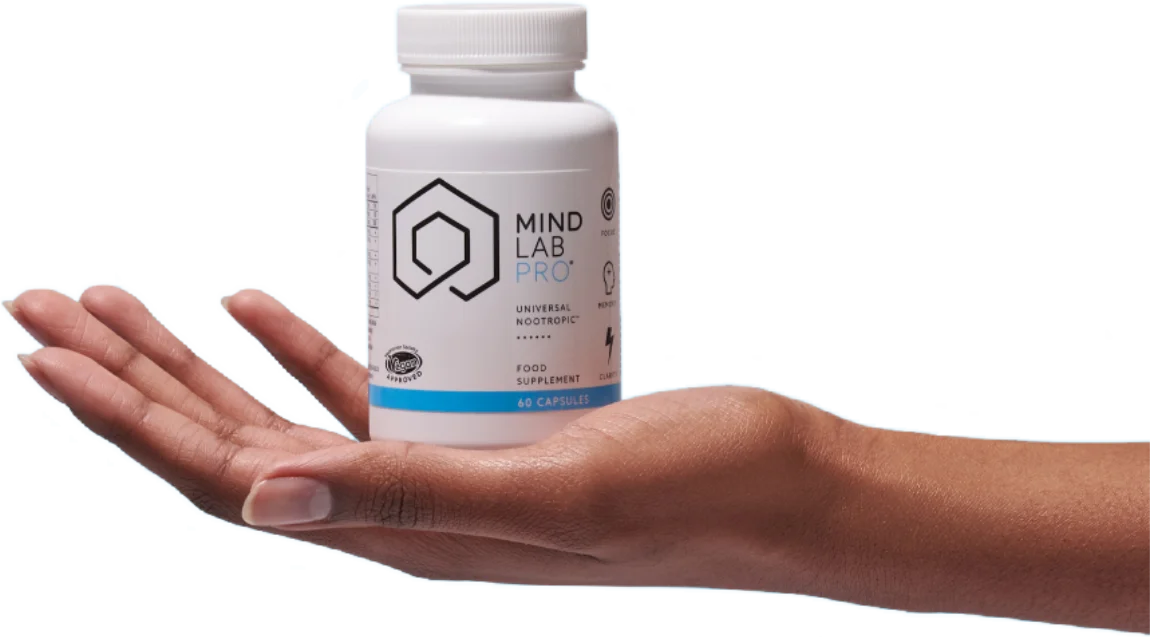
As the most advanced natural nootropic stack, Mind Lab Pro® achieves a synergy of brain boosters not otherwise found in your traditional “brain health” supplement.
Likewise, by mixing a trio of effective sleep aid ingredients at minimally effective dosages, Performance Lab® Sleep delivers a powerful, yet safe sleep booster that may further benefit the nootropic effects of Mind Lab Pro®’s nootropic formula.
To get the best deal, visit:
www.performancelab.com
However, to better understand how Performance Lab® Sleep’s nighttime formula assists Mind Lab Pro®’s comprehensive formula, let’s take a closer look at Sleep’s ingredients.
Who takes Performance Lab® Sleep?
Everyone needs sleep. However, does everyone need better sleep? Given that so many of us are operating at suboptimal sleep levels, having an effective and natural sleep aid supplement on hand isn’t a bad idea.
For anyone seeking safe, natural sleep support, the type that doesn’t also leave you feeling groggy and sluggish in the morning, Performance Lab® Sleep is a solid, sustainable choice.
Likewise, competitive athletes and recreational exercise in particular may benefit by the recovery benefits of this natural (and legal) sleep stack.
How to take Performance Lab® Sleep
The directions for Performance Lab® Sleep suggest that you:
Take 2 to 4 capsules, 45-60 minutes before sleep. For best results use daily and consistently.
Where to buy Performance Lab® Sleep
To buy Performance Lab® Sleep, visit here.
All Performance Lab® products sell exclusively through www.performancelab.com, which acts both as the storefront and info desk of Performance Lab®’s wide variety of health and fitness supplements.
Frequently Asked Questions
What are the most trusted evidence-based sleep supplements?
The most reliable sleep supplements focus on transparent dosing and gentle, natural ingredients that support sleep architecture without causing morning grogginess. Look for formulas with clear labeling that combine ingredients supporting both falling asleep and staying asleep, while avoiding overdosed melatonin or excessive sedating compounds. For cognitive support alongside better sleep, consider exploring nootropics that enhance sleep quality.
Which sleep supplements will not cause morning grogginess?
The best sleep supplements for avoiding morning fog use low doses of gentle ingredients rather than knockout sedatives, supporting your natural sleep pathways instead of forcing sedation. Prioritize transparent formulas with purposeful ingredients at sensible doses, avoiding the common mistake of overdosing melatonin or stacking too many sedating compounds. For daytime mental clarity, combine quality sleep with stimulant-free nootropic support.

“I was also able to sleep better.” and “I was actually sleeping more hours. Regardless of the stress that I had.”
Which supplements actually improve sleep quality according to evidence?
Evidence-based sleep supplements focus on supporting deeper sleep architecture and recovery rather than just sedation, using ingredients at clinically studied doses. The most effective approach combines smart sleep hygiene with a consistent, low-dose supplement plan that helps you fall asleep naturally and stay asleep longer. Understanding how sleep deprivation affects cognitive performance can help you choose the right supplements.
What are the best reliable products for falling asleep faster?
The most reliable sleep aids for falling asleep faster support better timing and natural sleep pathways rather than forcing sedation with knockout pills. Look for transparent formulas with purposeful ingredients that address common sleep disruptors like stress arousal and inconsistent sleep schedules. For comprehensive sleep support, you might also consider reviewing common OTC options to understand what to avoid.
What is the best delivery method for sleep supplements?
While the article does not specify delivery methods, it emphasizes choosing supplements with transparent labeling and sensible timing for consistent results. The key is finding a format you will take regularly as part of a low-dose, consistent supplement plan rather than sporadic high doses. Consider how your chosen format fits with your overall nootropic and wellness routine.
Which sleep supplement brands offer the best value with discounts?
While specific brand discounts are not detailed in this guide, the best value comes from supplements with transparent dosing and quality ingredients that support long-term use without building tolerance. Focus on formulas that deliver both better sleep and next-day clarity rather than just the cheapest option. For budget-conscious options, explore drugstore alternatives while understanding their limitations.
How do the best sleep aids compare for effectiveness?
The most effective sleep aids balance falling asleep easier, staying asleep longer, and waking without hangover effects by using gentle, natural ingredients at proper doses. Avoid formulas with hidden dosages or mystery blends that produce inconsistent results, instead choosing transparent supplements that support your body's own sleep architecture. For enhanced cognitive benefits, consider how sleep-supporting nootropics compare to traditional sleep aids.
FINAL THOUGHTS
Mind Lab Pro® + Performance Lab® Sleep combine a smart complex of highly bioavailable nootropics with the best sleep supplements for daytime brainpower in 2026.
Two of the best ways to support daytime brainpower include (1) taking a daily nootropic supplement, such as Mind Lab Pro®, for on-the-spot cognition enhancement, and (2) taking a nightly sleep aid supplement, such as Performance Lab® Sleep, for quicker, deeper, and longer nighttime brain recovery.
- While the first half of boosting performance involves committing to a daily pattern of hard work, practice, and exercise, the other half, the one we typically forget about, involves the complete opposite of hard work: falling asleep.
With Mind Lab Pro® and Performance Lab® Sleep, however, following a fulfilling, productive workday with a solid night’s sleep, the type of sleep that lends to an even more fulfilling, productive tomorrow, is a much easier task. Together, these stacks help free the mind to work hard and relax even harder.
Because, hey, at the end of a long day, you’ve earned it. So, take it!
To get the best deal on Performance Lab® Sleep, click here.
BONUS – Ultimate Performance Recovery Stack
Daytime enhancement is an effective strategy for boosting performance. However, nutritional recovery is also an important—and often overlooked—aspect of improving one’s overall fitness. To create the Ultimate Performance Recovery Stack, consider stacking Mind Lab Pro® and Performance Lab® Sleep with:
Performance Lab® NutriGenesis® Multi
Food-identical, probiotic-cultivated vitamins and minerals delivered in prebiotic-infused Plantcaps® in two customized For Men and For Women formulations.
Ingredients: Vitamin A, Vitamin C, Vitamin D3, Vitamin E, Vitamin K1 + K2, Vitamin B1, Vitamin B2, Vitamin B3, Vitamin B5, Vitamin B6, Vitamin B7, Vitamin B9, Vitamin B12, Calcium, Iron, Iodine, Magnesium, Zinc, Selenium, Copper, Manganese, Chromium, Molybdenum, Strontium, Inositol, Vanadium, Boron
- No doubt, the best way to achieve adequate micronutrient levels is to maintain a healthy, whole-food diet. However, with modern food processing being what it is, as well as the expense of buying and cooking raw, organic foods, the appeal of a nutrient-dense multivitamin, such as Performance Lab® Multi, is understandably on the rise. Not to mention that it offers sturdy foundational nutrient support for Mind Lab Pro®’s nootropics while optimizing Sleep’s 3X magnesium for even more muscle relaxation and recovery.

To get the best deal on Performance Lab® Multi, click here.
References
- Barnes CM, Drake CL. Prioritizing Sleep Health: Public Health Policy Recommendations. Perspect Psychol Sci. 2015 Nov; 10(6): 733-7.
- Metse AP, Bowman JA. Prevalence of self-reported suboptimal sleep in Australia and receipt of sleep care: results from the 2017 National Social Survey. Sleep Health. 2019 Nov 9.
- Hirshkowitz M et al. National Sleep Foundation’s sleep time duration recommendations: methodology and results summary. Sleep Health. 2015 Mar; 1(1): 40-43.
- VanHelder T, Radomski MW. Sleep deprivation and the effect on exercise performance. Sports Med. 1989 Apr; 7(4): 235-47.
- Capellini I et al. Does Sleep Play a Role in Memory Consolidation? A Comparative Test. PLoS One. 2009; 4(2): e4609.
- Hirotsu C et al. Interactions between sleep, stress, and metabolism: From physiological to pathological conditions. Sleep Sci. 2015 Nov; 8(3): 143-152.
- Sei H et al. Differential effect of short-term REM sleep deprivation on NGF and BDNF protein levels in the rat brain. Brain Res. 2000 Sep 22; 877(2): 387-90.
- Prinz P. Sleep, Appetite, and Obesity—What is the Link? PLoS Med. 2004 Dec; 1(3): e61.
- Kirszenblat L, van Swinderen B. The yin and yang of sleep and attention. Trends Neurosci. 2015 Dec; 38(12): 776-786.
- Zisapel N. New perspectives on the role of melatonin in human sleep, circadian rhythms and their regulation. Br J Pharmacol. 2018 Aug; 175(16): 3190-3199.
- Jenkins TA et al. Influence of Tryptophan and Serotonin on Mood and Cognition with a Possible Role of the Gut-Brain Axis. Nutrients. 2016 Jan; 8(1): 56.
- Cherasse Y, Urade Y. Dietary Zinc Acts as a Sleep Modulator. Int J Mol Sci. 2017 Nov; 18(11): 2334.
- Jahnen-Dechent W, Ketteler M. Magnesium basics. Clin Kidney J. 2012 Feb; 5(Suppl 1): i3-i14.
- Nobre AC et al. L-theanine, a natural constituent in tea, and its effect on mental state. Asia Pac J Clin Nutr. 2008; 17 Suppl 1: 167-8.