

Picamilon is one of the more unusual compounds in the nootropics world. Classified as a racetam nootropic, it is often described as a hybrid of niacin (vitamin B3) and GABA, designed to help GABA-related calming activity to reach the brain more effectively.
With CDC data showing that about 1 in 8 U.S. adults regularly experiences feelings of worry, nervousness, or anxiety, it’s easy to understand why nootropics marketed for “calm focus” attract attention—but picamilon is not a typical stress supplement.
Here's the catch: because it falls outside of standard supplement categories, picamilon is not technically legal in the United States.(1) And in picamilon's birthplace, Russia, it has historically been used as a drug—not a dietary supplement.(2)
So while picamilon is discussed in nootropic circles, it belongs in its own distinct class. In this article, we're digging into the history of picamilon, its legality, and its purported effects. We'll also suggest an alternative calming nootropic that is completely safe and legal. Let's get to it!
Key Takeaways
- Picamilon is a synthetic compound made by combining niacin and GABA. It was designed to cross the blood-brain barrier more effectively than GABA alone.
- Picamilon is one of the racetams: a family of synthetic nootropic compounds that are studied for potential effects on memory, learning, focus, and brain signaling.
- Racetams are different from ordinary supplements because they are synthetic, drug-like compounds. In the U.S., picamilon is not considered a legal dietary supplement.
- Picamilon is often discussed for calm focus, stress support, mood balance, and cerebral blood flow.
- The human research base for picamilon is limited, older, and largely tied to Russian medical use.
- Because of its regulatory status and drug-like profile, picamilon should not be treated like an ordinary nutritional supplement.
- L-Theanine is a viable alternative to picamilon; it settles the nervous system and sharpens clarity for a state of "wakeful relaxation."
Disclaimer
This article is for educational purposes only and is not medical advice. Picamilon is a synthetic GABA-niacin compound with drug-like properties, and the FDA does not consider it a lawful dietary supplement ingredient in the United States. Do not use picamilon to diagnose, treat, cure, or prevent any medical condition, including anxiety, depression, insomnia, cognitive impairment, or neurological disorders. Always consult a qualified healthcare professional before using any compound that may affect brain chemistry, mood, sleep, blood pressure, or nervous system function, especially if you take medication, have a medical condition, are pregnant or breastfeeding, or are combining it with alcohol, sedatives, stimulants, or other nootropics.
What Is Picamilon?

Picamilon, also known as nicotinoyl-GABA, is a synthetic compound made from two familiar molecules: niacin (a form of vitamin B3) and gamma-aminobutyric acid, better known as GABA.
GABA is the brain’s major inhibitory neurotransmitter, meaning it helps calm excessive neuronal firing and supports relaxation, nervous system balance, and stress modulation.
However, supplemental GABA has a notorious challenge: GABA itself has a hard time crossing the blood-brain barrier, a system that regulates which compounds can move from the bloodstream into the brain.(3) Picamilon was designed to overcome this challenge by attaching GABA to a niacin molecule, theoretically improving its ability to reach the brain.
How Picamilon Is Thought to Work
Once picamilon crosses into the brain, it is believed to be broken down into GABA and nicotinic acid (although FDA questions this bioactivity).(4) This possible dual action is why picamilon has been described as both a GABA-promoting compound and a cerebral circulation-supporting compound.
Picamilon may offer 2X nootropic activity: GABA-related calming support plus niacin-related blood vessel support.
- The GABA component may support inhibitory neurotransmission—for a calmer, less overstimulated nervous system state. This is why many people take picamilon for relaxation, emotional steadiness, and smoother stress response.
- The niacin component may help vasodilation, or the widening of blood vessels. In theory, this may support blood flow, including cerebral blood flow that is key for brain health and sharp cognition.
For nootropic users, the goal is “calm clarity.” However, that does not mean it is proven, risk-free, or appropriate for casual use.
Picamilon History
Picamilon has roots in Soviet/Russian history. It was developed in the Soviet Union in 1969 as a synthetic compound for GABA support. There, it has been used (and studied by Russian scientists) as a prescription drug rather than as a supplement, used as a treatment for patients with cerebrovascular function, neurological conditions, anxiety-like symptoms, and cognitive or stress-related issues. The Russian pharmaceutical context is important: while picamilon later became popular as a nootropic, its original use was drug-like, not nutritional — which helps explain why it is not legal in dietary supplements sold in the U.S.
Potential Brain and Nervous System Benefits

Picamilon has a strong reputation from its Russian medical history and many user reports. But the evidence is more cloudy, and many claims around picamilon go beyond what has been demonstrated in research. Some possible picamilon benefits:
1. Calm Focus
Picamilon is sometimes described as supporting calm focus: a mental state where the user feels less anxious or overstimulated, but not sluggish or sedated. This makes sense on paper because GABA is involved in nervous system calming. But “makes sense” is not the same as “clinically proven for calm focus.” Picamilon should therefore be considered as a compound that may influence GABA-related calming pathways, not as a proven focus enhancer. Read more: Calming Nootropics
2. Stress and Tension Support
Because of its GABA-related activity, picamilon has been linked to potential benefits for emotional stress, tension, and emotional balance. GABA helps regulate excitability in the brain, and compounds that affect GABA signaling may have calming effects; in the body, it may help induce muscle relaxation. This is one reason picamilon gained popularity among people seeking relaxation without the heavy sedation associated with some stronger calming agents and tranquilizer drugs.
3. Cerebral Blood Flow
Picamilon was developed to help improve blood flow to the brain. The niacin part of picamilon is one reason it has been linked with circulation. Niacin can affect blood vessel integrity. In theory, better blood flow may help deliver oxygen and nutrients to brain tissue, supporting mental energy, brain health and cognitive function. Read more about another nootropic for cerebral blood supply: Maritime Pine Bark Extract.
4. Mood and Motivation
Some nootropic users report that picamilon feels mood-brightening, especially when stress or tension is disrupting motivation. This may be related to reduced nervous system overactivation, improved subjective calm, or downstream effects of better mental composure. Discover top nootropics for motivation.
Picamilon vs. GABA
Picamilon is compared with GABA because GABA is part of its structure. The big difference is blood-brain barrier permeability. GABA alone has historically been considered poor at crossing the blood-brain barrier, though research on GABA supplements is more nuanced than older blanket claims suggest.(5) Picamilon was made to overcome this by linking GABA to niacin.
That does not automatically make picamilon “better” than GABA. It makes it different. GABA is a dietary supplement ingredient commonly sold in the U.S., while picamilon is not considered a lawful dietary supplement ingredient by FDA.(1) From a consumer safety and compliance perspective, that distinction matters more than the theoretical mechanism.
Picamilon vs. Niacin
Picamilon is also different from niacin. Niacin is vitamin B3, an essential nutrient involved in energy metabolism, NAD/NADP pathways, skin health, nervous system function, and overall cellular activity. Picamilon contains a niacin-related structure, but it is not simply “a form of vitamin B3.” FDA has described picamilon as a unique chemical entity synthesized from niacin and GABA.(1)
This is an important distinction for supplement writing. You can discuss niacin as a vitamin. You can discuss GABA as an amino-acid-like neurotransmitter compound. But picamilon should not be casually presented as a vitamin, mineral, herb, amino acid, or standard nutrient.
Is Picamilon Legal in Supplements?
In the United States, picamilon is not approved as a lawful dietary supplement ingredient. FDA has stated that picamilon does not meet the statutory definition of a dietary ingredient, because it is not a vitamin, mineral, herb, botanical, amino acid, dietary substance, or concentrate/metabolite/constituent/extract/combination of such ingredients. Rather, FDA describes it as a unique chemical entity synthesized from niacin and GABA.(1)
This is why picamilon in products marketed as supplements have been the subject of FDA warning letters and enforcement attention. In practical terms, if a product is marketed as a dietary supplement in the U.S. and lists picamilon as an ingredient, that should raise a major red flag for consumers, retailers, and brands.
Read more about legality of nootropic supplements
A Word on Racetams
Picamilon is a racetam nootropic. Racetams are a family of synthetic nootropic compounds, also including piracetam, aniracetam, oxiracetam, pramiracetam, and phenylpiracetam, studied and prescribed in Russia for potential effects on memory, learning, focus, and cognitive performance. Unlike ordinary dietary supplements, racetams are drug-like compounds. This contributes to their cloudy status in the U.S., where supplements are regulated more like foods, not as drugs.
Safety, Side Effects, and Cautions
Picamilon is sometimes portrayed online as gentle, but that may be misleading. A compound that crosses into the brain and affects neurotransmitter-related pathways should be treated with caution. Possible concerns may include headache, dizziness, flushing, changes in blood pressure, sedation, agitation, nausea, or interactions with drugs or other supplements that affect mood, sleep, blood pressure, or the nervous system. This is why picamilon is a prescription in Russia, taken under a doctor's supervision.
Another issue is product quality. When a compound is not a lawful supplement ingredient, products that still contain it may come from less reliable channels. That raises concerns about mislabeling, contamination, undisclosed ingredients, inaccurate dosage, and inconsistent manufacturing standards.
L-Theanine: A Gentler Alternative to Picamilon

L-theanine is an amino acid naturally found in green tea, where it is associated with a relaxed-but-alert mental state rather than sedation. Unlike picamilon, L-theanine is widely used in dietary supplements, with no legal or regulatory concerns.
If you are considering picamilon for calm focus, stress support, and smoother nervous system balance, L-theanine is a practical alternative.
L-theanine appears to influence several brain pathways involved in relaxation and attention, including alpha brain wave activity, glutamate signaling, GABA-related activity. It seems to "settle" the nervous system. This appeals to people who want to feel more composed, focused, and mentally steady.
L-theanine is also commonly paired with caffeine because it may help smooth out caffeine’s rough edges — supporting alertness and attention while reducing jitters, overstimulation, and nervous energy.(8)
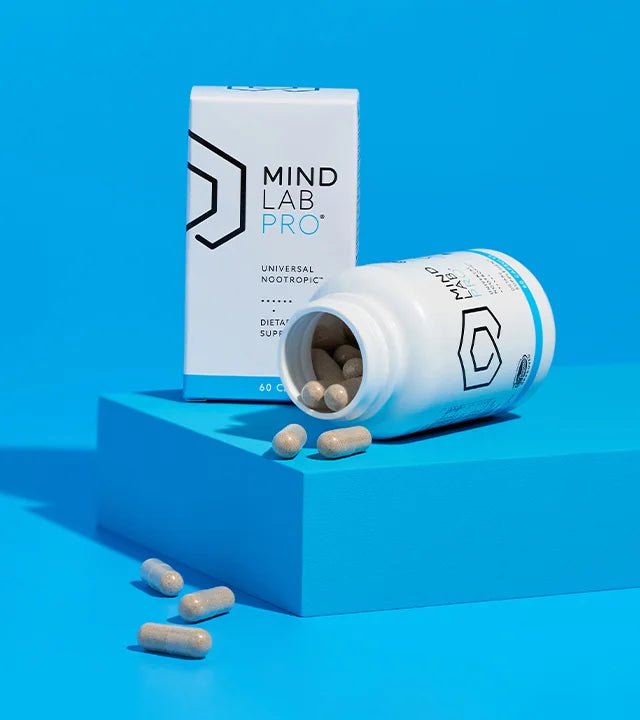
For users drawn to picamilon for “calm clarity,” L-theanine offers a more mainstream, food-derived, supplement-friendly path to a similar goal: relaxed focus without the legal ambiguity and drug-like profile of picamilon. Consider L-Theanine as a standalone supplement or as part of a multi-ingredient nootropic stack like Mind Lab Pro®.
Read more: L-Theanine as a Nootropic
Summary
Picamilon is a synthetic compound made from GABA and niacin, originally developed to help GABA-related activity reach the brain more effectively. It is often discussed for calm focus, stress support, mood balance, and cerebral blood flow. Mechanistically, picamilon is intriguing because it may combine GABA-related calming effects with niacin-related vascular effects.
However, picamilon is not a normal dietary supplement ingredient in the United States. FDA has stated that it does not meet the legal definition of a dietary ingredient, and products containing picamilon have been subject to regulatory action. The research base is also limited compared with mainstream nootropics and essential nutrients.
Bottom line: Picamilon may be one of the more interesting compounds in nootropic history, but it is not one of the simplest, safest, or most compliant choices for everyday brain health support. For most people, it makes more sense to focus on legal, better-studied nutrients and nootropics that support the brain and nervous system through clearer nutritional pathways.
References
- U.S. Food & Drug Administration. (2017). Picamilon in dietary supplements. U.S. Food & Drug Administration. Link
- Operation Supplement Safety. (n.d.). Picamilon: Not for use in dietary supplements. Operation Supplement Safety. Link
- Gawdi, R., & Emmady, P. D. (2023). Physiology, blood brain barrier. StatPearls. Link
- U.S. Food & Drug Administration. (2015). Scientific memorandum: Picamilon. U.S. Food & Drug Administration. Link
- Boonstra, E., de Kleijn, R., Colzato, L. S., Alkemade, A., Forstmann, B. U., & Nieuwenhuis, S. (2015). Neurotransmitters as food supplements: The effects of GABA on brain and behavior. Frontiers in Psychology, 6, 1520. Link
- Goldberg, J. S. (2010). Selected gamma aminobutyric acid (GABA) esters may improve cognitive performance: A review. Journal of Neurology & Neurophysiology, 1(1), 1000101. Link
- Owen, G. N., Parnell, H., De Bruin, E. A., & Rycroft, J. A. (2008). The combined effects of L-theanine and caffeine on cognitive performance and mood. Nutritional Neuroscience, 11(4), 193-198. Link