

Pramiracetam is a lesser-known nootropic that, on the surface, appears to meet the needs of common cognitive goals. According to AARP’s 2019 Brain Health and Dietary Supplements Survey, 71% of people taking brain-health supplements wanted help with memory, while 60% wanted help with mental sharpness.
To address these concerns, some people are going beyond the supplement aisle into cloudy areas of nootropic exotics, including the racetam-class nootropic pramiracetam. If you're here to find out what piracetam is, if it can boost cognition, and if it's safe and legal, read on for insight with a healthy dose of caution.
Pramiracetam is best known as an experimental memory-focused racetam, but most human research involved people with cognitive impairment after brain injury, oxygen deprivation, or neurological issues—not healthy users seeking mental performance enhancement.
Regardless, pramiracetam has been used in performance-oriented nootropics for overall cognitive enhancement. In this guide, we'll explore what pramiracetam is and whether or not it makes sense as a nootropic. Let's get to it!
Key Takeaways
- Pramiracetam is one of the racetams: a family of synthetic nootropic compounds studied for potential effects on memory, learning, focus, and brain health.
- Racetams are different from ordinary supplements because they are synthetic, drug-like compounds.
- In the U.S., pramiracetam is not FDA approved and is not considered a legal dietary supplement.
- It has mainly been investigated for memory and cognitive problems associated with head injury, oxygen deprivation and neurological issues.
- A small placebo-controlled study reported lasting memory improvements in young men with cognitive problems after head injury.
- Another small study found that pramiracetam partially protected healthy volunteers against experimentally induced amnesia.
- A controlled Alzheimer’s trial found that doses up to 4,000 mg were unlikely to provide meaningful symptomatic benefit.
- It is suggested to work via choline pathways and acetylcholine-related activity, potentially affecting memory formation.
Disclaimer
This article is for educational purposes only and is not medical advice. Pramiracetam is an unapproved synthetic drug compound, not an ordinary dietary supplement. It is not intended to diagnose, treat, cure or prevent memory loss, dementia, traumatic brain injury, Alzheimer’s disease or any other medical condition. Seek medical advice before using any unapproved nootropic, particularly if you take prescription medications, have a neurological, psychiatric, kidney, liver or cardiovascular condition, or are pregnant or breastfeeding.
What Is Pramiracetam?
Pramiracetam is a synthetic nootropic drug in the racetam family. Scientists at Parke-Davis (an American pharmaceutical company) developed pramiracetam in the late 1970s by modifying piracetam, the original and most well-known racetam compound. Other racetams include: Oxiracetam, Aniracetam, and Phenylpiracetam.
Pramiracetam was designed after animal experiments suggested it may have a stronger impact on memory than piracetam. It was later investigated for:
- Memory problems after traumatic brain injury
- Cognitive impairment following oxygen deprivation
- Experimentally induced amnesia
- Age-related concentration and memory problems
Some international drug databases list pramiracetam for cognitive symptoms associated with degenerative or vascular brain conditions (including Alzheimer's). That does not make it approved or medically accepted in the United States.
Did you know? Pramiracetam was developed as a pharmaceutical cognitive-enhancing drug, mainly to improve memory and treat cognitive impairment, especially after brain injury, oxygen deprivation, or age-related neurological decline—not primarily as a "brain booster" for healthy people.
How Does Pramiracetam Work?

Pramiracetam’s mechanisms of action are not fully understood. Most theories come from animal studies, pharmacology experiments and indirect evidence rather than strong, well-designed human brain research studies. Some possibilities suggested:
Choline Effects
The potential benefit most commonly associated with pramiracetam is increased high-affinity choline uptake. This refers to the process of transporting choline into nerve cells so it can be used to synthesize acetylcholine. Acetylcholine is a neurotransmitter involved in learning, attention and memory formation.
Animal research and reviews of racetams suggest that pramiracetam may stimulate pro-choline activity, particularly in the hippocampus—the part of the brain heavily involved in forming and consolidating memories.(4)
This does not mean pramiracetam simply raises acetylcholine levels in the brain. Its effects appear more complex and may depend on a lot of human variables.
Memory Formation and Retention
Some research suggests pramiracetam may be more relevant to long-term memory formation than to short-term working memory.
In animal studies, pramiracetam improved retention when given before learning or memory testing. Effects sometimes appeared after one dose, while other experiments suggested that repeated use over several days worked better.
These results helped create its reputation as a memory-enhancing racetam. But memory performance in lab animals does not necessarily translate to cognitive benefits in healthy humans.
Hippocampal Activity
The hippocampus helps convert newly learned information into longer-lasting memories. Because pramiracetam appears to influence choline uptake and signaling in this region, researchers have suggested that it may support memory consolidation.
Human evidence provides some early (but limited) support for this idea in people with cognitive impairment, but there is no convincing evidence that it enhances hippocampal function in healthy young adults.
Brain Electrical Activity
Animal studies have reported changes in electroencephalogram, or EEG, activity after pramiracetam administration. Changes in brain-wave patterns indicate that a compound affects neural activity, but they do not automatically mean the compound improves cognition, mood or overall brain health.
Discover nootropic supplements for mental energy.
Nitric Oxide Signaling
Preclinical research has also explored pramiracetam’s influence on nitric oxide synthase activity in the cerebral cortex. In one rat study, pramiracetam increased nitric oxide activity under certain conditions.(5) Nitric oxide participates in cell signaling, cerebral blood flow and synaptic plasticity. This finding is interesting, but it does not demonstrate cognitive enhancement or neuroprotective qualities in humans.
Discover Maritime Pine Bark Extract, a natural nitric oxide booster.
Did you know? A 2021 U.S. analysis of National Health Interview Survey data found that 47.4% of adults aged 40 and older with a history of head injury—about 11.4 million people—were living with a disability in at least one area of functioning, including possible limitations related to memory or confusion. While it is not a proven treatment, pramiracetam was developed (and researched for) these exact type of post-brain injury cognitive issues.
Pramiracetam Research: What Do the Studies Show?

Pramiracetam has some human evidence, but the research base is small. Most studies involve unusual clinical populations, very few participants or experimentally induced memory impairment.
Young Men With Memory Problems After Brain Injury
A double-blind, placebo-controlled study investigated pramiracetam in young men with memory and cognitive problems following head injury or oxygen deprivation.
Participants received 400 mg three times daily for 18 months, followed by an additional period without treatment. Researchers reported substantial improvements on memory measures during pramiracetam treatment, with some benefits remaining after supplementation ended.(6)
Key takeaway: This is the strongest and most well-known human evidence for pramiracetam. But the study included only four treated patients, all of whom had serious cognitive impairment.
Induced Amnesia in Healthy Volunteers
A placebo-controlled study examined whether pramiracetam could reduce memory impairment caused by a drug called scopolamine. Two groups of 12 healthy men received pramiracetam or placebo before scopolamine. Repeated pramiracetam use appeared to reduce impairment on some memory tests, while acute administration was less convincing.(7)
Key Takeaway: The study supports a possible cholinergic and anti-amnesic effect. It does not demonstrate that pramiracetam improves normal memory above baseline.
Alzheimer’s Disease Trial
A controlled trial investigated pramiracetam in 10 people with probable Alzheimer’s disease. Eight participants appeared to respond to pramiracetam during the first stage of testing, but only two showed improvement when the selected dose was tested again. Researchers concluded that doses up to 4,000 mg were unlikely to provide meaningful benefit in Alzheimer’s disease.(8)
Key takeaway: The lack of benefit replication shows why early improvements must be interpreted carefully. Effects may disappear when retested.
Animal Research on Long-Term Memory
Animal studies have frequently found that pramiracetam may improve retention or reverse experimentally induced amnesia. One 1989 study compared piracetam-like compounds in mice and found effects on long-term retention under certain experimental conditions.(9)
Key takeaway: The animal evidence supports the biological possibility of memory effects. It does not establish a safe or effective human cognitive-enhancement effect.
Overall, There are no strong clinical trials showing that pramiracetam improves memory, focus, mental clarity or cognitive function in healthy young adults.
Pramiracetam has limited preliminary evidence for memory impairment in specific clinical and experimental settings, but it has not been proven to enhance cognition in healthy people.
Important Medical and Legal Context
Pramiracetam is frequently discussed online as though it were simply a more potent supplement for memory and focus. That framing is misleading. It is a synthetically manufactured pharmaceutical compound. It is not a vitamin, mineral, herb, amino acid or naturally occurring nutrient.
In a warning letter to an online nootropic seller, the FDA specifically stated that pramiracetam products were not dietary supplements or conventional foods. Products promoted with claims involving memory, cognition or disease were classified as unapproved new drugs under federal law.(1)
This means pramiracetam is not an FDA-approved medication and cannot lawfully be marketed in the United States as an ordinary cognitive-enhancement supplement.
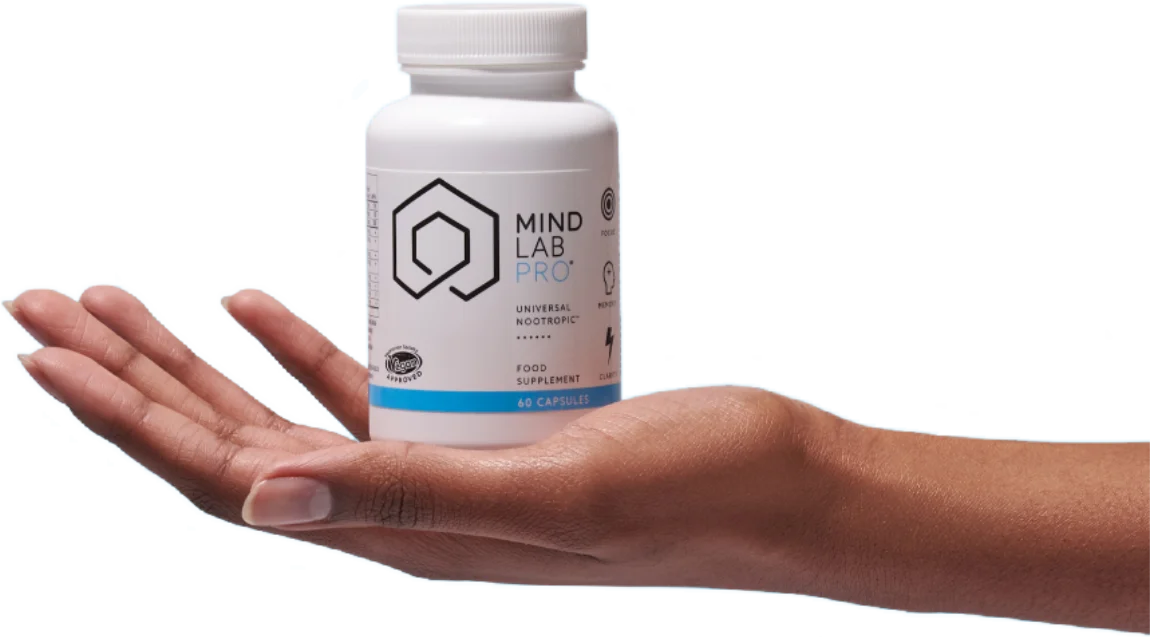
Mind Lab Pro®: A Legal Nutritional Approach to Memory and Focus

Pramiracetam is mainly explored for memory formation, mental clarity and cognitive performance. But its unapproved status, limited human evidence and uncertain product quality make it a questionable starting point for most people.
Mind Lab Pro® takes a different approach. It is a legal, caffeine-free, vegan-friendly nootropic supplement made with nutritional compounds, amino acids, herbs, vitamins and mushroom extracts.
It does not reproduce pramiracetam’s pharmacology and should not be presented as a direct substitute. Instead, its ingredients support overlapping goals such as acetylcholine synthesis, memory, learning, brain energy, stress resilience and healthy brain-cell function.
Mind Lab Pro includes:
- Cognizin® Citicoline — 250 mg: supports acetylcholine synthesis, phospholipid production, brain energy and attentional performance.
- Phosphatidylserine — 100 mg: supports brain-cell membranes, memory and neuronal signaling.
- Bacopa Monnieri — 150 mg: full-spectrum extract standardized to 24% bacosides with nine bioactives for memory and learning support.
- Organic Lion’s Mane Mushroom — 500 mg: supplies fruit and mycelium for neurotrophic and brain-health support.
- Rhodiola Rosea — 50 mg: standardized to 3% rosavins and 1% salidrosides for stress resilience and mental performance.
- N-Acetyl L-Tyrosine — 175 mg: supplies a precursor for dopamine and norepinephrine.
- L-Theanine — 100 mg: supports relaxed alertness and calm concentration.
- Maritime Pine Bark Extract — 75 mg: standardized to 95% proanthocyanidins for antioxidant defense and cerebral circulation.
- NutriGenesis® Vitamin B6 — 2.5 mg: supports neurotransmitter synthesis and brain-energy metabolism.
- NutriGenesis® Vitamin B9 — 100 mcg: supports methylation and healthy brain chemistry.
- NutriGenesis® Vitamin B12 — 7.5 mcg: supports nervous-system health and energy metabolism.
Citicoline has the clearest connection to pramiracetam’s proposed cholinergic mechanism because it supports choline availability, acetylcholine synthesis and phosphatidylcholine production.
Phosphatidylserine supports brain-cell membranes, while Bacopa supports memory formation and Lion’s Mane supports neurotrophic brain-health pathways.
Discover more about Citicoline as a nootropic.
Mind Lab Pro Research: Information Processing
In a double-blind, placebo-controlled study, adults taking Mind Lab Pro for 30 days improved on information-processing measures including simple reaction time, choice reaction time and anticipation. The findings suggest potential support for processing speed and rapid cognitive responses.(10)
Mind Lab Pro Research: Memory
A second double-blind, placebo-controlled study used the Wechsler Memory Scale to assess several dimensions of memory. Participants taking Mind Lab Pro improved across auditory memory, visual memory, visual working memory, immediate recall and delayed recall.(11)
Mind Lab Pro Research: Brain-Network Activity
A third human study used EEG during perceptual decision-making. Researchers reported changes suggesting enhanced communication and coordination between brain regions following Mind Lab Pro supplementation.(12)
Mind Lab Pro is not intended to treat traumatic brain injury, dementia or cognitive impairment. It offers a more conventional nutritional approach for healthy adults seeking support for memory, focus, mental clarity and brain energy.
Frequently Asked Questions
What is pramiracetam used for?
Pramiracetam has been investigated as a drug for memory and cognitive problems associated with head injury, oxygen deprivation, dementia and other neurological conditions. It is also used experimentally by some nootropic users, although evidence in healthy people is lacking.
Is pramiracetam a dietary supplement?
No. Pramiracetam is a synthetic racetam drug. The FDA has specifically stated that pramiracetam products are not dietary supplements or conventional foods.
Is pramiracetam legal in the United States?
Pramiracetam is not FDA-approved and cannot lawfully be marketed as an ordinary dietary supplement or as a drug for unapproved medical uses. It is not currently treated as a federally scheduled controlled substance, but its sale for human use remains legally problematic.
Does pramiracetam improve memory?
Small studies reported memory improvements in people with cognitive impairment and partial protection against experimentally induced amnesia. There is no strong evidence that it improves normal memory in healthy adults.
What is the recommended pramiracetam dosage?
There is no FDA-approved or officially recommended dosage. Human studies have often used 1,200 mg daily, divided as 400 mg three times per day or 600 mg twice daily. These research doses should not be interpreted as self-use recommendations.
How long does pramiracetam take to work?
Pharmacokinetic studies found measurable absorption after oral administration, while animal research sometimes reported memory effects within one to two hours. Human cognitive effects and onset in healthy users have not been established reliably.
Should pramiracetam be taken with choline?
Nootropic users often combine racetams with citicoline or alpha-GPC because of their connection to acetylcholine. No strong clinical trials have established that a pramiracetam-and-choline stack is necessary, effective or safe in healthy people.
Summary: Is Pramiracetam Worth Taking?
Pramiracetam is one of the more intriguing but poorly established racetams. It was developed from piracetam and has proposed effects on high-affinity choline uptake, acetylcholine-related signaling and long-term memory formation.
Small human studies reported possible memory benefits after head injury or oxygen deprivation and partial protection against drug-induced amnesia. But an Alzheimer’s trial found little meaningful benefit, and there is no convincing clinical evidence for cognitive enhancement in healthy adults.
Its legal and quality-control problems are equally important. Pramiracetam is not FDA-approved, is not a lawful dietary-supplement ingredient and may be sold through unregulated sources with uncertain identity and purity.
For advanced nootropic users, its mechanisms may be scientifically interesting. But the practical case for unsupervised use is weak. Legal nutritional nootropics such as Citicoline, Phosphatidylserine, Bacopa and Lion’s Mane provide a more conventional way to support memory and cognitive health without relying on an unapproved synthetic drug.
References
- U.S. Food and Drug Administration. (2019). Peak Nootropics LLC aka Advanced Nootropics: Warning letter 557887. U.S. Food and Drug Administration. Link
- Chang, T., et al. (1985). Pharmacokinetics of oral pramiracetam in normal volunteers. Journal of Clinical Pharmacology, 25(3), 193–197. Link
- Auteri, A., et al. (1992). Pharmacokinetics of pramiracetam in healthy volunteers after oral administration. International Journal of Clinical Pharmacology, Therapy, and Toxicology, 30(11), 457–460. Link
- Pepeu, G., & Spignoli, G. (1989). Nootropic drugs and brain cholinergic mechanisms. Progress in Neuro-Psychopharmacology and Biological Psychiatry, 13(Suppl), S77–S88. Link
- Corasaniti, M. T., et al. (1995). Systemic administration of pramiracetam increases nitric oxide synthase activity in the cerebral cortex of the rat. Functional Neurology, 10(3), 151–155. Link
- McLean, A., Cardenas, D. D., Burgess, D., & Gamzu, E. (1991). Placebo-controlled study of pramiracetam in young males with memory and cognitive problems resulting from head injury and anoxia. Brain Injury, 5(4), 375–380. Link
- Mauri, M., et al. (1994). Pramiracetam effects on scopolamine-induced amnesia in healthy volunteers. Arzneimittelforschung, 44(9), 1029–1032. Link
- Claus, J. J., et al. (1991). Nootropic drugs in Alzheimer’s disease: Symptomatic treatment with pramiracetam. Neurology, 41(4), 570–574. Link
- Mondadori, C., et al. (1989). The memory-enhancing effects of the piracetam-like nootropics in mice. Pharmacopsychiatry, 22(Suppl 2), 102–106. Link
- Utley, A., Gonzalez, Y., & Imboden, C. A. (2023). The efficacy of a nootropic supplement on information processing in adults: A double blind, placebo controlled study. Biomedical Journal of Scientific & Technical Research, 49(1). Link
- Abbott-Imboden, C., Gonzalez, Y., & Utley, A. (2023). Efficacy of the nootropic supplement Mind Lab Pro on memory in adults: Double blind, placebo-controlled study. Human Psychopharmacology: Clinical and Experimental, e2872. Link
- O’Reilly, D., Bolam, J., Delis, I., & Utley, A. (2025). Neural mechanisms of cognitive enhancement with a nootropic supplement. Brain Sciences, 15(3), 226. Link