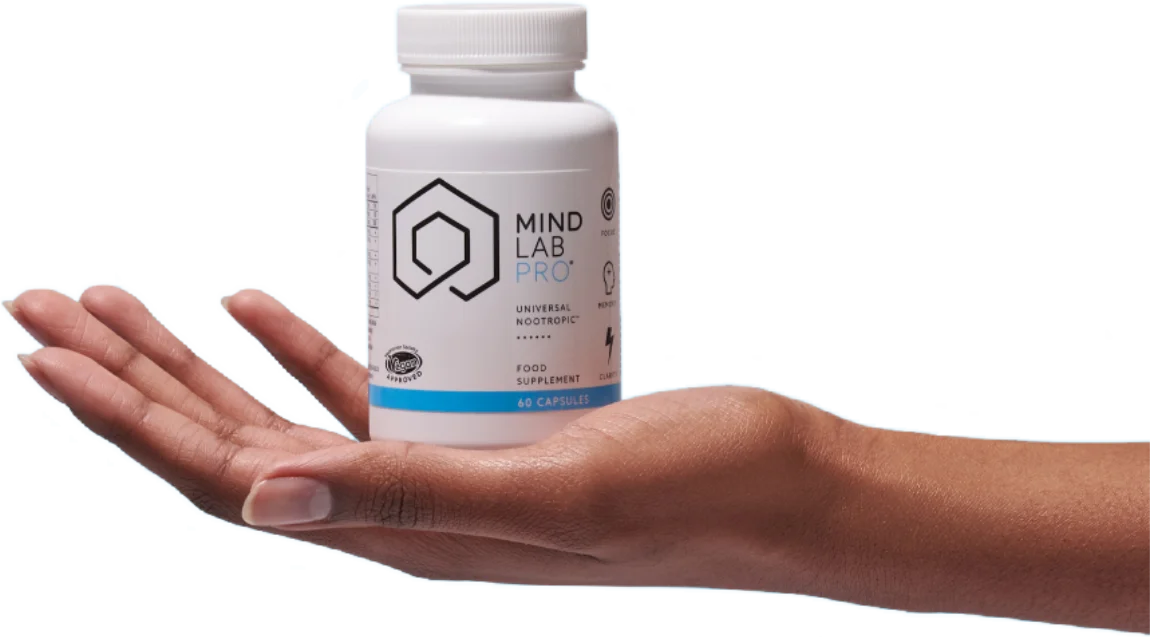


Artificial intelligence is evolving faster than you can say AI. We use computers for everything from calling home to buying groceries -- but people have to create programs to run them.
So if you're a coder, know there's competition: By 2025, the number of professional developers worldwide reached approximately 20.8 million (JetBrains Developer Ecosystem / Data Playground, 2025).
Whether you’re just learning code or you’re a veteran programmer, nootropics for programming help the cognitive skills and mental stamina you need to write better code faster.
If you are a programmer looking for nootropics or supplements to help you focus and stay mentally sharp during long coding sessions, we've got you covered. This guide covers the best coding nootropics to look for in brain supplements. Let's get to it!
Key Takeaways
- Coder pain points: context switching, mental fatigue, working-memory load, and deadline stress.
- What helps: evidence-backed nootropics that support focus/flow, working memory, mood under pressure, and fatigue resistance.
- Fast vs. steady: some nutrients act acutely (e.g., L-Theanine), while others build over 1–2+ weeks (e.g., Bacopa, Lion’s Mane).
- Best practice: start stim-free or low-stim stacks; dose earlier in the day; change one variable at a time.
- Mind Lab Pro® combines research-backed ingredients for everyday coding clarity without caffeine-type jitters.
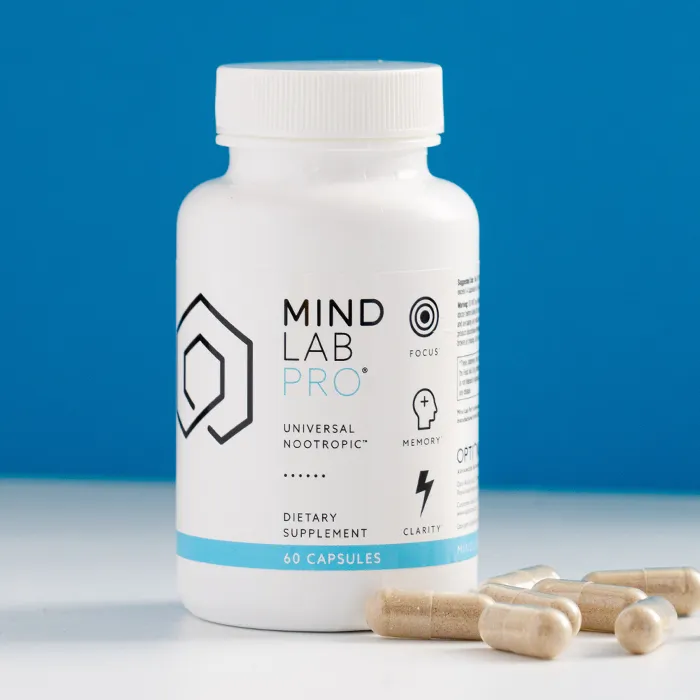
Best Nootropic Supplement for Programmers in 2026: Mind Lab Pro®
Mind Lab Pro® is an 11-in-1 nootropic stack that functions as a whole-brain booster. It helps enhance cognitive functions across the board, including some of the most important ones for programmers. Mind Lab Pro has demonstrated benefits for processing speed and memory, which we will detail below. It is clean and caffeine free; but also stacks with morning coffee and helps it work better. Shop Mind Lab Pro Now
What is Coding?
Coding is the popular term for computer programming. It’s the process computer programmers use to create software, smartphone apps, and websites – including blogs like this one.
Coding is everywhere. Whether you’re posting an Instagram, using your debit card, or watching a YouTube video, lines of code are behind it. Pretty much anything with a plug or a battery uses code – lots of it.
For anyone who was born post-2000, learning to code will probably be as normal as learning long division or how to read.(1) But for beginners or those who didn’t grow up with the internet, computer programming can seem as out of reach as learning Mandarin Chinese.
The truth is, almost anyone with strong, flexible cognitive skills and the desire to learn can code. And nootropics for programming, especially when combined into effective stack supplements, can help.
The cognitive benefits of computer programming go far beyond learning computer language or knowing how to make a webpage. Learning and practicing code teaches you valuable skills you can use in real life every day.
Coding Language
Code is a precise set of instructions that a computer can follow. Like a recipe for grandma’s famous banana bread, the instructions need to be concise in order to get the desired results.
There are myriad coding languages, including Perl, C++, and Python. And much like human language, coding languages are all different but share many of the same basic features. So the ideas behind any particular language apply to all coding languages.
“I think everyone should learn how to program a computer, because it teaches you how to think. I view computer science as a liberal art, something everyone should learn to do." – Steve Jobs
Brain Benefits of Coding
By now you’ve probably heard that everyone should learn how to code. But why?
The truth is, you can get many benefits from learning coding – from designing your own website to gaining a lucrative, stable career. But the best benefits are how coding can boost your brain power.
Did you know? Programming can actually make you smarter.
How? By teaching computational thinking.(2) More than merely writing code, computational analysis is a problem-solving approach that uses conceptual thinking at multiple abstract levels.
Computational thinking is far more human – and far more advanced – than computer reasoning. Humans possess a unique capacity for creativity that computers simply do not have, and that creative approach allows us to come up with solutions AI never could.
We can use this approach to coding in order to create more intelligent computers that can help us live smarter lives.
A 1991 meta-analysis found that “Students having computer programming experiences scored about 16 percentile points higher on various cognitive ability tests than students who did not have programming experiences.(3)
Coding has only gotten more complicated as technology speeds forward, and more recent research supports the idea that those complicated mental tasks help keep cognition sharp as we age.(4)
I'm developing a project which provides constant surges of exciting opportunistic energy that Mind Pro has channeled into calm, creative organized patterns that have made me more productive!George J.
How the Brain Works for Programming
A study using fMRI brain scans shows the main brain areas involved in comprehending code. Surprisingly, these brain regions don’t involve math and logic centers: they are responsible mostly for language processing, attention, and memory.
Middle Frontal Gyrus
The middle frontal gyrus is actually more of a brain region than a single gyrus. It spans both left and right hemispheres and covers just over 30 percent of the frontal lobe.
This area deals with attention, language, and working memory.(5) Computer programmers need hyper-vigilant attention skills to write code the computer can understand.
Computers can only follow the instructions programmers give them, they cannot complete a partial code or resolve errors on their own.
That’s why coders have to pay close attention to detail in order to get the instructions right the first time and avoid having to waste time skimming through hundreds or thousands of lines of code trying to find a glitch.
Middle Temporal Gyrus
The middle temporal gyrus is sandwiched between the superior and inferior temporal sulcus in both left and right temporal lobes.
This gyrus controls semantic memory retrieval. Semantic memory is a type of long-term memory related to acknowledged facts and common knowledge – like the sky is blue or Madison is the capital of Wisconsin.
For coding in particular, semantic memory retrieval accesses coding language memory so programmers can translate instructions into lines of code and vice versa. Some cognitive enhancers may support semantic memory.
Inferior Parietal Lobule
The inferior parietal lobule incorporates the angular gyrus and the supramarginal gyrus in the parietal lobes of the left and right brain hemispheres. Also called Geschwind’s territory, this lobule is right in the middle of the primary language pathway, linking Broca’s area to Wernicke’s area.
The inferior parietal lobule itself is involved with both language and mathematical operations. Strong activity in this brain region is particularly good for coding programs heavy in math, science, and engineering.
There are a wide variety of coding languages to choose from, and some are more mathematical languages than others. So when you’re coding for tech-intensive topics like science and engineering, this brain region really fires up.
Inferior Frontal Gyrus
The inferior frontal gyrus (IFG) is part of the frontal gyrus in the frontal lobe. The posterior portion of the IFG is part of Broca’s area, a brain region important for speech and language.(6)
The left parietal IFG serves as a language processor and helps with language comprehension, while the right parietal IFG is involved with attention.(7) Nootropics for programming can help with both.
Since coding uses language, the IFG helps programmers learn how to use and understand coding languages.
Program or Be Programmed
Media theorist Douglas Rushkoff says, “If you don’t know what the software you’re using is for, then you’re not using it - you’re being used by it.”
In a world where technology runs practically everything, it’s surprising how few people have decided to really interact with that technology. Some people may fear losing autonomy to AI, but the truth is, the programmers will be creating the reality in which the rest of us live.
Modern tech gives us the ability to reshape everything from education to our economy. Rushkoff warns us if we’re not using that power to redesign our world, future AI just might do it for us.
The Coding Toolkit
Computer programming takes a specific mental skill set, and those skills need to be quick and sharp. Honing the following skills will help you stay at the top of your game.
Practical setup for dev flow:
- Timing: dose earlier in the day; avoid late dosing if you’re stimulation-sensitive.
- Stack discipline: introduce one change at a time; log effects across a sprint.
- Caffeine pairing: if using coffee, keep total intake modest; L-Theanine can smooth edges.
- Ritual: combine with a pre-work ritual (noise-cancel, task list, 90-min focus block).
Problem Solving
Code glitches do not fix themselves, and it takes some serious problem-solving abilities to find and fix the issue without wasting a massive amount of time scrolling through countless lines of code.
But the act of coding itself can improve your problem-solving skills.
Writing and interpreting code means breaking a big task down into small chunks. Since everything is more manageable in small bites, that approach can help you manage other, non-coding problems better too.
More on Mind Lab Pro® nootropics for problem-solving
Working Memory
Programming requires a lot of working memory: language syntax, prewritten functions and their parameters, what variables and functions you have defined in your program so far, how to recognize, avoid or deal with problems you have had before – and that’s just the basics.
You could keep notes detailing everything you’ve done with the project and what you have left to do, but the more you can remember, the more successful you will be at coding.
Attention
Even if you can find hacks to deal with a poor memory or weak problem-solving skills, attention to detail and being able to focus for hours at a time are extremely important for coding success.
Just one wrong character can throw off the whole program, causing errors and creating potential bugs that can be tremendously time-consuming and difficult to find and fix.
And different languages require different variables and formats, so although you may work with several different coding languages, you have to remain consistent within the parameters of each one. That requires constant attention to the smallest details.
More on Mind Lab Pro® nootropics for attention
Language
Perhaps the most important skill you need for coding is thorough comprehension of the language. Learning to code is like learning a foreign language or how to play music. You will need all of the tools above and more just to learn the language.
Once you have learned the language sufficiently to write a line or two of code, you'll have to start using it.
That is the only way to expand your knowledge of the language and improve your programming skills.
Maybe you want to become an expert in just one programming language, but chances are you will want to learn multiple coding languages, especially if you aim to be a back end or full-stack developer.
Top Nootropics for Programming
N-Acetyl L-Tyrosine

NALT is particularly good at helping to enhance cognitive performance during high-pressure, multitasking events. And it is a more absorbable form of l-Tyrosine, making it even more effective.
- NALT works by increasing levels of catecholamines (CA) like dopamine and norepinephrine in the brain. And it helps multitaskers recover mental energy by increasing brain CA turnover and release.(8)
More on Mind Lab Pro® N-Acetyl L-Tyrosine
Citicoline

Citicoline as Cognizin® helps nourish brain cells to optimize the electrical impulses that create brain energy, improving mental performance. More brain energy plus better mental performance leads to enhanced attention, focus, and memory.
- Human studies show that citicoline complements coding-induced activity in the right parietal inferior frontal gyrus to improve attention through cognitive inhibition.(9)
More on Mind Lab Pro® Citicoline
L-Theanine

L-theanine is the special ingredient found in green tea that gives the tea its soothing properties. L-theanine's primary bioactivity supports an alpha brain wave state conducive to relaxed awareness, helping you to be creative and calm while remaining alert and attentive.
And l-theanine reduces caffeine-induced jitters for those long, coffee-fueled coding sessions, helping you to keep going without the side effects.
More on Mind Lab Pro® L-Theanine
Bacopa Monnieri

Bacopa can improve short-term memory, and that's good for coding performance. The more technical and practical properties you can remember, the better and faster you will be able to write good, glitch-free code.
And as an adaptogen it helps to moderate stress response so you can keep going under pressure without feeling frazzled.
- Animal studies suggest that neuroprotective properties of the bacosides in B. monnieri may improve learning and memory.(10)
More on Mind Lab Pro® Bacopa Monnieri
Rhodiola Rosea

Rhodiola works to combat stress during intense coding marathons by boosting mood, helping to enhance focus and helping you stay positive-minded and present in the moment. Plus, it helps fight fatigue and promotes an active, stimulated brain state - usually within 30 minutes.
Rhodiola works to combat stress with a two-pronged approach.
- Rhodiola soothes the sympatho-adrenal-system (SAS) that manages stress response to volatile, short-term stressors.
- As an adaptogen, rhodiola is thought to affect the hypothalamic–pituitary–adrenal axis (HPA axis), which handles long-term stress.(11)
More on Mind Lab Pro® Rhodiola Rosea
As complementary adaptogen herbs, bacopa and rhodiola work together to reduce stress-related burnout, protecting focus and memory.(12)
Best Nootropic for Programmers in 2026
Mind Lab Pro®

Mind Lab Pro nootropics for programming help to power-up key cognitive functions involved in coding.
The MLP Formula: Citicoline (CDP Choline) dosage 250mg per serving, Phosphatidylserine (PS) 100mg (from sunflower lecithin), Bacopa monnieri 150mg (24% bacosides, 9 bioactives), Organic Lion's Mane Mushroom 500mg (fruit and mycelium), Maritime Pine Bark Extract 75mg (Standardized to 95% proanthocyanidins), N-Acetyl L-Tyrosine 175mg, L-Theanine 100mg per serving, Rhodiola rosea 50mg (Standardized to 3% rosavins and 1% salidrosides), NutriGenesis® Vitamin B6 (2.5 mg), Vitamin B9 (100 mcg), Vitamin B12 (7.5 mcg)
The Universal Nootropic™, Mind Lab Pro® can enhance the cognitive tasks necessary for prime programming success, safely and naturally -- all while encouraging optimal whole-brain health. Attention, focus, concentration, mental energy, stress resistance, memory, processing speed... MLP is designed to support them all. In other words, whatever cognitive functions you rely on to program effectively, MLP probably enhances them.
Mind Lab Pro® Nootropic Supplement is Backed by Research
Three well-designed human clinical trials have demonstrated MLP's versatile benefits for cognitive performance in healthy adults:
- Subjects who took Mind Lab Pro® for 30 days showed significant improvements in simple reaction time (SRT), choice reaction time (CRT), and anticipation—all of which are tied to attention, focus, and quick decision-making. This makes Mind Lab Pro® a valuable supplement for individuals in high-pressure roles that demand sharp thinking and fast decisions.(12)
- A second study linked MLP supplementation to significant improvements across auditory, visual, and visual working memory, plue immediate and delayed recall.(13)
- A third study found no cognitive benefit, but did link MLP supplementation to enhanced communication between the brain's different regions, potentiall supporting peak brain performance.(14)
Frequently Asked Questions
What is Mind Lab Pro and how does it help with programming?
Mind Lab Pro® is a stimulant-free nootropic supplement designed to support focus, working memory, task switching, and stress performance, making it well suited to deep work sprints and long debugging sessions. It combines research-backed ingredients to provide everyday coding clarity without caffeine-type jitters, helping programmers maintain mental stamina during long coding sessions.
How does Mind Lab Pro compare to Alpha Brain for coding?
While both are popular nootropic supplements, Mind Lab Pro® is specifically formulated to be stimulant-free, supporting attention and working memory without caffeine spikes or crashes that can disrupt coding flow.
What's the difference between L-Theanine and L-Threonate for programming focus?
L-Theanine is a fast-acting nootropic that can provide acute focus benefits, helping programmers maintain calm concentration during coding sessions. L-Threonate, or magnesium L-threonate, works differently by supporting overall brain health and cognitive function over time. Learn more in our L-Theanine guide.
How does Mind Lab Pro compare to NooCube for developers?
Mind Lab Pro® focuses on providing clean-label capsules with evidence-backed ingredients specifically chosen to support the cognitive demands of programming like working memory load and context switching. Both supplements aim to enhance cognitive performance, but Mind Lab Pro's stimulant-free formula may be better suited for developers who code late into the evening.
Is fast thinking or sustained focus better for programming?
Programming requires both quick problem-solving and sustained deep focus, but evidence suggests that steady, sustained cognitive performance is more valuable for writing better code faster. Mind Lab Pro® is designed for daily use to build stable performance over 1-2+ weeks rather than providing short bursts of enhanced thinking that might lead to crashes.
What are the key cognitive challenges programmers face that nootropics can address?
Programmers face four main pain points: context switching, mental fatigue, working-memory load, and deadline stress. Evidence-backed nootropics can help by supporting focus and flow states, enhancing working memory, improving mood under pressure, and building fatigue resistance during long coding sessions.
How quickly do programming nootropics start working?
Some nootropics provide acute benefits, like L-Theanine which acts quickly, while others build effects over 1-2+ weeks, such as Bacopa and Lion's Mane. For best results with coding performance, experts recommend starting with stim-free or low-stim stacks, dosing earlier in the day, and changing one variable at a time.
FINAL THOUGHTS
Nootropics for programming help enhance the cognitive processes that are required to write efficient, bug-free code and improve overall programming performance. They also enable programmers to support cognition with supplements, rather than nootropic drugs ("smart drugs").
These cognition enhancers support peak mental performance. This includes support vital brain function involved in attention, memory, positive mood, sharper focus, problem-solving, divergent thinking and verbal learning—skills essential for coders. By boosting working memory, mental clarity, focus, and problem-solving abilities, nootropics like N-Acetyl L-Tyrosine, Citicoline, and Bacopa Monnieri help programmers tackle complex tasks and maintain productivity.
Additionally, adaptogens like Rhodiola Rosea help with stress resilience to ensure coders remain calm and clear-headed during cognitively demanding tasks. With the right nootropic stack, plus healthy lifestyle practices like getting enough sleep and healthy diet, programmers can improve their cognitive capacity, enhance learning, and write better code faster.
References
- Raichle, M. E., & Gusnard, D. A. (2002). Appraising the brain's energy budget. Proceedings of the National Academy of Sciences of the United States of America, 99(16), 10237–10239. Link
- Hershner, S. D., & Chervin, R. D. (2014). Causes and consequences of sleepiness among college students. Nature and Science of Sleep, 6, 73–84. Link
- Wurtman, R. J., et al. (2009). Synapse formation is enhanced by oral administration of uridine and DHA, the circulating precursors of brain phosphatides. Journal of Nutrition, Health & Aging, 13(3), 189–197. Link
- Fioravanti, M., & Buckley, A. E. (2006). Citicoline (Cognizin) in the treatment of cognitive impairment. Clinical Interventions in Aging, 1(3), 247–251. Link
- Silveri, M. M., et al. (2008). Citicoline enhances frontal lobe bioenergetics as measured by phosphorus magnetic resonance spectroscopy. NMR in Biomedicine, 21(10), 1066–1075. Link
- Mahoney, C. R., et al. (2007). Tyrosine supplementation mitigates working memory decrements during cold exposure. Physiology & Behavior, 92(4), 575–582. Link
- Thomas, J. R., et al. (1999). Tyrosine improves working memory in a multitasking environment. Pharmacology Biochemistry and Behavior, 64(3), 495–500. Link
- Neri, D. F., et al. (1995). The effects of tyrosine on cognitive performance during extended wakefulness. Aviation, Space, and Environmental Medicine, 66(4), 313–319. Link
- Hung, S. K., et al. (2011). The effectiveness and efficacy of Rhodiola rosea L.: a systematic review of randomized clinical trials. Phytomedicine, 18(4), 235–244. Link
- Olsson, E. M., et al. (2009). A randomised, double-blind, placebo-controlled, parallel-group study of the standardised extract SHR-5 of the roots of Rhodiola rosea in the treatment of subjects with stress-related fatigue. Planta Medica, 75(2), 105–112. Link
- van Diermen, D., et al. (2009). Monoamine oxidase inhibition by Rhodiola rosea L. roots. Journal of Ethnopharmacology, 122(2), 397–401. Link
- Utley, A., Gonzalez, Y., Imboden, C. A., et al. (2023). The efficacy of a nootropic supplement on information processing in adults: A double blind, placebo controlled study. Biomed J Sci & Tech Res, 49(1). Link
- Abbott-Imboden, C., Gonzalez, Y., & Utley, A. (2023). Efficacy of the nootropic supplement Mind Lab Pro on memory in adults: Double blind, placebo-controlled study. Human Psychopharmacology: Clinical and Experimental, e2872. Link
- O’Reilly, D., Bolam, J., Delis, I., & Utley, A. (2025). Neural mechanisms of cognitive enhancement with a nootropic supplement. Brain Sciences, 15(3), 226. Link