According to the Centers for Disease Control and Prevention, approximately 15.5 million U.S. adults—6% of the adult population—had a current ADHD diagnosis in 2023. The same survey found that nearly three-quarters of adults who had been prescribed a stimulant medication reported difficulty getting it filled because the medication was unavailable.
Statistics like these help explain why people are exploring almost every possible option for attention support—including controversial compounds such as a peptide for ADHD.
The brain peptide most closely connected to this conversation is Semax, a synthetic Russian-developed compound discussed for focus, memory, dopamine activity and neuroplasticity. But Semax is not an ordinary supplement, is not approved by the FDA and has not been established as an ADHD treatment. This guide examines what it is, why researchers became interested in it and where the evidence stops.
Key Takeaways
- Semax is a synthetic seven-amino-acid peptide developed in Russia and generally administered as a nasal preparation in countries where it is medically used.
- It is not an FDA-approved ADHD medication or an ordinary dietary supplement in the United States.
- There are many natural and synthetic brain peptides, but Semax is the only one on the market that has any research for ADHD, specifically.
- A small human study suggested possible support for selective attention and short-term memory, especially during fatigue, but it included only 11 healthy participants.
- A 2007 paper proposed Semax as a possible future ADHD research candidate based on dopamine, BDNF and attention-related activity; it was just a hypothesis, though.
- Most Semax evidence comes from Russian research, small studies, animal models, mechanistic experiments or neurological settings unrelated to ADHD.
- Gray-market peptide products raise additional concerns involving purity, concentration, contamination, sterility and inaccurate labeling.
- For people seeking legal, accessible nutritional support for attention, a researched nootropic stack may be a more practical first step.
Disclaimer
This article is for educational purposes only and is not medical advice. ADHD is a medical condition that should be diagnosed and managed by qualified healthcare professionals. Semax and other synthetic brain peptides are not ordinary dietary supplements and may have drug-like biological effects. Semax is not FDA-approved to diagnose, treat, cure or prevent ADHD or any other condition in the United States. Do not purchase or use intranasal, injectable, compounded or “research use only” peptide products without guidance from a licensed healthcare professional. Extra caution is warranted for anyone taking ADHD medication, anxiety and depression drugs, other psychoactive drugs, or who has a psychiatric, neurological, cardiovascular, immune, liver or kidney condition.
Important Medical and Legal Context
Semax peptide is not an ordinary supplement. It is a synthetic peptide used medically in Russia and discussed online for focus, memory and neuroprotection, but it is not FDA-approved in the United States and is not an accepted dietary-supplement ingredient. This is important because online availability does not prove that a Semax product is legal, safe, sterile, accurately labeled, or appropriate for human use. FDA materials have also raised concerns about compounded Semax.
For a broader look at this complicated category, see our guide to brain peptides, cognitive function and regulatory concerns.
What Is ADHD?
Attention-deficit/hyperactivity disorder is a diagnosed pattern of symptoms related to inattention, hyperactivity, and impulsivity that interfere with daily life.
ADHD can affect sustained attention, working memory, planning, organization, motivation, impulse control and emotional regulation. It is not simply a shortage of willpower or mental energy.
The condition is associated with differences across several interconnected brain systems, including:
- Dopamine and norepinephrine signaling
- Executive-control networks
- Stress systems
- Communication between brain regions
These systems help explain why a compound linked to dopamine, neuroplasticity or attention might attract interest from the ADHD community.
ADHD treatment may include prescribed stimulant or non-stimulant medications, behavioral therapy, coaching, accommodations and lifestyle changes.
Supplements or nootropics may have benefits that help, but think of them as complementary tools in your arsenal rather than substitutes for professional care.
Learn more details in our evidence-based overview of nootropics and ADHD support.
What Is Semax Peptide?

Semax is a synthetic heptapeptide—a short chain containing seven amino acids. This peptide is a synthetic copy of adrenocorticotropic hormone (ACTH), an essential hormone in the human body.
The compound emerged from Soviet and Russian peptide research. Scientists were exploring small regulatory peptides that might influence nervous system function without producing the broader endocrine effects associated with the original hormone. Their research started with nootropic and neuroprotective interest; it evolved to research for cognition, stress responses and brain repair and recovery.
In more recent Western biohacking circles, brain peptides like Semax are discussed for broader goals such as focus, memory, mood, motivation and mental energy. That leap—from foreign neurological drug to self-administered nootropic for performance—is where much of the controversy begins.
Did you know? The name Semax is commonly associated with its seven-amino-acid structure: methionine, glutamic acid, histidine, phenylalanine, proline, glycine and proline.
How Semax May Work
Semax does not have one fully established mechanism of action. Instead, researchers have investigated several possible pathways.
BDNF and Neuroplasticity
Semax has been studied for its effects on brain-derived neurotrophic factor, or BDNF. BDNF supports the survival and adaptability of neurons and plays a role in learning, memory and synaptic plasticity.
In animal research, Semax altered expression of BDNF and its TrkB receptor in the hippocampus, a brain region strongly involved in memory and learning.(2)
This is one reason Semax is sometimes discussed as a “neuroplasticity peptide.” But animal changes in BDNF do not establish that Semax improves ADHD symptoms in humans.
Dopamine and Serotonin Signaling
Early studies have reported that Semax can affect dopamine and serotonin-related brain systems.(3) Dopamine is relevant to motivation, reward, task initiation and sustained attention—all areas commonly discussed in ADHD research. Serotonin may affect mood, stress response and behavioral regulation. Again, this is bio-activity relevance, not proof of an ADHD effect.
Neuronal Communication
Semax may affect how brain networks communicate, possibly through neurotrophic signaling, neurotransmitter modulation, and regulation of gene expression. This broader signaling activity is part of what makes Semax intriguing. It is also why using an unapproved peptide without medical supervision is very different from taking a nutritional supplement.
Can a Peptide Help ADHD?

The cautious answer is: there is not enough evidence to say that Semax or another brain peptide helps ADHD patients.
Semax is relevant in theory because it has been associated with:
- Selective attention
- Short-term memory
- Dopamine signaling
- BDNF expression
- Neuroplasticity
- Stress-related cognitive performance
Several of these pathways overlap with cognitive functions affected by ADHD. But overlap is not the same as clinical validation.
A 2007 paper specifically proposed Semax as a possible future agent for ADHD. The author based the proposal on earlier findings involving BDNF, dopamine and selective attention.(4) But the publication appeared in Medical Hypotheses. It proposed a theory; it did not report an ADHD clinical trial.
Semax has possible biological activities and limited cognitive findings that make ADHD research worth investigating, but its effectiveness and safety for ADHD remain unproven.
Semax Research That May Be Relevant to ADHD
The following studies help explain why Semax attracts interest for attention and cognitive performance. Their results also reveal how limited the evidence remains.
Small Human Study of Attention and Memory
A 1996 human experiment evaluated intranasal Semax in 11 healthy participants completing eight-hour work shifts. Doses reportedly ranged from 250 to 1,000 micrograms. Researchers assessed selective attention and short-term memory before and after mentally fatiguing work. Semax was associated with better performance on some attention and memory measures, with the greatest effects in fatigued subjects. In a follow-up memory task the next morning, the Semax group produced more correct answers than the control group.(5)
Semax and the Brain’s Default Mode Network
A 2018 placebo-controlled imaging study examined 24 healthy adults. Fourteen received intranasal Semax and ten received placebo before resting-state functional MRI scans. Researchers reported changes in the brain’s default mode network after Semax administration.(6) The default mode network is involved in internally directed thought, memory, and interactions with task-focused brain networks.
Semax, BDNF and the Hippocampus
In rat research, Semax altered BDNF (brain-derived neurotrophic factor, kind of like "brain fertilizer') in the hippocampus after administration.(2) Researchers suggested that this neurotrophic pathway might contribute to the compound’s cognitive effects.
Discover top nootropics for supporting BDNF
Semax and Monoamine Neurotransmitters
Another animal study examined the effects of Semax on dopamine and serotonin systems. Researchers reported activation or modulation of these neurotransmitter pathways in rodents.(3) Dopamine is central to attention and motivation.
The ADHD Hypothesis Paper
In 2007, a researcher proposed that Semax could be investigated for ADHD because of its potential effects on BDNF, dopamine and selective attention.(4) This paper is the clearest direct connection between Semax and ADHD in the literature, but it is still just theoretical. Nearly two decades later, it has not been followed by a convincing ADHD clinical-trial program.
Why the Evidence Is Not Strong Enough
Semax has interesting mechanisms, including possible effects on BDNF, dopamine, serotonin and attention-related brain activity. But mechanisms are not the same as proof. The human evidence is small, limited and not specific enough to show that Semax helps people with ADHD.
The biggest problem is the lack of strong ADHD clinical trials. Most support comes from animal research, small human studies in healthy people, neurological research, or theory papers. That means we cannot confidently judge whether Semax is effective, safe, or worth the risk for ADHD
Semax Safety and Quality Concerns
Semax safety data in humans are limited, especially for long-term use and for people taking ADHD medications or other psychoactive drugs. Possible concerns include immune reactions, nasal irritation, mood or sleep changes, unknown drug interactions and unpredictable effects on neurotransmitter systems.
Product quality is another major issue. Gray-market peptide products may be mislabeled, contaminated, incorrectly dosed, nonsterile, or sold as “research use only” while implying personal use. That makes Semax very different from a standardized nutritional supplement.
Note: People with ADHD may already take medications that affect dopamine, norepinephrine, blood pressure, heart rate, sleep and appetite. Adding an unapproved synthetic peptide without medical supervision can be unpredictable.
Peptide Semax and ADHD: Consider Alternatives
Step #1 is always talk to your doctor. Legal nutritional nootropics may then be considered as complementary tools for your doctor's protocol, under your doctor's supervision.
Your doctor may prefer to go with more established nootropics for long range brain health, such as Omega-3 fatty acids. It's not necessarily about peptide supplement safety. More that Peptide simply has weaker evidence, suspect quality, and cloudier legal status.
Do not let peptide buzz, dramatic online testimonials, or wellness marketing do the thinking for you. Understand the specific compound, the evidence behind it, the proposed protocol, the possible risks, and whether it genuinely fits your individual needs.
Frequently Asked Questions
What peptide is discussed for ADHD?
Semax is the peptide most frequently connected to ADHD theory. It has been discussed for attention, memory, dopamine signaling and BDNF-related neuroplasticity. However, it has not been established as an ADHD treatment.
Has Semax been tested in people with ADHD?
There is no strong published body of randomized clinical trials showing that Semax improves ADHD symptoms. A 2007 paper proposed it as a possible research candidate, but that paper was theoretical rather than a clinical trial.
Is Semax legal in the United States?
Semax is not FDA-approved and is not an ordinary legal dietary-supplement ingredient. Its compounding and regulatory status has been under FDA scrutiny, which may be telling. Online availability does not mean a product is approved, lawful for the claimed use or safe for self-administration.
Is Semax available as a nasal spray?
Semax is commonly described as an intranasal peptide because oral peptides are often broken down during digestion. Products sold online as nasal sprays may still have major concerns involving legality, sterility, identity, purity and dosing accuracy.
Does Semax increase dopamine?
Animal research suggests Semax may influence dopaminergic brain systems. That finding is one reason it has been discussed for motivation and attention. It does not prove a useful or safe dopamine effect in people with ADHD.
Can Semax be taken with Adderall or other ADHD medication?
There is not enough reliable evidence to establish that combining Semax with stimulant or non-stimulant ADHD medication is safe. Do not combine an unapproved brain peptide with prescription medication without explicit guidance from the clinician managing your treatment.
Are there safer alternatives to Semax for attention?
Legal nutritional nootropics such as citicoline, L-theanine, N-acetyl L-tyrosine, Bacopa monnieri, Rhodiola rosea and maritime pine bark are used to support attention-related pathways through gentler nutritional or botanical mechanisms. See our guide to nootropics for attention and focus.
Mind Lab Pro®: A Legal Nootropic for Attention Support

Semax is biologically intriguing, but its limited evidence, unapproved status and uncertain product quality make it a difficult first choice for someone seeking everyday attention support.
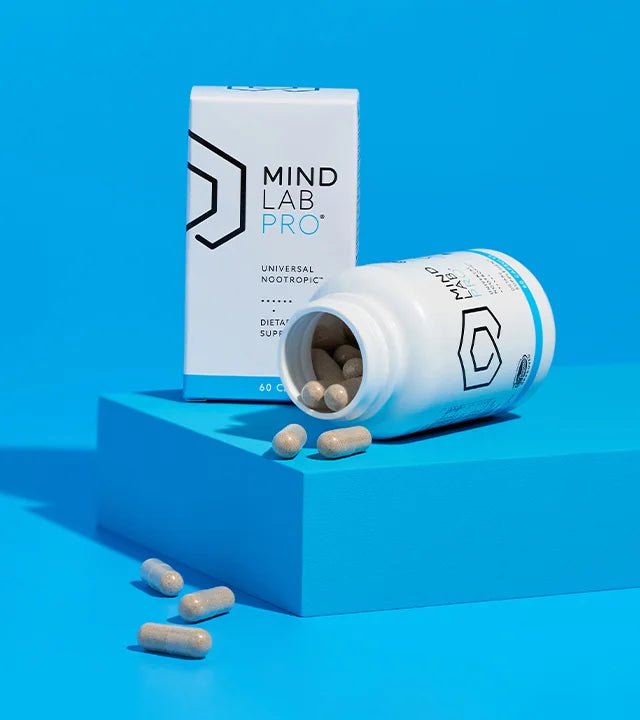
Mind Lab Pro® takes a different comprehensive approach. It is a legal, caffeine-free, vegan-friendly nootropic supplement that supports brain performance through researched nutrients, amino acids, herbs and mushroom extracts rather than experimental peptide therapy.
It does not duplicate Semax’s activity and should not be described as a peptide substitute. Instead, it supports several of the same broad cognitive goals—focus, memory, brain energy, stress resilience, neurotransmitter production and neuroplasticity—through nutritional pathways that may help anyone at any age.
Mind Lab Pro includes:
- Cognizin® Citicoline — 250 mg: supports brain energy levels, acetylcholine activity, cell-membrane formation and attention.
- Phosphatidylserine — 100 mg: supports brain-cell membranes, memory and cognitive function, and overall cognitive well-being.
- Bacopa Monnieri — 150 mg: a full-spectrum extract standardized to 24% bacosides with nine bioactives for memory and learning support.
- Organic Lion’s Mane Mushroom — 500 mg: supplies fruit and mycelium for neurotrophic and brain-health support.
- Rhodiola Rosea — 50 mg: standardized to 3% rosavins and 1% salidrosides for stress resilience and mental performance under pressure.
- N-Acetyl L-Tyrosine — 175 mg: supplies a precursor for attention-related catecholamines including dopamine and norepinephrine.
- L-Theanine — 100 mg: supports relaxed alertness and calm concentration; good for helping to create calm productivity.
- Maritime Pine Bark Extract — 75 mg: standardized to 95% proanthocyanidins for antioxidant and blood circulation support.
- NutriGenesis® Vitamin B6 — 2.5 mg: supports neurotransmitter synthesis and brain-energy pathways.
- NutriGenesis® Vitamin B9 — 100 mcg: supports methylation, blood formation and healthy brain chemistry.
- NutriGenesis® Vitamin B12 — 7.5 mcg: supports nervous-system health, energy metabolism and cognitive function.
For attention-related goals, Citicoline supports brain energy and attentional performance; N-Acetyl L-Tyrosine supports dopamine and norepinephrine synthesis; L-Theanine supports calm focus; and Rhodiola may help preserve cognitive performance during stress and fatigue.
Lion’s Mane provides the formula’s closest connection to the neurotrophic conversation surrounding brain peptides. It supports NGF-related pathways through a nutritional mushroom ingredient rather than an investigational synthetic peptide. Read more about Lion's Mane Mushroom.
Mind Lab Pro Research: Information Processing
In a double-blind, placebo-controlled study, adults took Mind Lab Pro or placebo for 30 days before completing information-processing tests. The Mind Lab Pro group showed improvements in simple reaction time, choice reaction time and anticipation, suggesting potential support for processing speed and rapid decision-making.(7)
Mind Lab Pro Research: Memory
A second double-blind, placebo-controlled trial evaluated memory with the Wechsler Memory Scale. Participants taking Mind Lab Pro showed improvements across the tested memory areas, including auditory memory, visual memory, visual working memory, immediate recall and delayed recall.(8)
Mind Lab Pro Research: Brain-Network Communication
A third human study used EEG brain mapping during perceptual decision-making. Researchers reported changes suggesting enhanced coordination and communication between brain regions after Mind Lab Pro supplementation.(9)
Mind Lab Pro is not an ADHD treatment (nor a mental health treatment) and does not replace medication or professional care. It offers a more accessible nutritional option for adults who want broad support for attention, mental clarity, memory, brain energy and cognitive performance without using an unapproved brain peptide.
Summary: Should You Use a Peptide for ADHD?
Semax is the brain peptide most often connected to ADHD theory. Its proposed effects on dopamine, BDNF, neuroplasticity and selective attention make it an interesting research subject. But interesting is not the same as proven.
The human research is pretty small and limited, so it doesn't carry as much weight. Most supporting evidence comes from animal studies, mechanistic experiments, Russian medical experience or neurological contexts unrelated to ADHD. The only publication directly proposing Semax for ADHD was a hypothesis paper—not a clinical trial.
Though it's been used as medicine elsewhere in the world, Semax is also not FDA-approved, is not an ordinary dietary supplement and carries unresolved questions about long-term safety, compounding, purity, sterility and product accuracy.
For most people seeking support with attention, a sensible order of operations is professional ADHD care first, foundational sleep and lifestyle support second, and legal research-backed nutritional nootropics before experimental peptide compounds.
References
- U.S. Food and Drug Administration. (2026). Certain bulk drug substances for use in compounding that may present significant safety risks. U.S. Food and Drug Administration. Link
- Dolotov, O. V., Karpenko, E. A., Inozemtseva, L. S., Seredenin, S. B., Levitskaya, N. G., Rozyczka, J., Dubynina, E. V., Novosadova, E. V., Andreeva, L. A., Alfeeva, L. Y., Grivennikov, I. A., & Myasoedov, N. F. (2006). Semax, an analog of ACTH(4–10) with cognitive effects, regulates BDNF and trkB expression in the rat hippocampus. Brain Research, 1117(1), 54–60. Link
- Eremin, K. O., Kudrin, V. S., Saransaari, P., Oja, S. S., Grivennikov, I. A., & Myasoedov, N. F. (2005). Semax, an ACTH(4–10) analogue with nootropic properties, activates dopaminergic and serotoninergic brain systems in rodents. Neurochemical Research, 30(12), 1493–1500. Link
- Tsai, S. J. (2007). Semax, an analogue of adrenocorticotropin (4–10), is a potential agent for the treatment of attention-deficit hyperactivity disorder and Rett syndrome. Medical Hypotheses, 68(5), 1144–1146. Link
- Kaplan, A. Y., Kochetova, A. G., Nezavibathko, V. N., Rjasina, T. V., & Ashmarin, I. P. (1996). Synthetic ACTH analogue Semax displays nootropic-like activity in humans. Neuroscience Research Communications, 19(2), 115–123. Link
- Lebedeva, I. S., Panikratova, Y. R., Sokolov, O. Y., Kupriyanov, D. A., Rumshiskaya, A. D., Kost, N. V., & Myasoedov, N. F. (2018). Effects of Semax on the default mode network of the brain. Bulletin of Experimental Biology and Medicine, 165(5), 653–656. Link
- Utley, A., Gonzalez, Y., & Imboden, C. A. (2023). The efficacy of a nootropic supplement on information processing in adults: A double blind, placebo controlled study. Biomedical Journal of Scientific & Technical Research, 49(1). Link
- Abbott-Imboden, C., Gonzalez, Y., & Utley, A. (2023). Efficacy of the nootropic supplement Mind Lab Pro on memory in adults: Double blind, placebo-controlled study. Human Psychopharmacology: Clinical and Experimental, e2872. Link
- O’Reilly, D., Bolam, J., Delis, I., & Utley, A. (2025). Neural mechanisms of cognitive enhancement with a nootropic supplement. Brain Sciences, 15(3), 226. Link