

What is the theanine half life—and how long does L-theanine actually help you feel calm and focused? L-theanine, the amino acid associated with green tea's "relaxed-alertness" feeling, is absorbed fairly quickly. In a human study, its blood concentration peaked around 50 minutes after consumption, and its estimated elimination half-life was 65 minutes.
But an hour-long half-life does not mean the benefits disappear after an hour. For students preparing for an exam, professionals planning a demanding work session, or nootropic users pairing L-theanine with coffee, the more useful question is when its effects are likely to be noticeable—and what the research can actually tell us.
Here's how L-theanine moves through the body, what clinical studies say about its timing, and how to use that information without confusing blood levels with brain performance. Let's get to it!
Key Takeaways
- Half-life is the time it takes for the amount of a dietary supplement ingredient or a drug in the body to decrease by half. Basically, it tells us how long a substance stays in the body.
- A human study estimated L-theanine's elimination half-life in blood plasma at approximately 65 minutes.
- L-theanine generally reaches peak blood plasma concentration in about 45–60 minutes after oral intake.
- Some L-Theanine cognitive effects have been measured during the first two hours after taking it, but there is no established duration of "calm focus" benefits.
- Human trials often measure L-Theanine effects 30–60 minutes after dosing, making this a sensible research-based window of onset.
- L-theanine and caffeine are sometimes paired because they can complement each other for calmer, cleaner stimulation and nootropic benefits.
Disclaimer
This article is educational and not medical advice. Do not use L-theanine to diagnose, treat, cure, or prevent a medical condition. Consult a qualified healthcare professional before supplementation if you take sedatives, blood-pressure medication or psychiatric drugs; have an underlying condition; or are pregnant or breastfeeding. Persistent sleep, anxiety, or concentration problems deserve clinical assessment.
What Is L-Theanine?

L-theanine is a non-protein amino acid found naturally in tea made from Camellia sinensis, including green tea and black tea. Structurally similar to glutamate, it is a popular nootropic for supporting relaxation, clarity, and even creative thinking (anecdotally).
It is also one-half of the legendary L-Theanine + Caffeine nootropic stack, which is highly regarded for clear-headed stimulation with less jitters. Tea delivers both compounds naturally, but the amount of each varies; a capsule allows more precise dosing. Check out a precision-dose caffeine + theanine supplement.
L-theanine has been studied for attention, stress responses, alpha brainwave activity, and sleep-related outcomes. These are not all equally established. Some studies report improvements in specific cognitive tasks, while evidence for broader mood and sleep benefits is not as consistent.(1)
L-Theanine Half-Life Explained
Half-life is the time required for an amount of a substance in the bloodstream to fall by approximately 50% during its elimination phase. It's a measuring tool in pharmacology—not a countdown timer for noticeable benefits.
In a 2010 human study, researchers administered 25–100 mg L-theanine as tea or liquid solution. They observed an absorption lag of about 10 minutes, an absorption half-life of around 15 minutes, maximum plasma levels after approximately 50 minutes, and an estimated elimination half-life of 65 minutes across all forms consumed.(2)
A separate randomized crossover study involving 12 healthy volunteers found that a 100 mg dose of L-Theanine in either tea or capsules reached maximum plasma concentration after about 0.8 hours, or 48 minutes. The researchers also detected its breakdown products in blood and urine.(3)
Did you know? In the human crossover study, tea and capsules produced similar L-theanine uptake and metabolic patterns. In other words, the delivery format alone did not change how well this nootropic amino acid was absorbed.(3)
Plasma Half-Life vs. Functional Effects
What happens in the blood and what happens during a concentration test are different endpoints. Plasma levels begin declining after their peak, but brain signaling and task performance may not match that curve minute by minute.
Let's get mathematical. If elimination of a substance followed a simple 65-minute half-life, roughly half of the measured concentration would remain after 65 minutes. After another 65 minutes, about one-quarter would be left. However, this does not establish when L-Theanine's relaxation or attention benefits start or stop. Nor is there a validated, precise “central nervous system half-life” for L-theanine.
How L-Theanine Works in the Brain
L-theanine is structurally similar to glutamate, a major neurotransmitter associated with alertness, attention and arousal. Laboratory and animal research suggests L-Theanine may affect glutamate-related signaling; some other early findings suggest it may interact with GABA and monoamine (dopamine, norepinephrine, serotonin) pathways.
In a small human experiment, researchers reported that L-theanine was associated with changes in electrical brain activity consistent with relaxed attention.(4) Alpha brainwave activity is an interesting physiological marker, but it is not proof that every user will experience a measurable improvement in executive function.
For a more in-depth explanation, see our L-theanine guide.
Factors That May Affect L-Theanine Half-Life
Human studies on L-Theanine half-life are relatively small, so many factors influencing how to body metabolizes it have not yet been tested well enough. Some of these factors:
- Individual metabolism: Differences in absorption and metabolism can change blood-concentration curves.
- Age: Older adults have been included in cognition trials, but evidence identifying an age-specific L-theanine half-life is lacking.
- Form and food: Tea and capsules produced similar uptake in one human study.(3)
- Dose: Larger doses correlated to higher blood levels, but a larger dose does not necessarily mean an extended effect.(3)
What Does Research Say About Timing and Cognitive Performance?
A 2026 systematic review and meta-analysis of theanine research looked at 31 randomized trials involving 1,168 participants. It found improved choice reaction time after a single 200 mg L-Theanine dose administered 30–60 minutes before testing. Acute stress results were modest; fatigue and most anxiety outcomes were not consistently improved.(1)
Another review, published in 2025, identified 50 randomized trials of tea compounds. In 15 eligible studies, L-theanine alone showed possible small-to-moderate cognitive benefits in the first and second hours after intake. Combinations of L-theanine and caffeine were associated with benefits on some attention measures, particularly around the second hour. Sleep findings were inconclusive.(5)
In a 12-week placebo-controlled trial in middle-aged and older adults, researchers reported improvements on certain attention, working-memory, and executive-function measures after repeated L-theanine intake. The study also assessed short-term performance, including faster responses on an attention task. This supports interest in both short-term and long-term usage outcomes.(6)
How Half-Life Affects Timing With Caffeine

Caffeine and theanine are often combined: the goal is energized attention with a calmer experience, not to make caffeine stronger by simply taking more of it.
A typical pairing is 100 mg L-theanine with 50 mg caffeine, a 2:1 ratio. Other studies use different amounts, and there is no one ideal ratio for all users. See our research-based discussion of theanine with caffeine and our guide to caffeine-and-theanine stacks.
For a morning focus session, dosing L-theanine around 30–60 minutes before you need brainpower mirrors the timing used in some human studies. Pairing it with coffee at the same time is a practical approach, but caffeine has a considerably longer duration and can affect sleep later even after theanine levels fall. For beverage-specific tips, see coffee with L-theanine.
Someone preparing for an exam should try out the combo on an ordinary day first. Individual sensitivity, sleep, caffeine habits, and task type often make the difference, more so than chasing an exact plasma peak. For separate evidence on caffeine itself, see caffeine and cognitive tasks.
L-Theanine Absorption, Metabolism, and Clearance
After oral intake, L-theanine enters the bloodstream relatively quickly, regardless of whether you are consuming it as tea or in dietary supplement capsules. Researchers have observed metabolites of L-Theanine in urine after dosing, as well as a small amount of L-Theanine retained in red blood cells.
Although supplements commonly describe excellent bioavailability (how much of an active compound reaches the bloodstream), an exact percentage of bioavailability has not been established from these studies. Similarly, human blood-sampling results do not directly show how much L-theanine enters the brain.
How Researchers Measure Half-Life
Pharmacokinetic studies collect blood samples after a known dose and measure L-theanine concentrations, then use lab testing to estimate Tmax (time to peak concentration), Cmax (peak concentration), exposure over time (AUC), and elimination half-life. Researchers have also measured L-Theanine in red blood cells and urine for up to 24 hours after consumption. These methods are far more informative about absorption and clearance than reports that someone felt calmer for “a few hours.”
Practical L-Theanine Dosing and Timing
Human cognition trials commonly use approximately 100–200 mg per serving, with some studies using other doses. There is no universally established “best dose” for every cognitive goal. The following is a practical research-based framework, not an individualized prescription:
- Focus session or exam: Studies commonly test outcomes 30–60 minutes after intake. Try any new supplement on a non-critical day first.
- Coffee pairing: Consider the caffeine amount separately. A frequently studied 2:1 theanine-to-caffeine ratio is an option, not a proven optimum.
- Evening wind-down: Theanine is not a guaranteed sedative, and evidence for sleep improvement is less settled than the evidence for certain attention tasks.
- Repeat dosing: There is insufficient clinical evidence to prescribe a fixed redosing interval based simply on the 65-minute half-life. Review total daily amounts and avoid automatic escalation.
Taking L-theanine every day has been evaluated in some trials lasting weeks, but long-term safety and optimal chronic schedules are less certain than short-term tolerability. A short half-life does not mean repeated dosing is necessary.
Choosing a Theanine Supplement: Tea, Capsules, and Quality
Green or black tea can supply L-theanine naturally, along with caffeine and other tea compounds. Capsules make it easier to identify the exact L-theanine amount per serving, while powders allow flexible dosing if measured accurately. A product's label should disclose the dose rather than hiding it in a proprietary blend.
Look for manufacturing transparency, independent purity or identity testing, a certificate of analysis where offered, and ingredient/allergen disclosures that fit your needs. A “natural” label or an expensive patented ingredient does not automatically prove longer half-life or better clinical results.
If you are optimizing a morning routine, consider the total stimulant burden of all your drinks and products rather than attributing every effect to theanine. Our guide to coffee supplements provides additional context.
Mind Lab Pro: L-Theanine Within a Broad-Spectrum Nootropic
Mind Lab Pro® — Caffeine-Free Cognitive Support

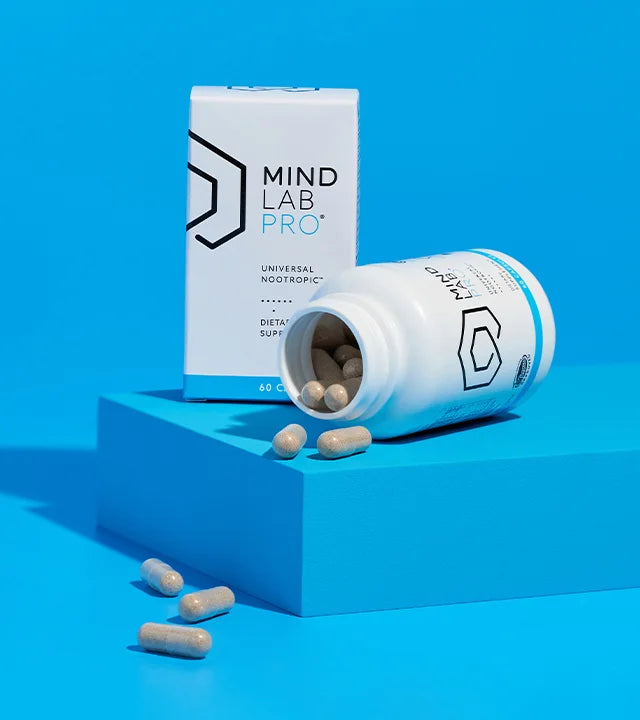
Some nootropic users prefer L-theanine as one component of a broader daily brain formula rather than as a standalone supplement. Mind Lab Pro® is a caffeine-free, vegan-friendly formula containing 100 mg L-theanine per two-capsule serving, along with ten other nootropic nutrients: citicoline, phosphatidylserine, Bacopa monnieri, Lion's Mane mushroom, Rhodiola rosea, N-acetyl-L-tyrosine, maritime pine bark extract, and vitamins B6, B9, and B12.(8)
In the formula, L-theanine contributes relaxed-attention support while the other ingredients address different aspects of cognitive function. Unlike coffee, Mind Lab Pro does not add caffeine, so users who pair it with a beverage can monitor stimulant intake separately. This is a positioning rationale, not evidence that Mind Lab Pro changes theanine's half-life.
Three studies have investigated the finished Mind Lab Pro formula. A 2023 placebo-controlled study reported improvements in selected information-processing tasks after 30 days.(9) A separate 2023 study reported significant between-group improvements in immediate and delayed memory recall, while several other memory measures did not significantly differ from placebo.(10) A 2025 EEG study found changes in brain-network interdependencies after 60 days, but not significant improvement in the measured perceptual-decision task's behavioral speed or accuracy.(11)
These findings concern the full multi-ingredient formula, not L-theanine's pharmacokinetics or the benefits of 100 mg L-theanine by itself.
Frequently Asked Questions About Theanine Half-Life
How long does L-theanine take to kick in?
Blood levels tend to peak about 45–60 minutes after a dose. Human attention studies have tested effects around 30–60 minutes after intake. Not everyone will notice an obvious subjective change.
How long do L-theanine effects last?
Some cognitive effects have been measured during the first one to two hours after use. A precise, universal duration of calm focus is not established, and a 65-minute plasma half-life does not define it.
Can I take L-theanine more than once daily?
Some people use repeated servings, but research does not establish an ideal redosing interval from half-life alone. Follow label guidance and discuss repeated use with a clinician if you take medications or have relevant medical conditions.
Does food affect L-theanine absorption?
Human research suggests comparable absorption from tea and capsules. However, robust meal-by-meal comparisons that quantify how food changes the half-life are lacking.
Does L-theanine cross the blood-brain barrier?
Preclinical evidence supports brain entry, but routine human supplementation studies primarily measure blood and urine rather than directly measuring concentrations in brain tissue.
Is L-theanine safe to take every day?
Short-term and several multiweek human trials have reported generally good tolerability. They do not fully establish long-term safety for every dose or patient group. The FDA has issued “no questions” responses to specific L-theanine GRAS (Generally Regarded as Safe) notices for specified food uses. GRAS notice status is not FDA approval of L-theanine as a medication, proof of cognitive benefit, or a blanket endorsement of every supplement dose.(7)
Does L-theanine cancel out caffeine?
No. They act through different mechanisms, and controlled studies suggest that the combination may support certain attention tasks. It does not reliably remove caffeine-related insomnia, anxiety, or cardiovascular effects.
Summary: Theanine Half-Life and Smart Timing
L-Theanine is a useful nootropic that is research-backed, safe and well tolerated. Inside knowledge of its half-life can help you maximize its potential benefits. Some tips:
- Know the number: Human research estimates an L-theanine elimination half-life of approximately 65 minutes and a plasma peak around 50 minutes.
- Don't confuse levels with benefits: Attention effects have been studied over the first couple of hours, but individual experiences vary.
- Use timing thoughtfully: A 30–60-minute pre-task window reflects common study designs; evaluate the response before making L-theanine part of a daily routine.
The useful takeaway is not that L-theanine “lasts exactly one hour.” It's that a fast-absorbed amino acid can have time-dependent effects worth considering when planning coffee, studying, and focused work—without turning a pharmacokinetic estimate into a promise of better performance.
References
- Gerolymos, C., Saddier, E., Boyer, L., & Fond, G. (2026). Cognitive and affective effects of L-theanine: A systematic review and meta-analysis of 31 randomized trials. Molecular Psychiatry, 31, 6592–6602. Link
- van der Pijl, P. C., Chen, L., & Mulder, T. P. J. (2010). Human disposition of L-theanine in tea or aqueous solution. Journal of Functional Foods, 2(4), 239–244. Link
- Scheid, L., Ellinger, S., Alteheld, B., et al. (2012). Kinetics of L-theanine uptake and metabolism in healthy participants are comparable after ingestion of L-theanine via capsules and green tea. Journal of Nutrition, 142(12), 2091–2096. Link
- Nobre, A. C., Rao, A., & Owen, G. N. (2008). L-theanine, a natural constituent in tea, and its effect on mental state. Asia Pacific Journal of Clinical Nutrition, 17(Suppl 1), 167–168. Link
- Payne, E. R., Aceves-Martins, M., Dubost, J., Greyling, A., & de Roos, B. (2025). Effects of tea (Camellia sinensis) or its bioactive compounds L-theanine or L-theanine plus caffeine on cognition, sleep, and mood in healthy participants: A systematic review and meta-analysis of randomized controlled trials. Nutrition Reviews, 83(10), 1873–1891. Link
- Baba, Y., Inagaki, S., Nakagawa, S., et al. (2021). Effects of L-theanine on cognitive function in middle-aged and older subjects: A randomized placebo-controlled study. Journal of Medicinal Food, 24(4), 333–341. Link
- U.S. Food and Drug Administration. (2007). GRAS Notice No. 209: L-theanine. Link
- Mind Lab Pro. Ingredients and supplement facts (current product listing). Link
- Utley, A., Gonzalez, Y., & Abbott-Imboden, C. (2023). The efficacy of a nootropic supplement on information processing in adults: A double blind, placebo controlled study. Biomedical Journal of Scientific & Technical Research, 49(1). Link
- Abbott-Imboden, C., Gonzalez, Y., & Utley, A. (2023). Efficacy of the nootropic supplement Mind Lab Pro on memory in adults: Double blind, placebo-controlled study. Human Psychopharmacology, 38(4), e2872. Link
- O’Reilly, D., Bolam, J., Delis, I., & Utley, A. (2025). Effect of a plant-based nootropic supplement on perceptual decision-making and brain network interdependencies: A randomised, double-blinded, and placebo-controlled study. Brain Sciences, 15(3), 226. Link


