A smart theanine pre-workout strategy doesn't "amp you up" like you might expect. Instead, l-theanine helps you stay calm, focused, and intentional while you train. L-theanine is a tea-derived amino acid best known for relaxed alertness, and it becomes especially interesting before exercise when it is paired with caffeine.
Caffeine is already legendary in sports nutrition. In a 2022 survey of 254 endurance athletes, 85% reported caffeine use, commonly timed around training and competition. L-theanine is highly relevant because many gym-goers are not looking for more stimulation—they are looking for a smoother way to use the stimulation they already take.
This guide explains what an L-theanine pre-workout can realistically do, how it may support clarity and focus in the gym, how it interacts with caffeine, and how it compares with more "physical" pre-workout amino acids such as beta-alanine and L-citrulline. It also covers dosage, timing, sleep, safety, label quality, and smarter pre-workout stacks. Let's get to it!
Key Takeaways
- L-theanine is mainly a cognitive pre-workout: it may support calm focus, stress control, and mental clarity rather than directly increasing strength, power, or muscle endurance.
- It stacks especially well with caffeine: research commonly uses more L-theanine than caffeine, including 100 mg L-theanine with 50 mg caffeine.
- Do not confuse calm with weakness: the goal is steadier attention and fewer stimulant-related distractions, not sedation.
- Physical ingredients still matter: beta-alanine and L-citrulline work through different pathways related to muscle fatigue, carnosine, nitric oxide, and blood flow.
- Timing depends on the stack: L-theanine is commonly taken about 30–60 minutes before training, especially when paired with caffeine.
- Evening workouts require extra thought: L-theanine may support relaxation, but it does not cancel caffeine-related sleep disruption.
Disclaimer
This article is for educational purposes only and is not medical advice. Pre workout supplements may contain caffeine and other stimulants that can affect heart rate, blood pressure, anxiety, and sleep. Talk with a healthcare professional before using L-theanine or a pre workout stack if you are pregnant or breastfeeding, have cardiovascular or blood pressure concerns, take prescribed stimulants or other medications, or have a medical condition. Supplements are not intended to diagnose, treat, cure, or prevent disease.
What Is L-Theanine?
L-theanine is a non-protein amino acid found naturally in tea leaves, especially Camellia sinensis, the plant used for green tea, black tea, white tea, and oolong tea. It is not a stimulant. Instead, it is used as a nootropic because it may support a calm-but-awake mental state without the drowsiness associated with sedatives.
This is relevant to pre-workout use because caffeine is so common among athletes: the endurance-athlete survey mentioned above found habitual caffeine use in 85% of respondents.(1) L-theanine offers a different kind of workout support than a stimulant; but it also appears to help caffeine work better, especially in a gym or sport-related context.
Read more about L-theanine as a nootropic.
How Does L-Theanine Work?

L-theanine appears to regulate excitatory nervous system signaling, stress responses, and brainwave activity. It may help create a smoother, sharper and clearer mental state that may be easier to control under pressure.
So how might L-theanine relate to athletic performance? Exercise performance is not just about muscles. A good session also involves attention, reaction speed, decision-making, motivation, and the ability to maintain consistent proper technique when fatigue sets in.
This is where a nootropic amino acid Like L-theanine (and various other nootropics) can complement and even enhance typical sports nutritients. Let's check out some "how it works" L-Theanine evidence that may be relevant to exercise:
- Alpha brain waves for "relaxed alertness": In one human EEG study, researchers reported that 50 mg L-theanine increased alpha-frequency brain activity compared with placebo. Alpha activity is commonly associated with relaxed wakefulness.(2)
- Calmer stress reactions: A small double-blind study exposed 12 participants to a mental arithmetic stressor. L-theanine reduced heart rate and salivary immune responses associated with acute stress compared with placebo, suggesting reduced "fight or flight" nervous system activation.(3)
These bioactivities make a basic pre-workout case for L-theanine as an indirect workout-booster. It may help gym-goers feel mentally relaxed without sinking into performance-crushing sedation. And it may help athletes feel sharp and focused without feeling overamped.
See how nootropics may support focus, motivation, and performance while working out.
Stimulant-Free Relevance
L-theanine is stimulant-free. This may appeal to late-day trainees, stimulant-sensitive users, or athletes who already get caffeine elsewhere. Just keep expectations realistic: the standalone benefit is more about relaxation, stress balance, and mental clarity than raw exercise energy.
While theanine is effective alone, by far the most popular use for sports nutrition-oriented athletes is to pair L-theanine with caffeine. The goal? Enhance caffeine alertness, stack on additional nootropic benefits, and take the edge off caffeine jitters for cleaner, calmer athletic performance.
Up next, let's take a closer look at the L-Theanine + Caffeine combo and its potential for sports nutrition.
Smarter Caffeine: Just Add Theanine


Caffeine is one of the best-supported sports-performance ingredients, but its stimulatory effects can also increase jitters, heart-rate awareness, and blood pressure in some users. That is one reason adding L-theanine to caffeine has become such a popular nootropic strategy: It appears to help smooth out caffeine's side effects while complementing its beneficial effects.
Steadier Stimulation
Adding L-theanine to caffeine may help the stimulation feel smoother. For users who respond to caffeine with edgy energy, this can make it easier to keep attention on the set, movement pattern, or training plan rather than on the stimulant sensation itself.
Let's now look at some combination caffeine + theanine studies for cognition and overall health, followed by combo studies in a sports nutrition context, specifically.
- In a randomized study of 44 young adults, 97 mg L-theanine combined with 40 mg caffeine significantly improved task-switching accuracy and subjective alertness while reducing tiredness compared with placebo.(4)
- A double-blind crossover study used 100 mg L-theanine with 50 mg caffeine. The combination improved the speed and accuracy of attention switching and reduced susceptibility to distractions during a memory task.(5) Those findings seem to align pretty well to gym situations where sustained focus and quick adjustment are relevant.
- In a double-blind, placebo controlled study evaluating cerebral blood flow, 24 adults received 75 mg caffeine, 50 mg L-theanine, the combination, and placebo on separate visits. Caffeine produced effects consistent with cerebral blood vessel tightening/narrowing. Adding L-theanine eased some of those vascular effects—but also eliminated some of caffeine’s cognitive and mood effects.(6)
- In a randomized study of 48 healthy adults, 250 mg caffeine raised blood pressure, while 200 mg L-theanine countered the caffeine-related blood-pressure increase.(7) That does not mean L-theanine guarantees healthy blood pressure or makes a high caffeine dose safe.
Did you know? L-theanine and caffeine naturally occur together in tea. Modern nootropic stacks are essentially a precision-dosed version of a combination humans have consumed for centuries.
For a practical explanation of the common ratio, see our guide to the best caffeine and L-theanine stack.
How L-Theanine Helps Deliver a Better Workout

The strongest case for L-theanine pre workout use is indirect: it can support the mental side of performance while balancing the stimulatory effects of caffeine. That may translate into a better workout when your training depends on attention, pacing, technique, reaction speed, or prolonged concentration.
Reaction Speed and Accuracy
One randomized, double-blind, placebo-controlled crossover trial studied 20 current or former male collegiate athletes taking a supplement containing caffeine, theanine, and L-tyrosine.
The combination improved movement accuracy during static and dynamic testing and improved some dynamic target-hitting measures versus placebo, although the actual exercise bouts themselves did not differ between conditions.(8)
What the Newest Athlete Study Shows
A 2026 randomized crossover study provides a useful reality check. Twenty competitive athletes completed caffeine, 200 mg L-theanine, caffeine + L-theanine, and placebo conditions.
The combination did not produce extra benefits for maximal strength, aerobic endurance, handgrip strength, or hand-eye coordination. L-theanine alone was associated with lower maximal leg and back strength than caffeine and placebo in this small study.(9)
So L-theanine should not be sold as a direct strength, power, or endurance booster. Its better role is cognitive: calmer focus, reduced overstimulation, and smarter caffeine pairing.
Dosage, Timing, and Stacking Recommendations
There is no officially established L-theanine pre-workout dose. Human cognitive studies commonly use amounts from about 50–200 mg, with 100–200 mg being a practical range for stacking. Timing L-theanine roughly 30–60 minutes before training fits the windows used in many acute studies.
L-Theanine + Caffeine
A popular starting point is a 2:1 L-theanine-to-caffeine ratio. For example:
- 100 mg L-theanine + 50 mg caffeine
- 160 mg L-theanine + 80 mg caffeine
- 200 mg L-theanine + 100 mg caffeine
The first ratio is directly represented in cognitive research, but 2:1 is a practical benchmark rather than a universally proven optimum. Caffeine sensitivity still matters more than a perfect mathematical ratio.
Caffeine itself is well established as an ergogenic aid. The International Society of Sports Nutrition notes consistent exercise-performance benefits in many studies at 3–6 mg/kg body weight, while lower doses may still work for some people.(12) If your goal is smooth stimulation rather than maximal caffeine exposure, you do not need to chase the top of that range.
L-Theanine + Beta-Alanine + L-Citrulline
These ingredients can coexist because they address different bottlenecks:
- L-theanine: calm focus and stimulant balance.
- Beta-alanine: daily carnosine support for high-intensity fatigue resistance.
- L-citrulline: acute nitric oxide and blood flow support.
A sample evidence-oriented pre workout stack might therefore combine 100–200 mg L-theanine, an individually appropriate caffeine dose, beta-alanine used consistently as part of a 4–6 g daily protocol, and 6–8 g citrulline malate before training. This is a framework, not a one-size-fits-all prescription.
Effects on Sleep Quality and Recovery
Recovery is where a calming amino acid gets especially interesting. L-theanine is not a sedative, but it has been studied for supporting relaxation and sleep quality.
A review of human sleep research concluded that around 200 mg L-theanine before bed may support sleep quality through relaxation rather than sedation. The authors emphasized that L-theanine does not appear to cause next-day drowsiness in the way conventional sedatives can.(13)
That does not mean you should take caffeinated pre workout at night and expect L-theanine to fix the problem. Caffeine can remain active for hours and degrade sleep even when you feel tired enough to fall asleep. For evening training, a stimulant-free pre workout stack with L-theanine makes more sense than trying to use theanine as an antidote to late caffeine.
Safety, Blood Pressure, and Contraindications
L-theanine is generally well tolerated in human studies. In a 28-day randomized, double-blind, placebo-controlled trial, 30 adults with moderate stress took either 400 mg L-theanine per day or placebo; the supplement was well tolerated without clinically meaningful safety concerns in the studied group.(14)
Still, pre-workout safety depends on the entire stack—not just L-theanine. Be more cautious if you use:
- high-dose caffeine or multiple stimulant sources
- prescribed stimulants
- blood pressure medications
- products that combine several stimulatory compounds
- multiple pre workout supplements on the same day
If you monitor blood pressure, do not assume that adding L-theanine makes caffeine neutral. Healthy blood pressure responses vary substantially by person and dose. Stop and seek medical advice for chest pain, severe dizziness, fainting, or unusual cardiovascular symptoms.
Can You Take L-Theanine Every Day?
Daily L-theanine use has been studied for several weeks, including 400 mg/day in the trial above.(14) That provides some reassurance for short-term use, but it does not establish a universal long-term dose for everyone. If your daily stack also contains caffeine, tolerance, dependence, sleep quality, and total stimulant intake become the bigger issues.
Best Ingredients to Pair With L-Theanine for a Better Workout
A useful pre workout stack should have a reason for every ingredient. Rather than collecting as many compounds as possible, match each nutrient to a specific performance goal.
- Caffeine: alertness, energy, endurance, and exercise performance.
- Beta-alanine: muscular fatigue resistance during repeated high-intensity work.
- L-citrulline: nitric oxide and blood flow support.
- L-tyrosine: cognitive performance under stress and fatigue.
- Creatine: strength, power, and repeated high-intensity performance.
If you want a broader look at mind-body ingredients, see our guide to nootropics for pre-workout focus and performance.
How to Evaluate Pre-Workout Labels for Better Ingredients
A better pre workout is not necessarily the product with the longest label. Look for:
- Transparent doses: avoid proprietary blends that hide how much of each compound you are actually getting.
- Reasonable stimulant levels: more caffeine does not automatically mean better performance.
- Clinically relevant amounts: compare ingredient doses with the amounts used in human studies.
- Clear role differentiation: know which ingredients target focus, blood flow, endurance, hydration, or muscle fatigue.
- Clean formulation: unnecessary artificial additives are not performance ingredients.
- Quality and testing: competitive athletes should pay particular attention to contamination risk and third-party verification.
This is also where many pre workout formulas fall apart: they include dozens of fashionable nutrients at token doses. A shorter transparent formula with better ingredients can be more useful than an oversized label full of underdosed compounds.
Frequently Asked Questions
Is L-theanine good before a workout?
It can be, especially if your goal is calm focus or smoother caffeine stimulation. Evidence is stronger for cognitive and stress-related effects than for directly increasing strength, power, or endurance.
How much L-theanine should I take pre workout?
Human studies commonly use roughly 50–200 mg, and 100–200 mg is a practical range often used in supplements. There is no officially established pre-workout dose, so start conservatively and account for any L-theanine already present in your formula.
When should I take L-theanine before training?
About 30–60 minutes before exercise is a practical timing window, especially when combining it with caffeine. Product instructions should still take priority when using a formulated pre workout.
Can I take L-theanine with caffeine before working out?
Yes. This is one of the best-known nootropic combinations. A common starting ratio is about two parts L-theanine to one part caffeine, such as 100 mg L-theanine with 50 mg caffeine.
Does L-theanine improve blood flow?
L-theanine is not a conventional nitric oxide ingredient like L-citrulline. Research suggests it can modify caffeine-related cerebral blood flow and blood pressure responses, but it should not be positioned as a muscle-pump ingredient.
Will L-theanine make me sleepy during a workout?
Usually not at common supplemental doses. L-theanine is better known for relaxation without sedation. Individual responses differ, however, so test it during ordinary training before using it for an important event.
Can I use L-theanine for an evening workout?
Yes, especially without caffeine. If sleep quality matters, a stimulant-free L-theanine stack makes more sense than pairing it with late-day caffeine and hoping the theanine will offset the sleep effects.
Best L-Theanine Pre-Workout Products
If you want L-theanine in a finished formula, the best option depends on whether you want a complete pre-workout, a precise caffeine-theanine stack, or broader caffeine-free nootropic support.
Performance Lab® Pre Lab Pro®

Pre Lab Pro® is built specifically as a pre workout rather than as a general nootropic. The current formula provides 160 mg L-theanine with 80 mg natural caffeine—a 2:1 ratio—plus 400 mg L-tyrosine. It also adds 2,200 mg Setria® for Sport (L-citrulline + glutathione), 1,500 mg red beet powder, B vitamins, vitamin D3, potassium, iron, and Himalayan pink salt.
That makes it a more complete gym formula: L-theanine and caffeine target smooth focus and energy, while beetroot and L-citrulline support nitric oxide and blood flow. The label is transparent, vegan, and free from artificial additives.
Learn more about Performance Lab® Pre Lab Pro®.
Performance Lab® Caffeine 2

Caffeine 2 is a simpler option if your main goal is controlled stimulation. Each capsule supplies 50 mg natural caffeine + 100 mg L-theanine, along with 250 mg L-tyrosine and NutriGenesis® vitamins B2, B6, B9, and B12.
The advantage is control. One capsule delivers a low caffeine dose in the classic 1:2 caffeine:L-theanine ratio; you can then decide whether your workout needs one capsule or whether you already have caffeine coming from coffee, tea, or another source.
Compare Caffeine 2 with other caffeine pills.
Mind Lab Pro®: L-Theanine in a Broader Nootropic Stack

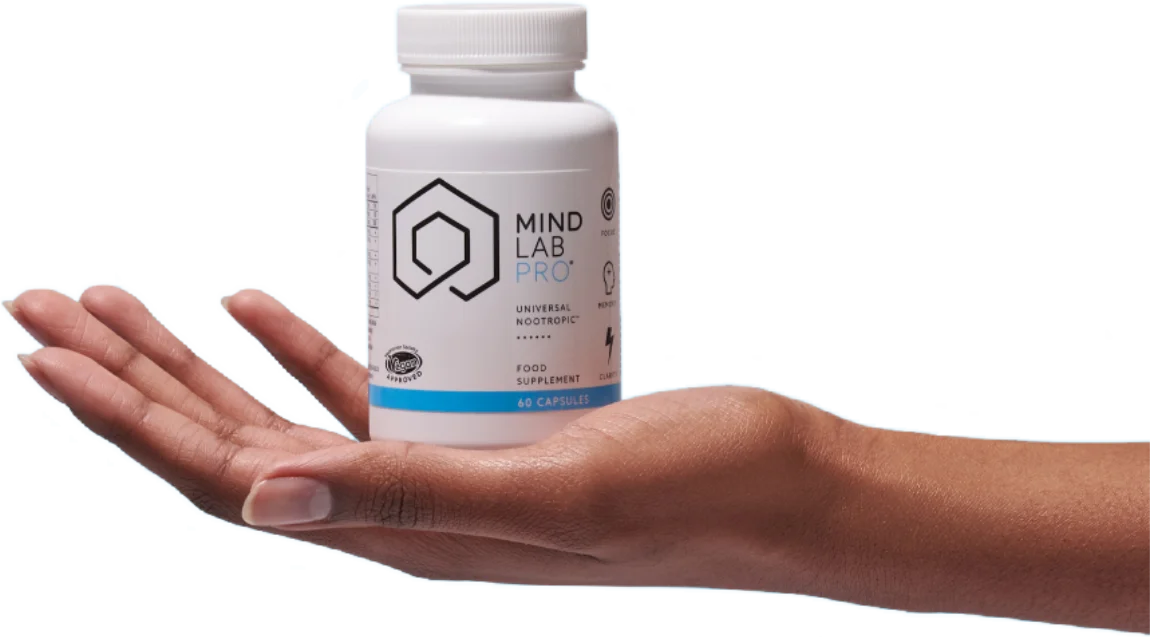
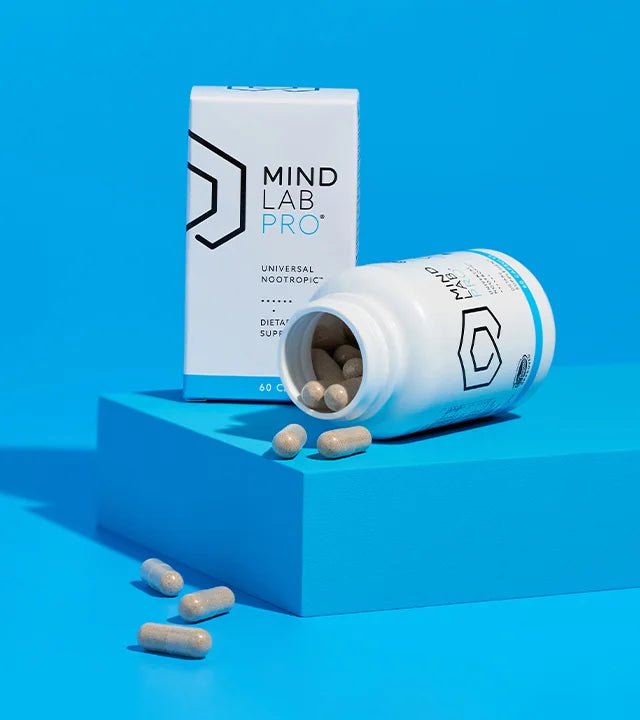
Mind Lab Pro® is not a dedicated pre workout. It is a caffeine-free, broad-spectrum nootropic designed to support cognitive performance across the day. That can still matter in the gym: focus, motivation, decision-making, stress resilience, and mental intensity all contribute to consistent training.
The current two-capsule serving supplies all 11 Mind Lab Pro ingredients:
- Citicoline (as Cognizin®) — 250 mg
- Phosphatidylserine (from sunflower lecithin) — 100 mg
- Bacopa monnieri full-spectrum extract — 150 mg, standardized to 24% bacosides with 9 bioactives
- Organic Lion’s Mane Mushroom (mycelium and fruit) — 500 mg
- Rhodiola rosea root — 50 mg, standardized to 3% rosavins and 1% salidrosides
- N-Acetyl L-Tyrosine — 175 mg
- L-Theanine — 100 mg
- Maritime Pine Bark Extract — 75 mg, standardized to 95% proanthocyanidins
- Vitamin B6 — 2.5 mg
- Vitamin B9 — 100 mcg
- Vitamin B12 — 7.5 mcg
For training, L-theanine contributes calm focus; N-Acetyl L-Tyrosine and Rhodiola are relevant to performance under stress; Citicoline supports attention and brain energy; and Maritime Pine Bark Extract supports antioxidant activity and healthy blood flow. Because Mind Lab Pro is caffeine-free, you can keep it stimulant-free or pair it with a separately controlled caffeine source.
Mind Lab Pro Human Research
Mind Lab Pro has also been evaluated as a complete formula in three human trials:
- Information processing: In a pseudo-randomized, double-blind, placebo-controlled study, 105 healthy adults took Mind Lab Pro or placebo for 30 days. The supplement group significantly improved simple reaction time, choice reaction time, and anticipation, with significant between-group differences on all three measures.(15)
- Memory: In another 30-day pseudo-randomized, double-blind, placebo-controlled study, 49 healthy adults completed the Wechsler Memory Scale. The supplement group improved across all tested memory subscales, with significant between-group differences in immediate and delayed recall.(16)
- Brain-network activity: A randomized, double-blind, placebo-controlled study followed 32 completers after 60 days of supplementation. EEG analysis found broader increases in brain-network interdependencies and information sharing, although the study did not find significant improvements in visual choice accuracy or reaction time.(17)
Get all the details on Mind Lab Pro research.
That makes Mind Lab Pro more relevant as a whole-day cognitive base than as a traditional pre-workout powder. If you want targeted gym stimulation, Pre Lab Pro or Caffeine 2 are the more direct options; if you want broader nootropic support that also carries into training, Mind Lab Pro fits a different role.
Summary
A theanine pre workout works best when you understand what L-theanine actually does. It is not beta-alanine, L-citrulline, creatine, or caffeine. Its main value is cognitive: relaxed alertness, stress control, mental clarity, and smoother stimulation.
If you already use caffeine, combining L-theanine can make a pre workout stack feel more controlled, with human research supporting improvements in specific attention tasks. For physical performance, combine that mental support with ingredients aimed at the body—such as beta-alanine for high-intensity fatigue resistance and L-citrulline for nitric oxide and blood flow.
The practical goal is not to build the largest stack possible. It is to choose better ingredients, use transparent doses, understand what each compound contributes, and create a pre workout that helps you train harder without making your nervous system feel like the workout started before you did.
References
- Kreutzer, A., Graybeal, A. J., Moss, K., Braun-Trocchio, R., & Shah, M. (2022). Caffeine supplementation strategies among endurance athletes. Frontiers in Sports and Active Living, 4, 821750. Link
- Nobre, A. C., Rao, A., & Owen, G. N. (2008). L-theanine, a natural constituent in tea, and its effect on mental state. Asia Pacific Journal of Clinical Nutrition, 17(Suppl 1), 167–168. Link
- Kimura, K., Ozeki, M., Juneja, L. R., & Ohira, H. (2007). L-Theanine reduces psychological and physiological stress responses. Biological Psychology, 74(1), 39–45. Link
- Giesbrecht, T., Rycroft, J. A., Rowson, M. J., & De Bruin, E. A. (2010). The combination of L-theanine and caffeine improves cognitive performance and increases subjective alertness. Nutritional Neuroscience, 13(6), 283–290. Link
- Owen, G. N., Parnell, H., De Bruin, E. A., & Rycroft, J. A. (2008). The combined effects of L-theanine and caffeine on cognitive performance and mood. Nutritional Neuroscience, 11(4), 193–198. Link
- Dodd, F. L., Kennedy, D. O., Riby, L. M., & Haskell-Ramsay, C. F. (2015). A double-blind, placebo-controlled study evaluating the effects of caffeine and L-theanine both alone and in combination on cerebral blood flow, cognition and mood. Psychopharmacology, 232(14), 2563–2576. Link
- Rogers, P. J., Smith, J. E., Heatherley, S. V., & Pleydell-Pearce, C. W. (2008). Time for tea: Mood, blood pressure and cognitive performance effects of caffeine and theanine administered alone and together. Psychopharmacology, 195(4), 569–577. Link
- Zaragoza, J., Tinsley, G., Urbina, S., et al. (2019). Effects of acute caffeine, theanine and tyrosine supplementation on mental and physical performance in athletes. Journal of the International Society of Sports Nutrition, 16(1), 56. Link
- Yildirim Tuncer, S., Ozdenk, S., Yildirim, U. C., et al. (2026). Acute effects of combined and isolated caffeine and theanine supplementation on physical and cognitive performance in competitive athletes: A randomized, double-blind, placebo-controlled crossover study. Frontiers in Nutrition, 12, 1751673. Link
- Trexler, E. T., Smith-Ryan, A. E., Stout, J. R., et al. (2015). International society of sports nutrition position stand: Beta-Alanine. Journal of the International Society of Sports Nutrition, 12, 30. Link
- Vårvik, F. T., Bjørnsen, T., & Gonzalez, A. M. (2021). Acute effect of citrulline malate on repetition performance during strength training: A systematic review and meta-analysis. International Journal of Sport Nutrition and Exercise Metabolism, 31(4), 350–358. Link
- Guest, N. S., VanDusseldorp, T. A., Nelson, M. T., et al. (2021). International society of sports nutrition position stand: Caffeine and exercise performance. Journal of the International Society of Sports Nutrition, 18(1), 1. Link
- Rao, T. P., Ozeki, M., & Juneja, L. R. (2015). In search of a safe natural sleep aid. Journal of the American College of Nutrition, 34(5), 436–447. Link
- Moulin, M., Crowley, D. C., Xiong, L., Guthrie, N., & Lewis, E. D. (2024). Safety and efficacy of AlphaWave® L-Theanine supplementation for 28 days in healthy adults with moderate stress: A randomized, double-blind, placebo-controlled trial. Neurology and Therapy, 13(4), 1135–1153. Link
- Utley, A., Gonzalez, Y., & Abbott Imboden, C. (2023). The efficacy of a nootropic supplement on information processing in adults: A double blind, placebo controlled study. Biomedical Journal of Scientific & Technical Research, 49(1), 40297–40305. Link
- Abbott-Imboden, C., Gonzalez, Y., & Utley, A. (2023). Efficacy of the nootropic supplement Mind Lab Pro on memory in adults: Double blind, placebo-controlled study. Human Psychopharmacology: Clinical and Experimental, 38(4), e2872. Link
- O’Reilly, D., Bolam, J., Delis, I., & Utley, A. (2025). Effect of a plant-based nootropic supplement on perceptual decision-making and brain network interdependencies: A randomised, double-blinded, and placebo-controlled study. Brain Sciences, 15(3), 226. Link