


Brain Boosters + Sleep Aids for Superior Daytime Cognition
Looking for nootropics that can help you sleep better? It's a little tricky. Brain-boosting nootropics aren't traditional "sleep aids." However, some nootropics are calming supplements that support relaxation, sleep quality and next-day mental performance. Some may even help you fall asleep faster.
Stacking the right cognitive enhancers with natural sleep supplements is your best bet for enhancing both brain recovery and overall cognitive performance.
Sleep isn’t just “rest”—it’s brain maintenance. In a 2025 Neurology paper from the Mayo Clinic Study of Aging, chronic insomnia was associated with a 40% increased risk of incident cognitive impairment and a faster decline in global cognitive scores.(11)
This guide covers how combining the right nootropics with a quality natural sleep supplement may unlock the best possible benefits for daytime brainpower and long-range brain health. Let's get to it!
Not sure which sleep guide you need?
- Looking for supplement picks? Read Best Sleep Supplements.
- Looking for OTC sleeping pills / drugstore options? Read Best Over-The-Counter Sleeping Pills.
- You’re in the right place: this guide explains how nootropics can help or hurt sleep (timing, calming options, and what to avoid at night).
Key Takeaways
- Goal: Support calmer nights and clearer days by reducing stress arousal and promoting relaxed focus.
- What helps: non-stim nootropics that ease tension and support healthy brain rhythms (e.g., relaxation, stress resilience, mood balance).
- What to avoid late: stimulants and energizing stacks near bedtime; time these earlier in the day.
- Timing matters: take calming supports in the evening; take energizers in the morning/early afternoon.
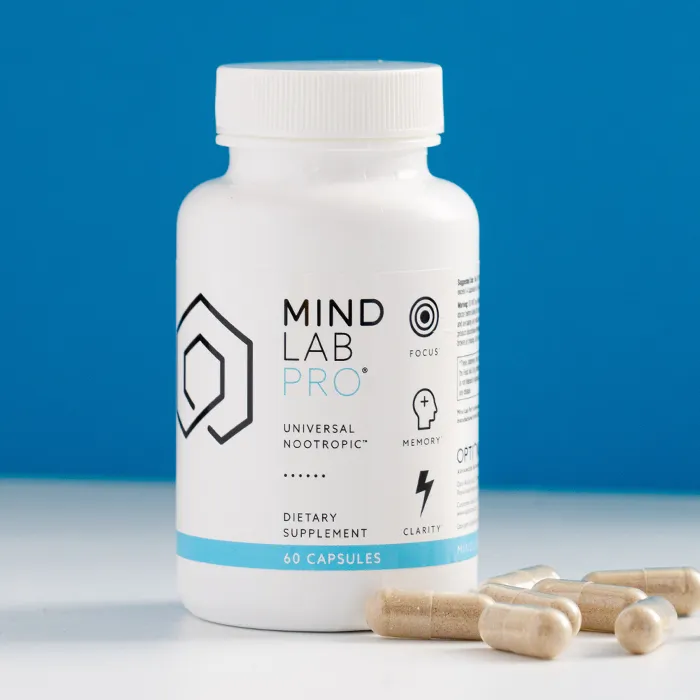
- Mind Lab Pro® is a clean, stim-free stack designed for steady daytime clarity—so falling asleep isn’t fighting caffeine-type jitters.
Before You Stack: Pick the Right Sleep “Lane”
This guide focuses on nootropics + timing—how cognitive enhancers can help or hurt sleep depending on when you take them, how stimulating they are, and whether your sleep issue is mostly stress arousal vs. circadian misalignment.
- Want the best sleep supplements to buy (buyer’s guide, label red flags, best options by goal)? Go here: Best Sleep Supplements
- Want OTC/drugstore “sleeping pills” + safety notes (what to avoid + next-day grogginess)? Go here: Best Over-The-Counter Sleeping Pills
*Note: Always check with your clinician before using sleep aids or new supplements (especially if you’re pregnant, managing a condition, or taking medications). Persistent insomnia can signal an underlying issue that needs medical support.
Which Brain Functions Affect Sleep?
Essentially, sleep is controlled by two general functions: our sleep drive and our circadian rhythm. Our sleep drive is the mechanism that keeps track of how much quality sleep we've gotten. It lets us know when we're running low and helps us stay asleep when we need it.
Our circadian rhythm, however, controls the when. It tells people when to feel sleepy and when to feel awake in response to light exposure throughout each day and night.
Melatonin Production and the Circadian Rhythm
Then, the main brain chemical associated with sleepiness and wakefulness is called melatonin. Essentially, our eyes translate our sleep schedule into melatonin production based on lightness and darkness. This is how our circadian rhythm regulates when we sleep and wake up.
Melatonin production in our brains makes us sleepy and the lack of melatonin production makes us wakeful. This cycle is part of the circadian rhythm.
Technically, when the retinas in our eyes are exposed to light or darkness, they tell our brain's suprachiasmatic nucleus (located in the hypothalamus).( 1) Then, the suprachiasmatic nucleus relays the message to the areas of the brain that regulate our hormones and body temperature.
The messages navigate from the suprachiasmatic nucleus through the spinal cord and up to the pineal gland. The pineal gland, then, is where melatonin production, or the lack thereof, takes places.( 2)
So, when it's light outside, our retinas send messages to stop our pineal gland from creating melatonin. When it's dark, our retinas tell our pineal gland to create it, which is what induces a sleepy state.
Some nootropics for sleep support serotonin, which raises melatonin.
Melatonin is derived from serotonin, which comes from the amino acid tryptophan. Tryptophan is first soaked up from the bloodstream into the pineal gland to create melatonin and other chemicals.
Overall, melatonin is the main chemical involved in a healthy circadian rhythm. Its production, or the lack of it, is primarily affected by the level of light our retinas are exposed to each day. It sounds pretty simple, right? But there's a little more to quality sleep than just melatonin.
Did You Know?
Most sleep supplements use synthetic melatonin. Montmorency Tart Cherry -- found in Performance Lab® Sleep as a 50:1 extract-- is the richest natural source of melatonin.
Other Brain Functions Involved With Sleep
The basal forebrain and midbrain are also somewhat involved with sleep. The basal forebrain helps induce sleepiness. For example, it produces the chemical adenosine, which supports our ability to sleep.
The midbrain, however, supports the production of chemicals associated with wakefulness and arousal to keep us energized. Thus, suppressing it might be helpful to induce quality sleep.
There are various other chemicals involved in this process besides melatonin and adenosine. Here's a little bit about how each one makes us feel relaxed or awake.
GABA and Glutamate
GABA can down-regulate neurons involved in arousal, ultimately helping us sleep. It blocks the activation of neurons in the posterior hypothalamus (PH).( 3) Glutamate, then, contributes to the regulation of sleep duration and REM sleep, according to research. It helps initiate sleep and wakefulness.
Acetylcholine
The chemical acetylcholine is produced in the forebrain, which is important for the initiation of REM sleep. Our acetylcholine levels are known to increase during REM sleep. In addition, REM sleep is maintained in the acetylcholine pathways of the brain.
Norepinephrine
Norepinephrine production can deprive us of REM sleep, according to a study. Thus, nootropics that block the production of norepinephrine may help increase REM sleep.
Dopamine
Dopamine is the motivational, feel-good chemical involved in brain rewards and wakefulness. This chemical promotes wakefulness and "fights against the tendency of adenosine to promote sleep."(4)
Serotonin
The precursor to melatonin, serotonin helps maintain arousal and inhibit REM sleep.(5) Thus, optimizing it may help support your journey into deeper REM sleep if you're having trouble getting there.
Cortisol
Cortisol is the stress hormone that helps our brains and bodies stay chemically balanced. Excess cortisol or not enough cortisol can disrupt our circadian rhythm and sleep stages.
How Nootropics Can Help (or Hurt) Sleep
Most nootropics don’t “knock you out.” They influence sleep indirectly by changing stress arousal, focus intensity, and neurotransmitter balance. That’s why timing matters as much as the ingredient.
Sleep-friendly nootropics (best used late-day or evening)
- Calm-focus nootropics that reduce mental “spin” without sedation (often by supporting alpha wave activity, GABA tone, or stress resilience).
- Stress-modulating adaptogens that are better tolerated earlier in the day for some people, but can be sleep-supportive for others depending on sensitivity.
Nootropics that often disrupt sleep (best used AM / early afternoon)
- Stimulants (obvious: caffeine, high-stim pre-workouts) and “energizing” stacks.
- Highly dopaminergic / focus-intensifying compounds that increase mental drive late in the day.
- Late-day dosing of otherwise-helpful nootropics—because you can feel calm but still be too alert to drift off.
If your main goal is buying a sleep supplement (melatonin, magnesium, glycine, tart cherry, multi-ingredient stacks), use: Best Sleep Supplements.
What are the Stages of Sleep?
There are four different stages of sleep humans should experience in a cycle throughout the night. The first three are generally categorized as non-rapid eye movement (NREM) stages. The last is rapid eye movement (REM).
Here's what each stage consists of:
Stage One
Stage one is the period when we go from being awake to being asleep. It's when our brain and body start to slow down from the day. Heart rate and breathing also begin to slow down and muscles start to relax.
Stage Two
The second stage of sleep is a little heavier than stage one but not as heavy as stage three. Our eyes stop moving, our body temperature rises and our we relax even more. We also experience sleep spindles, which are sudden increases in frequency that happen as we drift into stage two.
Stage Three
This sleep stage helps us reenergize for the next day. It's when the brain and body are most relaxed. The brain starts producing slow delta waves to calm the brain. It may be very hard to wake someone up during stage 3 NREM sleep.
Rapid Eye Movement (REM) Sleep
The rapid eye movement stage is the stage when the brain becomes activated during sleep. We tend to dream the most while in REM sleep because it's the deepest stage.
Related Post:Nootropics for Lucid Dreaming - Dream Bigger with These Cognitive Enhancers
During REM, the eyes start to move rapidly underneath our eyelids. In addition, our heart begins beating fast and our blood pressure goes up. Yet our bodies are physically paralyzed. We don't necessarily reach this stage of sleep every night, however. And, when our body doesn't have enough time to go through the stages of sleep, we may experience sleep deprivation.
 This Hypnogram chart shows the typical duration of sleep stages.
What is Sleep Deprivation?
Sleep deprivation happens when we don't get enough total sleep each night. We can become sleep deprived for many reasons. However, it often has to do with our retina's exposure to light and associated brain functions.
What Causes Sleep Deprivation?
Technically, sleep deprivation can be caused by hypersomnia, insomnia, heavy work schedule, sleep apnea, stress, bad sleep hygiene, narcolepsy, diet and other issues that affect our ability to sleep and wake up. External light or the lack of it is also a huge factor, as we discussed above.
When brain chemicals are out of whack due to internal and/or external issues, we may feel exhausted because we haven't gotten enough sleep. This deprivation can lead to a whole slew of other issues.
Negative Effects of Sleep Deprivation
Experts say every adult should be getting at least seven hours of sleep per night. If not, we might end up sleep deprived, which can have greater effects than just robbing us of energy. If you don't get enough sleep each day, you could heighten your risk for a long list of health concerns:
- Mood swings
- Memory problems
- High blood pressure
- Reduced brain function
- Obesity
- Dementia
- Hallucinations
- Heart issues
- Anxiety and depression
As you can see, sleep deprivation can heighten our risk for all kinds of different health issues. Thus, it's important to get back on schedule if you're having trouble sleeping at least seven hours per night.
Nootropic L-Tyrosine has been shown in research to enhance cognitive performance in study subjects in a sleep-deprived state -- indirectly serving as one of the more effective nootropics for sleep related cognitive issues.
General Tips for Better Sleep
Before you try nootropics for sleep, there are some other natural ways you can try to get a better night's sleep.( 1)
- Put down your computer and/or cell phone earlier.
- Get on a sleep schedule to regulate your body's sleep cycle.
- Try an eye cover when you sleep to block external light.
- Make sure daylight doesn't seep through your bedroom window too early.
- Make sure there isn't too much external light in your room when you go to bed.
- Don't consume coffee or stimulants like energy drinks too close to bed-time.
If you've tried everything and still can't seem to get enough sleep, nootropics may be your best bet. But how could they possibly help?
I have better sleep habits, new job, communicating better with friends, exercising consistently and I just feel happy.Andrew D.
L-Theanine

L-Theanine is an amino acid that promotes GABA and serotonin production in the brain by crossing the blood-brain barrier. This GABA support helps induce feelings of relaxation linked to better sleep quality.(6)
- In addition, serotonin is the calming precursor to melatonin. Thus, its production may increase our brain's potential for natural melatonin production when we're deprived.
Studies show that L-Theanine has positive effects on sleep quality.(7) It leads the way among the best nootropics for sleep.
However, unlike most sleep aids, L-Theanine doesn't contain any sedatives. Instead, L-theanine works via relaxation without sedation -- which can help with both sharp mental clarity and pre-bedtime winding down. It raises Alpha brain waves associated with calm clarity. Because of this unique activity, L-Theanine is easily one of the best nootropics for sleep.
More on Mind Lab Pro® L-Theanine
Simple “Day + Night” Stack (Without Overcomplicating It)
If you want a clean, low-friction approach that supports both performance and recovery:
- Day: a stimulant-free nootropic stack for steady clarity (so you’re not relying on caffeine late). Mind Lab Pro®
- Night: a dedicated sleep supplement when needed to support sleep onset + deeper recovery. See options here: Best Sleep Supplements
If your main intent is “OTC sleeping pills” (drugstore-style aids, what to avoid, and how to reduce next-day grogginess), use this guide instead:
Best Over-The-Counter Sleeping Pills
References
- National Institute of Neurological Disorders and Stroke (NINDS). Brain Basics: Understanding Sleep. NIH Publication No. 17-3440c. Link
- Brown GM. Light, melatonin and the sleep-wake cycle. J Psychiatry Neurosci. 1994 Nov;19(5):345–353. Link
- Nitz D, Siegel JM. GABA release in posterior hypothalamus across sleep-wake cycle. Am J Physiol. 1996 Dec;271(6 Pt 2):R1707–R1712. Link
- Conger K. Research shows dopamine plays crucial role in sleep regulation. Stanford Report. 2001 Mar 21. Link
- Portas CM, Bjorvatn B, Ursin R. Serotonin and the sleep/wake cycle: special emphasis on microdialysis studies. Prog Neurobiol. 2000 Jan;60(1):13–35. Link
- White DJ, et al. Anti-Stress, Behavioural and Magnetoencephalography Effects of an L-Theanine-Based Nutrient Drink: A Randomised, Double-Blind, Placebo-Controlled, Crossover Trial. Nutrients. 2016 Jan;8(1):53. Link
- Türközü D, Şanlier N. L-theanine, unique amino acid of tea, and its metabolism, health effects, and safety. Crit Rev Food Sci Nutr. 2017 May 24;57(8):1681–1687. Link
- Utley A, Gonzalez Y, Imboden CA. The Efficacy of a Nootropic Supplement on Information Processing in Adults: A Double Blind, Placebo Controlled Study. Biomed J Sci & Tech Res. 2023;49(1). Link
- Abbott-Imboden C, Gonzalez Y, Utley A. Efficacy of the nootropic supplement Mind Lab Pro on memory in adults: Double blind, placebo-controlled study. Hum Psychopharmacol Clin Exp. 2023;e2872. Link
- O’Reilly D, Bolam J, Delis I, Utley A. Neural mechanisms of cognitive enhancement with a nootropic supplement. Brain Sciences. 2025;15(3):226. Link
- Carvalho DZ, et al. Associations of chronic insomnia, longitudinal cognitive outcomes, amyloid-PET, and white matter changes in cognitively normal older adults. Neurology. 2025. doi: 10.1212/WNL.0000000000214155.


