Lion’s Mane (Hericium erinaceus) is a functional mushroom known for its shaggy appearance and potential brain health benefits. Interest in functional mushrooms has moved well beyond niche wellness circles: Grand View Research valued the global functional mushroom market at $38.2 billion in 2025 and projects it to reach about $96 billion by 2033. Lion’s Mane is one of the mushrooms helping drive that growing interest.
But growing popularity also means more people are asking about Lion's Mane mushrooms side effects. Clinical studies generally describe Lion’s Mane as well tolerated, but side effects have been reported in some research, and individual reactions can vary. One unexpected effect some users report is sleepiness or fatigue.
So, can Lion’s Mane actually make you sleepy? And what other side effects should you know about? In this article, we’ll separate documented study findings from anecdotal reports, cover possible Lion’s Mane side effects, and look at practical ways to respond if the mushroom leaves you feeling tired instead of sharp. Let's get to it!
Key Takeaways
- Lion’s Mane is a medicinal mushroom studied for cognitive function, mood, nerve growth factor, and broader brain health.
- Human studies in this article generally describe Lion’s Mane as well tolerated; one longer study reported mild digestive discomfort, nausea, and skin rash in several participants.
- There is no solid clinical evidence in the studies cited here that sleepiness is a common Lion’s Mane side effect.
- Anecdotal reports of fatigue or drowsiness may reflect individual response, timing, dose, other supplements, medications, stress, or poor sleep.
- If negative effects persist, worsen, or include signs of an allergic reaction, stop use and consult a qualified healthcare professional.
- Research involving humans is still limited, so further research is needed to clarify long-term safety and uncommon reactions.
Disclaimer
The information in this article is for educational purposes only and is not intended to replace professional medical advice, diagnosis, or treatment. Lion’s Mane and other dietary supplements should be used with guidance from a qualified healthcare provider, especially if you have a medical condition, take prescription medications, have a known mushroom allergy, or are pregnant or breastfeeding. If you develop skin rashes, digestive symptoms, higher risk of allergy or signs of an allergic reaction, stop use and seek medical advice. Human studies remain limited, so long-term safety and uncommon health risks are not fully established.
What Is Lion’s Mane and Why Do People Take It?

Lion’s Mane (Hericium erinaceus) is a type of functional mushroom with long, white, shaggy tendrils that resemble a lion’s mane. It has been used for centuries in traditional Chinese medicine and Japanese herbalism to support brain and nerve health.
Today, Lion’s Mane is widely used as a mushroom supplement for cognitive support. Research suggests compounds in Lion’s Mane may influence the brain's ability to produce nerve growth factor (NGF), a protein involved in the growth and maintenance of nerve cells and brain cells, as well as mental functioning.
You may see stronger claims that Lion’s Mane can “regenerate brain cells,” but the human studies cited in this article do not establish that outcome. Potential health benefits commonly studied include:
- Support memory, focus, and cognitive performance
- Support pathways involving nerve growth factor and nervous system health
- Support mood and mental health in some research settings
- Support brain health in the context of age-related cognitive concerns
This is just a quick summary. If you want all the details, check out our in-depth article on Lion's Mane Benefits. But for now, let's get to the question at hand.
Fresh Lion's Mane mushrooms can be consumed as food, while supplements may use mushroom powder, Lion's Mane extract, or Lion's Mane mushroom extract. Some people take Lion's Mane mushrooms daily or use Lion's Mane extract daily, but the human studies cited here do not establish that one form or daily-use pattern is universally safer or more effective than another.
The benefits of Lion's Mane are covered in more depth in our dedicated guide. For this article, the important distinction is that the potential benefits and the possible side effects are separate questions.
Does Lion’s Mane Make You Sleepy?

There is no solid clinical evidence that Lion’s Mane causes sedation or fatigue.
In fact, most research suggests it may enhance mood, and mental clarity. Of course, there have only been a few human clinical trials on Lion's Mane Mushroom, versus a lot of people taking it reporting their personal experiences.
So first, let's quickly summarize Lion's mane research studies and report on what, if any, side effects were reported by study authors. Then we'll cover some theories behind anecdotal reports of Lion's Mane and sleepiness.
Lion's Mane for Depression and Anxiety
A 2010 placebo-controlled study involving 30 women used Lion’s Mane baked into cookies for 4 weeks. Researchers reported lower scores on some mood-related measures in subjects eating cookies versus placebo. No adverse effects were reported, and no participants dropped out because of side effects.(1)
Learn more about adaptogens for perimenopause and menopause
Review: Lion's Mane Mushroom for Depression
A 2020 review discussed human clinical research on Hericium erinaceus and depressive symptoms. The authors described potential mood-related effects while also emphasizing the limited evidence base and need for further research.(2)
Learn more about nootropics for depression
Lion's Mane Mushroom for Memory and Cognition in MCI
Researchers studied Lion’s Mane mushroom (Yamabushitake) in 30 adults ages 50–80 with mild cognitive impairment. Participants received Lion’s Mane tablets or placebo for 16 weeks. The Lion’s Mane group showed improvement on cognitive scores during treatment compared with placebo, and no adverse effects were reported during the study.(3)
Learn more about nootropics for memory
Lion's Mane for Age-Related Cognitive Concerns
Researchers also tested an erinacine A-enriched Lion’s Mane mycelia product for 49 weeks in 49 participants with mild Alzheimer’s disease. The study reported differences favoring Lion’s Mane on several cognitive and functional measures versus placebo.(4)
Side effects: This is the clearest study in the article linking Lion’s Mane to adverse effects. Four participants discontinued because of mild symptoms including digestive discomfort, nausea, and skin rash.(4)
Lion's Mane Mushrooms Side Effects
The human studies cited in this article suggest that Lion’s Mane is often well tolerated, but that does not mean side effects are impossible. The effects of Lion's Mane can vary between individuals and products. In the 2010 trial using Lion’s Mane cookies, no adverse effects were reported.(1) The 16-week mild cognitive impairment study likewise reported no adverse effects during the study or follow-up.(3)
The longer 49-week study provides the clearest side-effect signal in this article: four participants discontinued because of mild symptoms including digestive discomfort, nausea, and skin rash.(4) These findings do not establish how common those reactions are in the general population, but they are more useful than anecdotal reports when evaluating the known effects of Lion’s Mane.
Research involving humans is still limited compared with the amount of animal studies and laboratory research on this medicinal mushroom. That means uncommon reactions, interactions, and long-term safety are less certain. Anyone with a mushroom allergy, significant health concerns, or persistent negative effects should consult a healthcare professional rather than assuming Lion’s Mane is the cause—or that it is harmless.
For related safety questions, see Is Lion’s Mane Addictive? Psychoactive Claims, Safety, & FAQs.
Why Might Lion’s Mane Seem to Cause Fatigue in Some People?
Clinical trials cited here do not establish sleepiness as a typical side effect. If fatigue appears after taking Lion’s Mane, several practical explanations are worth considering before assuming the mushroom itself is responsible:
- Individual response: People can respond differently to the same mushroom supplement, especially when dose, timing, diet, and other supplements vary.
- Other supplements or medications: Taking Lion’s Mane alongside calming products, sleep aids, alcohol, or other medications can make it harder to identify what is causing drowsiness.
- Underlying sleep or stress problems: Fatigue may come from poor sleep, sleep disorders, stress, overwork, or heavy caffeine use rather than Lion’s Mane itself.
Correlation is not causation. Feeling sleepy while consuming Lion’s Mane does not prove Lion’s Mane caused the symptom. If fatigue consistently appears after taking it, improves when you stop, and returns when you restart, that pattern is useful information to discuss with a healthcare professional.
Learn more about today's top natural sleep supplements
Tips for Reducing Sleepiness from Lion’s Mane
- Change the timing: If you notice drowsiness, try taking Lion’s Mane at a different time of day and track how you respond. Learn more about taking Lion's Mane before bed.
- Follow the product dosage: Avoid assuming that a higher dose will produce better benefits. Use the labeled serving unless a healthcare professional recommends otherwise. Learn more about Lion's Mane mushroom dosage.
- Change one variable at a time: If you use many supplements, it can be difficult to identify what is causing fatigue or other side effects.
- Check the form and quality: Products can differ by fruiting body, mycelium, extract concentration, and overall formulation. Choose a clearly labeled product rather than assuming every Lion’s Mane extract is equivalent.
- Stop if symptoms persist: If drowsiness, digestive symptoms, skin rashes, or other negative effects continue, discontinue use and consult a healthcare professional.
Best Supplement with Lion's Mane Mushroom
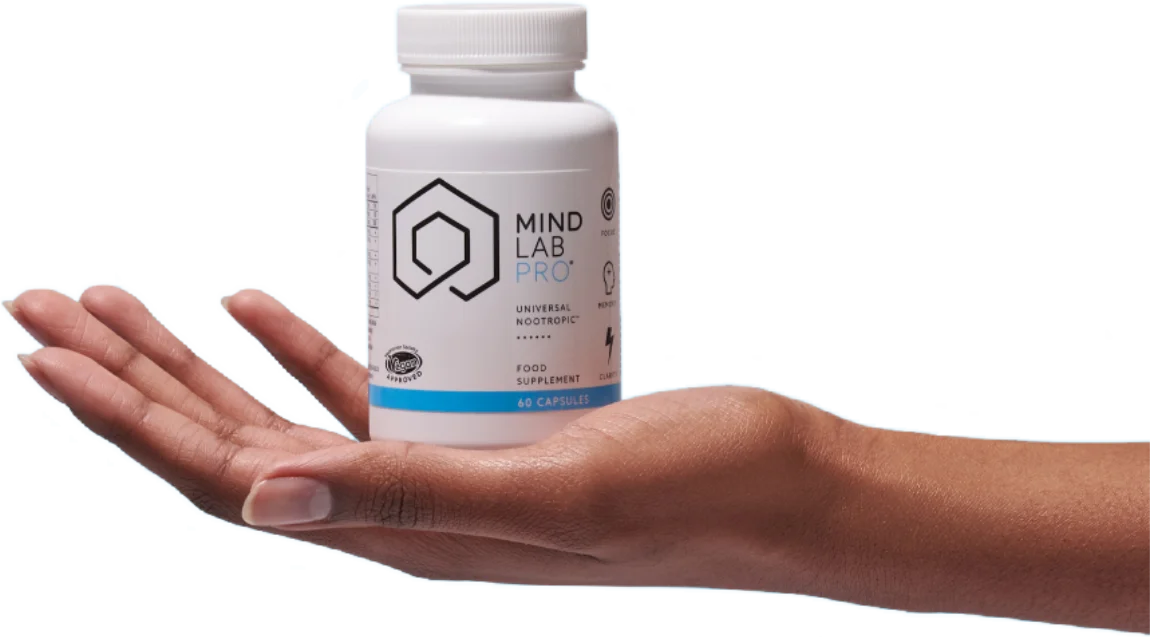
Mind Lab Pro®

If you want Lion’s Mane as part of a broader nootropic formula, Mind Lab Pro® includes 500 mg of Organic Lion’s Mane Mushroom (fruit and mycelium) alongside other ingredients for cognitive support. It is caffeine-free, but it should not be presented as preventing or counteracting Lion’s Mane side effects.

“Probably at about the two-month mark, it became very evident in my life that it was working.”
Mind Lab Pro® Ingredients: Citicoline (CDP Choline) dosage 250mg per serving, Phosphatidylserine (PS) 100mg (from sunflower lecithin), Bacopa monnieri 150mg (24% bacosides), Organic Lion's Mane Mushroom 500mg (fruit and mycelium), Maritime Pine Bark Extract 75mg (95% proanthocyanidins), N-Acetyl L-Tyrosine 175mg, L-Theanine 100mg per serving, Rhodiola rosea 50mg (3% rosavins and 1% salidrosides), NutriGenesis® Vitamin B6 (2.5 mg), Vitamin B9 (100 mcg), Vitamin B12 (7.5 mcg)
Mind Lab Pro® has also been evaluated in three placebo-controlled human studies examining information processing, memory, and brain-network activity:
- Study 1: After 30 days, researchers reported improvements on several information-processing measures versus placebo.(5)
- Study 2: After 30 days, researchers reported improvements across multiple memory measures versus placebo, including immediate and delayed recall.(6)
- Study 3: After 60 days, the study did not find faster or more accurate perceptual decision-making versus placebo, but EEG measures showed differences in brain-network interdependencies.(7)
Read all the details on Mind Lab Pro clinical studies
Frequently Asked Questions
What are the most common Lion's Mane mushrooms side effects?
In the human studies cited here, Lion’s Mane was generally well tolerated. One longer study reported mild digestive discomfort, nausea, and skin rash in several participants who discontinued treatment.(4) The evidence base is still limited, so uncommon or long-term effects are less certain.
Does Lion's Mane make you sleepy?
While there is no solid clinical evidence that Lion's Mane causes sedation or fatigue, some users do report unexpected drowsiness. Most research suggests Lion's Mane may support mood and mental clarity, but individual reactions can vary based on factors like dosage, timing, and personal brain chemistry.
Why does Lion's Mane make me sleepy?
The studies cited here do not establish why some people report sleepiness. Individual response, timing, other supplements or medications, stress, and poor sleep are all plausible alternative explanations. If the pattern is consistent, stop use and discuss it with a healthcare professional.
Can Lion's Mane make you tired?
Some users report feeling tired after taking Lion's Mane, though the clinical studies cited here have not documented fatigue as a common side effect. If tiredness consistently follows supplementation, changing timing or discontinuing use can help you determine whether Lion’s Mane may be involved.
Does Lion's Mane cause drowsiness?
The clinical research cited here does not identify drowsiness as a common documented side effect. Anecdotal reports exist, but they cannot establish cause and effect.
Does Lion's Mane give you energy?
Lion's Mane is primarily known for supporting mental clarity, focus, and cognitive performance rather than providing direct energy like stimulants. While it is considered one of the best nootropics for brain health, some users actually report feeling calmer or even sleepy rather than energized.
When should I take Lion's Mane to avoid sleepiness?
If Lion’s Mane seems to make you sleepy, try changing the timing while keeping the dose and other variables consistent. There is no established universal timing rule in the studies cited here.
Will Lion's Mane make me sleepy if I have anxiety or depression?
A small 2010 study reported changes in some mood-related measures after 4 weeks of Lion’s Mane intake and reported no adverse effects.(1) That does not establish Lion’s Mane as a treatment for anxiety or depression, nor does it prove that drowsiness cannot occur in an individual user.
Summary
Lion’s Mane is a popular functional mushroom studied for brain health, cognitive function, mood, and nerve-related pathways. The human studies cited here generally describe it as well tolerated, although mild digestive discomfort, nausea, and skin rash were reported in one longer trial.(4)
Sleepiness is different: the studies in this article do not establish sedation or drowsiness as a common Lion’s Mane side effect. Anecdotal reports may reflect individual sensitivity, timing, other supplements or medications, stress, or underlying sleep problems.
So does Lion’s Mane make you sleepy? It may seem to for some people, but current evidence in this article cannot establish why. If symptoms are mild, changing timing and tracking your response may help. If sleepiness, skin reactions, digestive symptoms, or other negative effects persist, stop use and consult a healthcare professional.
References
- Nagano, M., Shimizu, K., Kondo, R., & Hayashi, C. (2010). Reduction of depression and anxiety by 4 weeks Hericium erinaceus intake. Biomedical Research, 31(4), 231–237. Link
- Chong PS, Fung ML, Wong KH, Lim LW.Therapeutic Potential of Hericium erinaceus for Depressive Disorder. Int J Mol Sci. 2019 Dec 25;21(1):163. Link
- Mori, K., Inatomi, S., Ouchi, K., Azumi, Y., & Tuchida, T. (2009). Improving cognitive function with Lion’s Mane mushroom: A double-blind placebo-controlled clinical trial. Phytotherapy Research, 23(3), 367–372.Link
- Li IC, Chang HH, Lin CH, Chen WP, Lu TH, Lee LY, Chen YW, Chen YP, Chen CC, Lin DP. Prevention of Early Alzheimer's Disease by Erinacine A-EnrichedHericium erinaceus Mycelia Pilot Double-Blind Placebo-Controlled Study. Front Aging Neurosci. 2020 Jun 3;12:155. Link
- Utley A, Gonzalez Y, Imboden CA. The Efficacy of A Nootropic Supplement on Information Processing in Adults: A Double Blind, Placebo Controlled Study. Biomed J Sci & Tech Res 49(1)-2023. BJSTR. MS.ID.007746.Link
- Abbott-Imboden C., Gonzalez Y., Utley A. (2023). Efficacy of the nootropic supplement Mind Lab Pro on memory in adults: Double blind, placebo-controlled study. Human Psychopharmacology: Clinical and Experimental, e2872.Link
- O’Reilly, D., Bolam, J., Delis, I., & Utley, A. (2025). Effect of a Plant-Based Nootropic Supplement on Perceptual Decision-Making and Brain Network Interdependencies: A Randomised, Double-Blinded, and Placebo-Controlled Study. Brain Sciences, 15(3), 226.Link