
Memory is far-reaching. It includes short-term memory, working memory, long-term recall, visual memory, verbal memory. It also involves attention, processing speed, and the ability to connect new info with what you already know.
If you want to improve memory via brain games, you need to cast a wide net. The best games for memory challenge attention, pattern recognition, learning, recall, strategy, language, problem-solving, and mental flexibility.
Interest in memory support is not just a niche concern. CDC data suggest that more than 1 in 9 adults age 45 and older report subjective cognitive decline, meaning worsening or more frequent confusion or memory loss over the past year.(1) Many people are interested in brain games that may help keep the memory and mind sharp.
So, can brain games enhance memory? They might help, but keep your expectations realistic. The most effective brain games are mentally challenging, practiced consistently, and target specific cognitive skills. If you're searching for games to enhance memory, specifically, then you're in the right place.
In this guide we'll go into more detail on brain games, how they might help, and give you examples of games you can start playing to sharpen your memory. Let's get to it!
Key Takeaways
- Brain games may help support memory by challenging attention, working memory, recall, processing speed, visual thinking, language, and problem-solving.
- The best games for memory include matching games, word games, strategy games, card games, chess, puzzles, trivia, video games, and learning-based games.
- Research suggests cognitive training can improve trained abilities, but benefits may not always transfer to overall daily cognitive function.
- For best results, brain games should be challenging, consistent, varied, and paired with sleep, exercise, nutrition, and real-world learning.
- Nootropics may complement brain games by supporting focus, attention, memory, brain energy, stress resilience, and neuroplasticity.
Disclaimer
This article is for educational purposes only and is not medical advice. Brain games, memory exercises, and dietary supplements are not intended to diagnose, treat, cure, or prevent any disease. If you are experiencing worsening memory loss, confusion, difficulty performing daily tasks, mood changes, or other concerning symptoms, consult a qualified healthcare professional for proper evaluation. Always speak with a healthcare professional before using supplements, especially if you take medication, have a medical condition, are pregnant or breastfeeding, or are managing cognitive or neurological concerns.
How Brain Games May Help Memory

Brain games may help memory through a straightforward concept: the brain adapts to repeated challenges. When you practice remembering patterns, recalling words, solving puzzles, tracking information, or making fast decisions, you activate neural circuits involved in learning and recall.
This is often discussed in relation to neuroplasticity — the brain’s ability to change, adapt, and strengthen connections in response to experience. Games are not the only way to support neuroplasticity, but they can provide a structured practice. A good brain game gives the mind a clear task, fast feedback, increasing difficulty levels, and a reason to keep trying.
However, the key is challenge. If a game is too easy, it becomes routine. If it is too hard, it becomes frustrating. The best memory-supporting games sit in the middle: difficult enough to demand focus, but not so difficult that you give up.
What Research Says About Brain Games
The research on brain games is mixed, which is why expectations must be tempered. Some studies suggest cognitive training can improve specific trained skills, while others find brain games don't really have an impact on overall cognition.
One large meta-analysis on computerized cognitive training in healthy older adults found that cognitive training can be effective, but the benefits vary. The authors also found that unsupervised at-home training and training more than three times per week were specifically ineffective, suggesting that quality and structure are key to success.(2)
Long-term data from the ACTIVE trial also show an important nuance. In older adults, cognitive training improved the specific abilities being trained, and reasoning and speed training showed benefits that lasted up to 10 years. However, memory training did not show the same long-term targeted benefit as reasoning and speed training in that analysis.(3)
Another review focused on adults with mild cognitive impairment or dementia found that brain gaming was not more effective than control interventions for improving cognitive function in those groups.(4)
Key takeaway: brain games can be useful tools, but they work best as part of a bigger brain-health routine.
Best Games for the Brain to Enhance Memory, Specifically

Different games train different types of memory. The strongest brain-game routine includes variety: verbal memory, visual memory, working memory, strategy, processing speed, and social thinking.
1. Matching Games
Classic matching games are simple but powerful. You flip cards or tiles and try to remember where each image, word, or symbol appeared. These games train visual memory, short-term memory, attention, and pattern recognition.
Matching games are especially useful because they are easy to scale. Beginners can start with fewer cards, while advanced players can increase the number of pairs, use more similar images, add time limits, or switch to words, numbers, faces, or locations.
2. Word Games
Word games challenge verbal memory, vocabulary, language retrieval, and flexible thinking. Crossword puzzles, word searches, anagrams, spelling games, Scrabble-style games, and word-association games can all help keep language networks active.
For memory specifically, the best word games require recall, not just recognition. For example, trying to generate words from a theme, remember definitions, or recall words under time pressure may be more memory-intensive than simply spotting words in a grid.
3. Card Games
Card games are underrated brain games. Games like bridge, gin rummy, poker, hearts, spades, and even solitaire can challenge working memory, probability, attention, sequencing, emotional control, and decision-making.
Card games may be especially valuable because they often combine memory with social interaction. Remembering which cards have been played, predicting opponents’ moves, and adjusting strategy all require active mental tracking.
Discover top nootropics for poker.
4. Chess and Strategy Games
Chess, checkers, Go, strategy board games, and tactical video games can challenge planning, pattern recognition, working memory, and long-term learning. These games are not simply about memorizing facts. They require you to hold possibilities in mind, compare options, and anticipate future outcomes.
Discover top nootropics for chess.
Strategy games may be useful for people who want a more complex brain challenge. They force the mind to connect memory with logic, attention, and decision-making.
5. Trivia Games
Trivia games train retrieval. Instead of simply recognizing information, you have to pull facts from memory. This can support long-term recall, semantic memory, and mental association.
Trivia is even better when you review missed answers afterward. That turns the game into a learning loop: guess, get feedback, encode the correct answer, and recall it again later.
6. Number and Logic Puzzles
Sudoku, KenKen, logic grids, mental math games, and pattern puzzles challenge working memory, reasoning, and concentration. These games often require holding several pieces of information in mind at once, which is exactly what working memory does.
They may not directly train “remembering names” or “remembering where you put your keys,” but they can support mental discipline, attention, and the ability to manipulate information in the mind.
7. Video Games
Not all video games are mindless. Some video games require attention, spatial navigation, reaction speed, learning, task switching, and problem-solving. Action games, strategy games, puzzle games, rhythm games, and adventure games may all challenge different cognitive systems.
Evidence is still mixed, and the type of game matters. A 2026 meta-analysis of randomized trials in people with mild cognitive impairment found that video-game-based interventions improved global cognition and executive function compared with controls, but the included studies were small and focused on a specific population.(5) For healthy adults, benefits may depend on game type, training schedule, and how challenging the game is.
Read about nootropics for gaming.
8. Memory Palace Games
The memory palace, also called the method of loci, is one of the oldest memory techniques. It involves placing information inside a familiar mental location — such as your house, a street, or a route you know well — and then mentally walking through that location to recall the information.
You can turn this into a game by memorizing grocery lists, speeches, vocabulary words, names, or article outlines using vivid images placed in specific rooms or locations. This trains visualization, association, sequencing, and long-term recall.
9. Learning-Based Games
Some of the best brain games do not look like games at first. Learning a musical instrument, practicing a new language, memorizing song lyrics, learning dance steps, or studying geography can all become game-like when you add goals, scoring, repetition, and challenge.
Learning-based games are powerful because they build real-world skills. Instead of only getting better at a brain-training app, you get better at Spanish, guitar, piano, writing, public speaking, or another meaningful ability.
Discover nootropics for learning.
10. Social Games
Conversation games, storytelling games, charades, role-playing games, quiz nights, and group board games add another layer: social cognition. They challenge memory, attention, emotional reading, humor, verbal fluency, and quick thinking.
Social games may be especially helpful because loneliness and social isolation are linked with poorer cognitive and emotional health. A brain that is engaged with other people is not just solving puzzles — it is tracking stories, faces, emotions, timing, and meaning.
How to Use Brain Games for Better Memory
The best brain-game routine is simple, consistent, and varied. You do not need to play for hours. In fact, excessive gaming can backfire if it crowds out sleep, exercise, work, social life, or outdoor activity.
A practical schedule might look like this:
- 10-20 minutes per day of one focused brain game.
- 3-5 days per week for consistency.
- Rotate game types so you train verbal memory, visual memory, working memory, speed, and strategy.
- Increase difficulty gradually so the brain keeps adapting.
- Apply the skill in real life by remembering names, lists, directions, ideas, or new vocabulary.
Most important: do not only play games you are already good at. If you always choose the easy puzzle, your brain is coasting. If you choose games that challenge your weak spots, your brain has a reason to adapt.
Games Are Helpful, But They Are Not the Whole Brain-Health Plan
Brain games can support mental engagement, but memory also depends on sleep, exercise, nutrition, stress control, blood sugar balance, cardiovascular health, and social connection. Poor sleep alone can make memory feel dramatically worse. Chronic stress can interfere with attention and recall. Low activity can reduce circulation and metabolic health. Nutrient shortfalls can affect brain energy, neurotransmitters, and nerve function.
That’s why games should be seen as one tool, not the entire toolbox. The strongest memory plan combines:
- Regular brain challenge
- Consistent sleep
- Physical exercise
- Protein and nutrient-dense foods
- Omega-3s and brain-supportive nutrients
- Stress management
- Social interaction
- Real-world learning
Read about today's top ultramodern sleep supplements.
Nootropics and Brain Games: A Smart Combination
Nootropics may complement brain games by supporting the biological systems involved in learning and memory. While games provide the cognitive challenge, nootropics may help support focus, attention, brain energy, neurotransmitter activity, stress resilience, circulation, and neuroplasticity. For example:
- Citicoline supplies choline for acetylcholine and brain cell membrane support.
- Bacopa monnieri has human research for memory support with consistent use over time. Lion’s mane mushroom is often discussed for nerve growth factor pathways.
- Phosphatidylserine supports healthy brain cell membranes and stress-related cognitive performance.
- L-theanine may support calm focus, especially when paired with caffeine.
- Rhodiola rosea may help with mental fatigue under stress.
Nootropics do not replace practice. A memory supplement will not automatically make you great at chess, Spanish, guitar, or remembering names. But paired with consistent cognitive training, the right nootropics may help create a better internal environment for learning, focus, and recall.
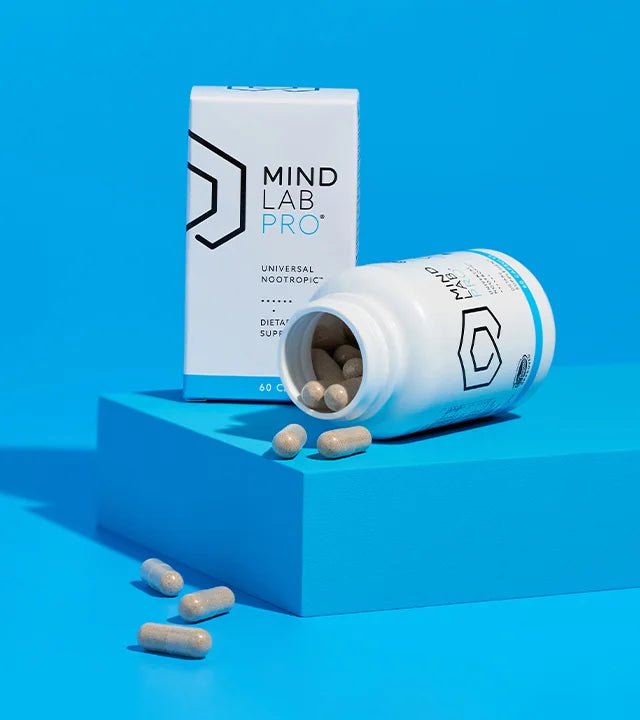
Mind Lab Pro® for Memory, Focus, and Brain Training

Mind Lab Pro® is a multi-ingredient nootropic designed to support several pathways involved in cognitive performance.
The MLP Formula: Citicoline (CDP Choline) dosage 250mg per serving, Phosphatidylserine (PS) 100mg (from sunflower lecithin), Bacopa monnieri 150mg (24% bacosides, 9 bioactives), Organic Lion's Mane Mushroom 500mg (fruit and mycelium), Maritime Pine Bark Extract 75mg (Standardized to 95% proanthocyanidins), N-Acetyl L-Tyrosine 175mg, L-Theanine 100mg per serving, Rhodiola rosea 50mg (Standardized to 3% rosavins and 1% salidrosides), NutriGenesis® Vitamin B6 (2.5 mg), Vitamin B9 (100 mcg), Vitamin B12 (7.5 mcg)
This multi-pathway approach may pair well with brain games because memory training requires more than memory alone. It also depends on attention, information processing, stress resilience, mental energy, and the ability to stay engaged long enough to learn.
Mind Lab Pro® has been studied in multiple double-blind, placebo-controlled human trials.
- One study reported improvements in information-processing tasks, including faster anticipatory response speed.(6)
- Another found improvements across several memory domains, including immediate and delayed recall.(7)
- A 2025 EEG study did not find faster or more accurate decisions, but reported increased brain network interdependencies and coordination, suggesting deeper and more connected neural processing.(8)
Read the full story on MLP research.
In practical terms, Mind Lab Pro® may be a useful nootropic option for people who are using brain games, learning routines, or memory exercises as part of a broader cognitive performance plan.
Summary
Games for the brain may help enhance memory by challenging attention, recall, pattern recognition, processing speed, working memory, language, and strategy. The best options include matching games, word games, card games, chess, strategy games, trivia, Sudoku, video games, memory palace exercises, language learning, music practice, and social games.
The research is promising but mixed. Brain games may improve specific trained skills, but they should not be treated as a cure for memory problems or cognitive decline. Benefits are most likely when games are challenging, consistent, varied, and paired with real-world learning.
Bottom line: the brain likes challenge, novelty, feedback, and repetition. Choose games that make you think, rotate them often, and combine them with sleep, exercise, nutrition, social connection, and smart nootropic support for a more complete memory-enhancement strategy.
References
- Taylor, C. A., Bouldin, E. D., & McGuire, L. C. (2018). Subjective cognitive decline among adults aged ≥45 years — United States, 2015-2016. Morbidity and Mortality Weekly Report, 67(27), 753-757. Link
- Lampit, A., Hallock, H., & Valenzuela, M. (2014). Computerized cognitive training in cognitively healthy older adults: A systematic review and meta-analysis of effect modifiers. PLOS Medicine, 11(11), e1001756. Link
- Rebok, G. W., Ball, K., Guey, L. T., et al. (2014). Ten-year effects of the ACTIVE cognitive training trial on cognition and everyday functioning in older adults. Journal of the American Geriatrics Society, 62(1), 16-24. Link
- Kletzel, S. L., et al. (2021). Effectiveness of brain gaming in older adults with cognitive impairments: A systematic review and meta-analysis. Journal of the American Medical Directors Association, 22(11), 2281-2288.e5. Link
- Liu, B., et al. (2026). The effects of video games on cognitive function in older adults with mild cognitive impairment: A systematic review and meta-analysis. Frontiers in Aging Neuroscience. Link
- Utley, A., Gonzalez, Y., & Imboden, C. A. (2023). The efficacy of a nootropic supplement on information processing in adults: A double blind, placebo controlled study. Biomedical Journal of Scientific & Technical Research, 49(1). Link
- Abbott-Imboden, C., Gonzalez, Y., & Utley, A. (2023). Efficacy of the nootropic supplement Mind Lab Pro on memory in adults: Double blind, placebo-controlled study. Human Psychopharmacology: Clinical and Experimental, 38(3), e2872. Link
- O’Reilly, D., Bolam, J., Delis, I., & Utley, A. (2025). Neural mechanisms of cognitive enhancement with a nootropic supplement. Brain Sciences, 15(3), 226. Link