Cognitive coffee is coffee designed to do more than wake you up. It usually means coffee upgraded with nootropics, functional mushrooms, MCT oil, amino acids or other ingredients intended to support mental focus, clarity, energy and overall cognitive function.
Coffee is already one of the world’s favorite cognitive tools. In a U.S. NHANES analysis, coffee was consumed by 59% of adults in the sample, and coffee drinkers averaged about 545 grams of coffee per day. That makes coffee less of a casual beverage and more of a daily brain-performance ritual for millions of people.
If you're interested in cognitive coffee, this guide has answers you are looking for: what cognitive coffee is, how caffeine affects attention and alertness, which nootropic add-ins make the most sense, where mushroom coffee fits, how cognitive coffee compares with a nootropic stack, and how to use it safely without turning your morning routine into a jittery mess. Let's get to it!
Key Takeaways
- Cognitive coffee is coffee enhanced with functional ingredients such as L-theanine, lion’s mane, Rhodiola, bacopa, citicoline, MCT oil or mushrooms.
- Mushroom coffee can qualify as cognitive coffee when it includes brain-relevant mushrooms such as lion’s mane, but formula transparency and dose matter.
- Caffeine is "cognitive" because it supports alertness, attention, energy and reaction time largely by blocking adenosine signaling.
- L-theanine is one of the best-supported coffee companions because it helps smooth out caffeine’s stimulating effects while supporting calm focus.
- DIY cognitive coffee (such as adding MCT oil) gives you flexibility, while formulated products may offer better convenience, ratios and consistency.
- Caffeine safety matters: dose, timing, anxiety, sleep quality and blood pressure should guide how you use cognitive coffee.
Disclaimer
This article is for educational purposes only and is not medical advice. Cognitive coffee, caffeine pills, mushroom coffee and nootropic supplements are not intended to diagnose, treat, cure or prevent disease. Talk with a healthcare professional before using caffeine or nootropic products if you are pregnant or breastfeeding, sensitive to stimulants, have anxiety, panic attacks, insomnia, high blood pressure, heart rhythm concerns, cardiovascular disease, seizure history, bipolar disorder, liver disease or take medications. Track total caffeine from coffee, tea, energy drinks, pre-workouts and supplements.
What Is Cognitive Coffee?
Cognitive coffee is a functional coffee concept: coffee formulated or customized to support cognitive performance. It may be a ready-made blend, a mushroom coffee product, a coffee-plus-MCT latte, or a normal cup of coffee combined with nootropic add-ins.
The "cognitive coffee concept" can describe several strategies and product types:
- Nootropic coffee: coffee combined with ingredients for focus, memory, stress resilience or mental clarity.
- Mushroom coffee: coffee blended with mushrooms such as lion’s mane, reishi, chaga or cordyceps. Check out our mushroom supplement guide.
- MCT coffee: coffee with MCT oil or MCT oil powder for creamy texture and energy-rich fats.
- Latte-style functional coffee: coffee with creamy coconut milk, organic coconut milk powder, MCTs, spices or adaptogenic ingredients.
- Supplement-paired coffee: regular coffee taken with a nootropic stack, caffeine pill, L-theanine or other complementary supplement.
The key distinction: cognitive coffee should not just be coffee with trendy ingredients. A strong formula should explain what each ingredient is doing, how much is included, and whether the research supports the intended benefit.
How Caffeine Affects Alertness, Attention and Cognitive Function

Caffeine is the foundation of most cognitive coffee. It is a naturally occurring compound found in coffee beans, tea leaves, cacao, kola nut and other plants.
The "cognitive" part? Caffeine is a central nervous system stimulant associated with increased energy, reduced perception of fatigue and improved sense of performance. Let's check some research about caffeine and performance.
In an eight-day randomized, double-blind, placebo-controlled crossover study, 17 healthy volunteers took caffeine at 200 mg daily, D-ribose or placebo during fatigue-inducing mental tasks. The caffeine group performed better than placebo during the tasks, although subjective fatigue and sleepiness did not significantly improve afterward. This is a useful reminder: caffeine may improve performance even when you do not necessarily feel refreshed.(1)
Caffeine’s cognitive effects are most noticeable for alertness, vigilance, reaction time, attention and perceived energy. It is less reliable as a memory enhancer or long-term brain-health ingredient. For a deeper comparison, see the effects of caffeine on cognitive tasks and our take on whether caffeine is a nootropic.
Coffee is great on its own, but many people want to both enhance its nootropic effects or build upon them with complementary nutrients. Cognitive coffee has emerged to address this consumer desire.
Pull up a seat, pour yourself a cup, and let's get into the details on cognitive coffee products.
Performance Lab® Caffeine 2
Smooth energy. Clarity. Focus. No jitters. No burnout. No crash.
Shop Now
Types of Cognitive Coffee
Mushroom Coffee

Mushroom coffee is one of the most common cognitive coffee formats. A typical cognitive mushroom coffee may combine arabica coffee with lion’s mane extract, chaga mushroom extracts, dual-extracted reishi, organic MCT oil or creamy coconut milk powder. Some products are marketed as delicious brain fuel or an afternoon pick me up.
The promise is appealing: coffee’s immediate mental energy plus mushrooms and nootropics that may support cognition or stress resilience. The limitation is that many mushroom coffee products use proprietary blends or small undisclosed amounts. “Contains lion’s mane” is not the same as a meaningful dose of a well-characterized lion’s mane extract.
Did you know?
Lion’s mane is the most directly brain-focused of the mushrooms found in mushroom cognitive coffee, while reishi and chaga are more often positioned for stress, immune system support and antioxidant properties.
Coffee Bean and Roast Choices
Some people think cognitive coffee begins with the bean itself. Arabica coffee is often chosen for flavor and smoothness, while robusta tends to contain more caffeine and a stronger, more bitter profile. Roast level, grind size and brewing method all influence taste, caffeine yield and polyphenol content.
A lighter roast may preserve more of certain coffee compounds, while darker roasts may taste richer and less acidic to some drinkers. But for cognitive performance, the biggest variables are still total caffeine dose, timing, tolerance and what else you add to the cup.
MCT Coffee and Creamy Functional Lattes
MCT coffee uses medium-chain triglycerides, often from coconut oil or purified MCT oil powder. These fats can make coffee feel more substantial and may provide a quick energy substrate, especially in low-carbohydrate or ketogenic routines.
MCTs are often described as brain fuel because they can increase ketone availability. Ketones are like a backup energy source for the brain. In a meta-analysis of medium-chain triglycerides in people with mild cognitive impairment or Alzheimer’s, researchers reported that MCTs can induce mild ketosis and may improve cognition in these populations.(2)
For everyday users, MCT coffee may help with satiety and a creamy latte experience. But too much MCT oil can cause digestive discomfort, and adding organic coconut milk powder, creamy coconut milk or MCT oil powder increases calories. It may taste great, but it is not “free energy.”
Discover today's top MCT oil supplements.
Nootropic Coffee Add-In Blends
Some cognitive coffee products use powdered blends that include caffeine, amino acids, mushrooms, adaptogens, coconut milk powder, chaga mushroom extracts, lion’s mane extract, reishi mushroom, MCT oil powder or flavoring. These blends can be convenient because you simply add water or stir into your morning cup.
The tradeoff is quality control. Look for specific ingredient amounts, extract standardization, third-party testing, clean labeling and clear caffeine content. Avoid blends that rely on big promises but hide key doses inside proprietary blends.
Nootropic Add-Ins for Cognitive Coffee
L-Theanine

L-theanine is one of the most practical cognitive coffee add-ins because it pairs naturally with caffeine. It is an amino acid found in tea often used to support calm, focused energy without sedation. L-Theanine is part of the legendary caffeine + L-Theanine nootropic stack, which helps to enhance caffeine's stimulation benefits while minimizing its side effects.
In a randomized study, researchers tested 97 mg L-theanine with 40 mg caffeine and reported improvements in cognitive performance and subjective alertness. The authors concluded that the combination helped focus attention during a demanding cognitive task.(3)
In another study, researchers found that a combination of L-theanine and caffeine improved speed and accuracy on an attention-switching task and reduced susceptibility to distraction. This is why L-theanine is often considered the classic “coffee smoother.”(4)
Whether as part of a cognitive coffee product or taken as a supplement along with coffee, L-Theanine is one of the most reliable pairings with caffeine for enhancing clarity and cognitive function.
For more detail, see coffee with L-theanine and this guide to the best caffeine and L-theanine stack.
Lion’s Mane Mushroom

Lion’s mane mushroom is popular in cognitive coffee because it has a brain-health story that caffeine does not. It contains compounds studied for nerve-growth-related pathways, cognitive function, stress and mood. In coffee products, lion’s mane is usually included as a powder or extract with distinct nootropic properties supported by emerging research.
Human Study: Lion’s mane, cognitive speed, stress, and mood. A 2023 double-blind, placebo-controlled pilot study tested lion’s mane mushroom in 43 healthy young adults ages 18 to 45, with 41 completing the 28-day phase. Participants took 1.8 g of Hericium erinaceus daily, supplied as three 600 mg capsules, or placebo. Researchers tested both acute effects 60 minutes after a single dose and chronic effects after 28 days using computerized cognitive tasks and mood/stress scales.
After a single dose, the lion’s mane group performed faster on the Stroop task, a measure involving attention, processing speed, and cognitive control. After 28 days, the study also found a trend toward lower subjective stress.(5)
Cognitive coffee context: This study supports lion’s mane as a promising but still early-stage ingredient for cognitive coffee formulas aimed at focus, mental speed, and calmer productivity. It may suggest that lion’s mane complements caffeine by supporting speed of performance and stress resilience — two benefits people often want from a functional morning coffee.
Find out more about lion’s mane mushroom.
Rhodiola Rosea

Rhodiola rosea is an adaptogen herb often used for stress resilience, mental energy and fatigue resistance. It does not act like caffeine, but it may complement coffee when the goal is performance under pressure rather than stimulation alone.
In a double-blind, placebo-controlled study, researchers studied Rhodiola rosea in stress-induced fatigue and used tests involving challenging perceptive and cognitive functions such as associative thinking and short-term memory. The trial reported improvements consistent with reduced mental fatigue, suggesting Rhodiola may be most relevant when stress and fatigue are part of the performance problem.(6)
This, and other, research-suggested Rhodiola benefits seem to position this adaptogen as a sensible complementary supplement for pairing with coffee and caffeine.
Discover more on Rhodiola rosea as a nootropic.
Bacopa Monnieri

Bacopa monnieri is not an acute coffee booster. It is a longer-range nootropic herb best known for memory and learning support. That makes it a different kind of cognitive coffee add-in: less “feel it now,” more “support the broader cognitive routine.”
In a randomized, double-blind, placebo-controlled study, researchers examined a Bacopa monnieri extract in healthy adults over 12 weeks. The study reported improvements in information processing, learning rate and memory consolidation, with effects appearing after chronic use rather than immediately.(7)
Read more: Bacopa monnieri.
Citicoline

Citicoline is a choline donor involved in phospholipid synthesis and acetylcholine-related pathways. It is relevant to cognitive coffee because it supports attention, mental energy and brain-cell membrane support without adding stimulant load.
In a randomized clinical study, researchers found that citicoline supplementation improved attention and psychomotor speed compared with placebo. This makes citicoline a useful nootropic complement for people who want more than caffeine’s quick alertness effect.(8)
Read more: citicoline.
MCT Oil

MCT oil and MCT oil powder are common in cognitive coffee because they create a creamy texture while adding their own energy-promoting bioactivities. In functional coffee products, MCTs are often paired with organic coconut milk powder or added creamy coconut milk for a comforting latte format.
The strongest cognitive MCT evidence is not in healthy coffee drinkers. It is mostly in populations with cognitive impairment or issues with disrupted brain-energy metabolism. Researchers have reported that MCTs can induce mild ketosis and may improve cognition in mild cognitive impairment and Alzheimer’s, but this doesn't mean MCT coffee boosts brainpower for everyone.(2)
Coffee vs. a Nootropic Stack
Coffee mainly helps you feel more awake and alert because of caffeine. It is useful for an early morning start, an afternoon pick-me-up or a focused work sprint. But coffee does not comprehensively support memory, stress resilience, brain-cell membranes, neurotransmitter precursors and long-range cognitive health.

“When I need to be sharp, focused and ready, Mind Lab Pro is what I reach for.”
A nootropic stack may include ingredients that work on different timelines and pathways: citicoline for attention and membrane support, bacopa for memory over time, Rhodiola for stress-related fatigue, L-theanine for calm focus, lion’s mane for brain-health pathways, and B vitamins for energy metabolism.
This is why many people combine coffee with nootropics. Coffee supplies the motivating energy. The stack fills in areas coffee does not cover. For more context, see nootropics vs coffee, what nootropics are, a practical list of nootropics and our guide on nootropics that actually work.
Benefits and Limits of Cognitive Coffee
Potential Benefits
- Enhanced focus: caffeine may support alertness and attention, while L-theanine may smooth the experience.
- Mental clarity: cognitive coffee may feel cleaner when caffeine is balanced with calming or supportive nootropics.
- Sustained energy: MCT oil powder, coconut milk or lower-dose caffeine strategies may help some people avoid the “spike and crash” pattern.
- Stress-performance support: Rhodiola and L-tyrosine may be useful when coffee is used during demanding work or training.
- Brain-health positioning: lion’s mane, citicoline and bacopa may add longer-range nootropic support beyond stimulation.
Limitations
- Many products are under-dosed: front-label ingredients may not match clinically relevant amounts.
- Caffeine still drives the feel: many cognitive coffee products feel effective mainly because they contain caffeine.
- More is not better: too much caffeine can worsen focus by increasing anxiety, restlessness or sleep disruption.
- Evidence varies by ingredient: L-theanine plus caffeine has stronger acute focus evidence than many trendy coffee add-ins.
- Mushroom coffee claims often outrun data: lion’s mane evidence is interesting, but mushroom coffee blends are not always tested as finished products.
DIY Cognitive Coffee vs. Formulated Products
DIY cognitive coffee gives you control. You can start with your favorite brew, then add one ingredient at a time: L-theanine for smooth focus, MCT oil for creamy energy, lion’s mane for a mushroom coffee angle, or a nootropic stack alongside your morning cup.
The DIY cognitive coffee advantage is personalization. You can avoid ingredients you do not tolerate, adjust caffeine dose and keep your blend simple.
The downside is measuring, sourcing, taste and consistency.
Formulated cognitive coffee products are easier. You add water, stir and drink. Some taste great and provide a rich, creamily delicious morning beverage. Some include organic coconut milk powder, arabica coffee, chaga mushrooms, reishi mushroom, lion’s mane extract, MCT oil powder and other bioactive ingredients. But you still need to inspect the Supplement Facts panel.
The best choice depends on your personality. If you like experimentation, DIY is flexible. If you want convenience, a formulated blend may be better. Either way, start low, assess how you feel, and do not stack multiple stimulant products casually.
Explore DIY nootropic stacking concepts.
Safety: Caffeine Dose, Anxiety, Sleep and Blood Pressure
The U.S. Food and Drug Administration cites 400 mg caffeine per day as an amount not generally associated with dangerous negative effects for most adults, while also emphasizing that caffeine sensitivity and clearance vary widely.(11)
That variability is the safety issue. One person can drink a strong morning cup and feel sharp. Another can drink the same amount and feel anxious, shaky, sweaty or unable to sleep. Cognitive coffee should make you feel focused, not overstimulated.
Anxiety and Jitters
If caffeine makes you anxious, cognitive coffee should focus on balance, not intensity. L-theanine, lower caffeine per serving and avoiding energy drinks or pre-workouts on the same day may help. If you have panic attacks or anxiety, speak with a clinician before using high-caffeine products.
Sleep
Caffeine timing matters. Even if cognitive coffee feels like good stuff in the moment, it can backfire if it delays sleep or reduces sleep quality. Many people do best using caffeine early in the day and avoiding it in the early afternoon or later.
Discover today's top ultramodern sleep supplements.
Blood Pressure and Heart Rate
Caffeine can acutely affect blood pressure and heart rate. People with high blood pressure, arrhythmias or cardiovascular disease should be cautious with caffeine pills, strong coffee, pre-workouts and concentrated functional coffee products.
Highly Concentrated Caffeine
Avoid bulk caffeine powder. The FDA has warned that pure or highly concentrated caffeine powders can be dangerous because small measuring errors may deliver toxic doses.(9,10) If you use caffeine supplements, choose clearly labeled capsules or tablets instead.
Best Forms and What to Look For
A good cognitive coffee should be transparent, pleasant to use and aligned with your goal.
- For calm focus: look for caffeine plus L-theanine.
- For mushroom coffee: look for lion’s mane extract, clear mushroom doses and ideally fruiting body or well-characterized extracts.
- For creamy brain fuel: look for MCT oil powder, organic coconut milk powder or added creamy coconut milk, but account for calories and digestive tolerance.
- For stress-heavy workdays: consider Rhodiola or L-tyrosine as part of a broader nootropic strategy.
- For memory support: bacopa and citicoline make more sense than simply adding more caffeine.
- For clean daily use: choose products that are transparent, gluten free if needed, non-GMO if preferred, and free of unnecessary sweeteners or fillers.
Also consider taste and routine. A cognitive coffee you actually enjoy is easier to use consistently. Great taste, rich flavor and a comforting latte texture are all great—but they should not distract from the formula quality.
FAQ
What is cognitive coffee?
Cognitive coffee is coffee enhanced with functional ingredients intended to support focus, mental clarity, energy or brain health. It may include nootropics, mushrooms, MCT oil, amino acids, adaptogens or a separate nootropic stack taken with coffee.
Is mushroom coffee cognitive coffee?
It can be. Mushroom coffee is a type of cognitive coffee when it includes brain-relevant mushrooms such as lion’s mane or is positioned for focus and mental clarity. However, benefits depend on the mushroom species, extract quality and dose.
What is the best nootropic to add to coffee?
L-theanine is one of the best nootropics to pair with coffee because human studies suggest that caffeine plus L-theanine may improve attention and reduce distraction. Citicoline, Rhodiola, bacopa and lion’s mane can also make sense depending on your goal.
Does cognitive coffee work better than regular coffee?
It depends on the formula. Cognitive coffee may work better if it balances caffeine with useful nootropics such as L-theanine or includes meaningful doses of brain-support ingredients. But many products are essentially regular coffee with small amounts of trendy add-ins.
Can cognitive coffee help with memory?
Caffeine may support alertness and attention, but memory support usually requires different ingredients and a longer time horizon. Bacopa and citicoline have more relevant human evidence for memory-related outcomes than caffeine alone.
Is cognitive coffee safe every day?
It may be safe for many healthy adults when caffeine intake is moderate and sleep is unaffected. But daily use is not right for everyone. Be cautious if you have anxiety, insomnia, high blood pressure, heart rhythm concerns or take medications.
What should I avoid in cognitive coffee?
Avoid unclear proprietary blends, undisclosed caffeine amounts, exaggerated brain claims, excessive sugar, high stimulant stacking and bulk caffeine powder. Also avoid taking cognitive coffee late in the day if you have trouble sleeping.
Performance Lab Caffeine+: A Modern Caffeine Pill for Cognitive Coffee Users

Performance Lab Caffeine+ fits the cognitive coffee conversation because it takes the most important active compound in coffee—caffeine—and builds a more complete nootropic support system around it.
Instead of relying on a huge caffeine dose, Performance Lab Caffeine+ uses 50 mg natural caffeine per capsule and pairs it with L-theanine, L-tyrosine and NutriGenesis® B vitamins. The concept is simple: preserve caffeine’s familiar mental energy while making the experience smoother, steadier and more comfortable.
That makes it useful for people who like coffee’s cognitive benefits but do not always want another cup. It can also make sense for people who want more predictable caffeine dosing than a café drink, where caffeine content can vary dramatically by size, bean, brew method and preparation.
Performance Lab Caffeine+ may be especially relevant if you want:
- clearer caffeine dosing;
- L-theanine to support calm focus;
- L-tyrosine for demanding work or training days;
- B vitamins to support energy metabolism and neurotransmitter pathways;
- a cleaner alternative to high-dose caffeine pills or sugary energy drinks.
It still contains caffeine, so dose and timing matter. Think of it as a smarter caffeine tool, not a reason to ignore total daily caffeine intake.
Performance Lab® Caffeine 2
Smooth energy. Clarity. Focus. No jitters. No burnout. No crash.
Shop Now
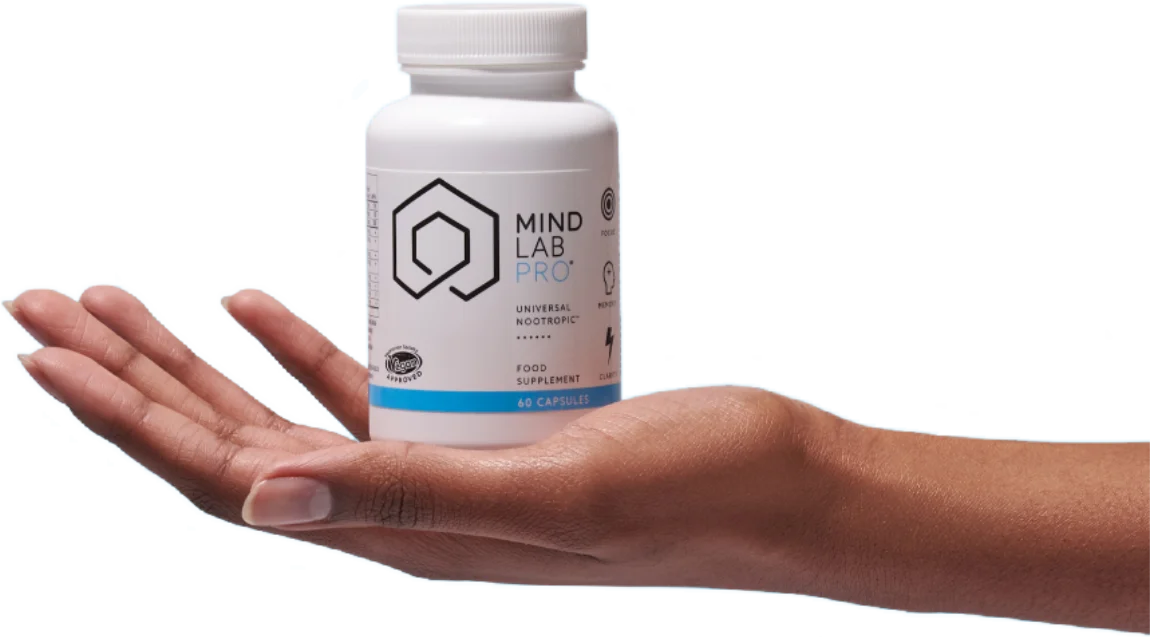
Mind Lab Pro: A Nootropic Stack That Pairs Well With Coffee

Mind Lab Pro is a broad-spectrum nootropic stack. But it pairs naturally with coffee because many people use coffee for focus, clarity and motivation—and Mind Lab Pro supports those goals through multiple non-caffeine pathways.
“It’s helped me tremendously at work.”
Many Mind Lab Pro users take it with coffee as part of a morning routine. That pairing makes sense: coffee provides fast stimulation, while Mind Lab Pro adds caffeine-free nootropics that support attention, memory, stress resilience, brain energy and long-range cognitive function.
Mind Lab Pro includes 11 nootropic ingredients. The full formula: Citicoline, 250 mg; Phosphatidylserine (PS), 100 mg; Bacopa monnieri, 150 mg (full-spectrum extract, 24% bacosides with 9 bioactives); Organic Lion's Mane Mushroom, 500 mg (fruit and mycelium); Maritime Pine Bark Extract, 75 mg: (Standardized to 95% proanthocyanidins); N-Acetyl L-Tyrosine, 175 mg; L-Theanine, 100 mg; Rhodiola rosea, 50 mg (Standardized extract: 3% rosavins and 1% salidrosides); NutriGenesis® B-Vitamins: Vitamin B6 (2.5 mg), Vitamin B9 (100 mcg), Vitamin B12 (7.5 mcg)
For cognitive coffee users, the most relevant ingredients include L-theanine for calm focus, N-acetyl L-tyrosine for demanding conditions, Rhodiola for stress-related fatigue, citicoline for attention and brain-cell membrane support, lion’s mane for brain-health pathways, and bacopa for memory support over time.
Mind Lab Pro Research
Mind Lab Pro has also been studied as a finished formula:
- In a double-blind, placebo-controlled study, 105 healthy adults completed information-processing tasks after taking Mind Lab Pro or placebo. The Mind Lab Pro group showed improvements in measures such as reaction time, choice reaction time and anticipation, suggesting support for fast cognitive processing under test conditions.(11)
- In another double-blind, placebo-controlled study, researchers evaluated memory in 49 healthy adults using the Wechsler Memory Scale-IV UK. After four weeks, the Mind Lab Pro group showed improvements across several memory domains, including immediate and delayed recall. This is relevant for coffee users because caffeine may help alertness, while a nootropic stack may support cognition from other angles.(12)
- A third randomized, double-blind, placebo-controlled study examined 60 days of supplementation and EEG-based brain network activity during perceptual decision-making. The study reported changes in brain network interdependencies and energetic efficiency, suggesting a broader neural-processing effect than simple stimulation.(13)
Read the full story on Mind Lab Pro research studies.
Make Any Coffee “Cognitive” with Performance Lab MCT Oil

Cognitive coffee does not have to be complicated. One of the simplest ways to upgrade an ordinary cup is to add Performance Lab MCT Oil, a clean source of medium-chain triglycerides designed to mix into coffee, smoothies, and other daily drinks.
Performance Lab MCT Oil can help make any coffee “cognitive” by adding fast, clean, brain-friendly fuel. It is one of the easiest ways to turn coffee into a sharper, more performance-oriented daily ritual.
MCTs are unique fats that are absorbed and metabolized differently from many longer-chain dietary fats. The body can convert them into fast-acting energy molecules called ketones, which may help support mental energy, focus, and clean fuel for the brain — especially when used in a low-carb, keto, or fasting-friendly routine.
That makes MCT oil a natural fit for cognitive coffee. Instead of relying on caffeine alone, adding MCTs gives coffee a smoother, more sustained “brain fuel” angle. It can help turn a standard morning brew into a more functional drink for focus, productivity, and mental performance.
Why Add MCT Oil to Coffee?
- Fast brain-friendly fuel: MCTs are quickly metabolized and may support ketone production.
- Pairs well with caffeine: Coffee provides stimulation, while MCT oil adds a clean energy-supporting fat source.
- Supports fasting-style routines: Many people use MCT coffee as part of low-carb, keto, or intermittent fasting lifestyles.
- Easy upgrade: Add MCT oil to black coffee, blend until creamy, and you have a simple cognitive coffee without sugar or heavy cream.
Performance Lab® MCT stacks the most ketogenic MCT (C8) with capric acid (C10), an effective MCT for cell energy activity in the brain. Its MCTs are premium quality, sourced from 100% USDA organic, MCT oil rich, non GMO coconuts.
Best fit: Performance Lab MCT Oil is ideal for people who want a simple way to make their coffee more functional — students, writers, entrepreneurs, remote workers, biohackers, keto dieters, and anyone who wants their morning coffee to do more than wake them up.
Performance Lab® MCT Energy Oil
For enhanced mind-body vitality and metabolic performance.
Shop Now
Summary
Cognitive coffee is coffee upgraded for brain performance. It may be mushroom coffee, nootropic coffee, MCT coffee, a creamy functional latte or simply your normal coffee paired with smart nootropic add-ins.
The strongest foundation is still caffeine—but caffeine works best when used intelligently. L-theanine may help smooth the edge. Lion’s mane may add a brain-health angle. Rhodiola may support performance under stress. Bacopa and citicoline may support longer-range cognitive goals. MCT oil may add creamy texture and an energy-rich fat source.
The best cognitive coffee is not the one with the longest ingredient list or the loudest claims. It is the one that helps you feel focused, clear and steady—without wrecking your sleep, spiking anxiety or hiding key doses behind marketing language.
References
- Ataka S, Tanaka M, Nozaki S, et al. Effects of caffeine and D-ribose on mental fatigue. Nutrition. 2008;24(3):233-238. Link
- Avgerinos KI, Egan JM, Mattson MP, Kapogiannis D. Medium Chain Triglycerides induce mild ketosis and may improve cognition in Alzheimer’s disease. A systematic review and meta-analysis of human studies. Ageing Research Reviews. 2020;58:101001. Link
- Giesbrecht T, Rycroft JA, Rowson MJ, De Bruin EA. The combination of L-theanine and caffeine improves cognitive performance and increases subjective alertness. Nutritional Neuroscience. 2010;13(6):283-290. Link
- Owen GN, Parnell H, De Bruin EA, Rycroft JA. The combined effects of L-theanine and caffeine on cognitive performance and mood. Nutritional Neuroscience. 2008;11(4):193-198. Link
- Docherty S, Doughty FL, Smith EF, et al. The Acute and Chronic Effects of Lion’s Mane Mushroom Supplementation on Cognitive Function, Stress and Mood in Young Adults: A Double-Blind, Parallel Groups, Pilot Study. Nutrients. 2023;15(22):4842. Link
- Darbinyan V, Kteyan A, Panossian A, et al. Rhodiola rosea in stress induced fatigue—a double blind cross-over study of a standardized extract SHR-5. Phytomedicine. 2000;7(5):365-371. Link
- Stough C, Lloyd J, Clarke J, et al. The chronic effects of an extract of Bacopa monniera on cognitive function in healthy human subjects. Psychopharmacology. 2001;156(4):481-484. Link
- McGlade E, Agoston AM, DiMuzio J, et al. The Effect of Citicoline Supplementation on Motor Speed and Attention in Adolescent Males. Journal of Attention Disorders. 2019;23(2):121-134. Link
- U.S. Food and Drug Administration. Spilling the Beans: How Much Caffeine is Too Much? Updated 2024. Link
- U.S. Food and Drug Administration. Guidance for Industry: Highly Concentrated Caffeine in Dietary Supplements. 2018. Link
- Utley A, Gonzalez Y, Abbott-Imboden C. The Efficacy of A Nootropic Supplement on Information Processing in Adults: A Double Blind, Placebo Controlled Study. Biomedical Journal of Scientific & Technical Research. 2023;49(1):40297-40305. Link
- Abbott-Imboden C, Gonzalez Y, Utley A. Efficacy of the nootropic supplement Mind Lab Pro on memory in adults: Double blind, placebo-controlled study. Human Psychopharmacology: Clinical and Experimental. 2023;38(4):e2872. Link
- O’Reilly D, Bolam J, Delis I, Utley A. Effect of a Plant-Based Nootropic Supplement on Perceptual Decision-Making and Brain Network Interdependencies: A Randomised, Double-Blinded, and Placebo-Controlled Study. Brain Sciences. 2025;15(3):226. Link