The development of brain tissue starts before birth and continues into adulthood, but the fastest growth happens early. During the first few years of life, more than 1 million new neural connections form every second, according to Harvard's Center on the Developing Child.(1)
If you're asking how to grow brain cells as an adult, the key process is adult neurogenesis—but it is much more limited than early brain development.
A landmark 1998 human study showed newly generated neurons in the adult hippocampus.(2) Later carbon-14 “birth dating” research estimated that about 700 new neurons are added to each adult hippocampus per day, equal to roughly 1.75% annual turnover within the renewing neuronal population; the researchers also estimated that about one-third of hippocampal neurons belong to this renewing population.(3)
Those findings show that the mature brain is not completely static, but they do not mean supplements can rapidly regrow brain tissue. In this article, we separate early brain development from adult neurogenesis, then looks at lifestyle factors and nootropics that may support related pathways such as brain-cell membranes, neurotrophic signaling, cellular energy, and neuroprotection. Let's get to it!
Key Takeaways
- The development of brain tissue during early life is different from adult neurogenesis, which refers to the formation of new neurons after brain maturity.
- Adult neurogenesis has been reported in the human hippocampus, but it is a specialized biological process—not evidence that the brain can simply "regrow" on demand.
- The nootropics in this article are discussed for pathways such as phospholipid synthesis, neurotrophic signaling, brain energy, and neuroprotection; they should not be presented as proven ways to grow new human brain cells.
- Much of the ingredient-specific evidence discussed here comes from cell, animal, mechanistic, or review research rather than direct demonstrations of adult human neurogenesis.
- Aerobic exercise and an overall brain-healthy lifestyle remain important context for brain plasticity and long-term brain health.
Disclaimer
This article is for educational purposes only and is not medical advice. Adult neurogenesis is an active research area, and evidence that an ingredient affects NGF, BDNF, cell membranes, brain energy, or neurite growth does not prove that a supplement grows new brain cells in humans. Nootropics are not intended to diagnose, treat, cure, or prevent neurological or neurodevelopmental disorders. Consult a qualified healthcare professional before using supplements, especially if you have a medical condition, take medication, are pregnant, or are breastfeeding.
Development of Brain: From Early Brain Development to Adult Neurogenesis
The development of brain tissue begins long before birth. During embryonic development, the neural tube gives rise to the developing brain and spinal cord. As the brain continues to develop, new neurons move into place, specialize, and form connections with other brain cells. This carefully timed process helps build the brain’s structure, including gray matter, white matter, and the networks that connect different regions.
A child’s brain is still developing at birth. Brain growth continues through childhood, adolescence, and into early adulthood as neural connections are formed, strengthened, and refined. Genes, learning, stress, sleep, nutrition, and a child’s environment all help shape this process.
The first years of life are especially important for learning, language, emotional development, cognitive development and overall brain health. Healthy pregnancy, good nutrition, supportive relationships, and appropriate medical care all help support normal brain development and may influence long-term health outcomes.
What Nutrition Helps Early Brain Development?
Nutrition is especially important for normal development of the brain. The rapidly developing brain needs structural fats and other essential nutrients to support healthy brain growth.
DHA (docosahexaenoic acid) is an omega-3 fatty acid that is highly concentrated in brain tissue and is important for supporting healthy brain development, especially during pregnancy, infancy, and childhood.
For adults interested in supplemental omega-3s that provide DHA, check out vegan-friendly Performance Lab® Omega-3 made from algae.(4)
Healthy brain development and adult neurogenesis are related ideas, but they are not the same process. During early years of development, the brain develops on a massive scale as cells are generated, migrate, specialize, and form connections. In a mature brain, neural stem cells are much more restricted.
The adult brain still changes through brain plasticity, learning, synaptic remodeling, and limited formation of new neurons in specific areas of the brain, but this is fundamentally different from early brain growth. There is no single final stage at which the brain simply stops changing.
Proper nutrition and a healthy lifestyle can support a healthy brain across the lifespan, but no supplement can recreate the critical period of childhood development, spark cell differentiation or force the adult brain to grow on demand.
The sections below focus instead on adult neurogenesis and pathways that may support neural-cell maintenance, brain plasticity, and long-term brain health.
What is Neurogenesis?
Neurogenesis is the formation of new neurons from neural stem or progenitor cells.
Before a neuron is a neuron, it's a stem cell.(5) Basically, the stem cell is an undefined cell template that can differentiate into a specialized cell type, e.g., red blood cell, neuron, etc.
During embryonic stages, stem cells rapidly differentiate into all cell types to match the embryo's growing demands. However, the embryonic stem cell differs from the adult stem cell. Adult stem cells instead differentiate based on where they are located. Neural stem cells localize near neural tissues.
Embryonic stem cells multiply to create large masses of organs and systems. Adult stem cells, however, only develop their housing tissues. Adult stem cells, such as the neural stem cell, differentiate mainly for maintenance and repair purposes. But now we know: They can do more.
Neurogenesis is when stem cells differentiate into neurons.
Because the nervous system has limited capacity to repair major neuronal damage, scientists once believed neurogenesis occurred only during early development. Adult neurogenesis research challenged that view.
Adult neurogenesis appears far more limited than early developmental growth, however, and evidence that a nootropic affects a related pathway is not the same as proving that it creates new neurons in humans.
How Does Adult Neurogenesis Work?
 Image: The neurogenesis processes. By Handisilver CC BY-SA 3.0(6), via Wikimedia Commons.(7)
The exact regulation of adult neurogenesis is complex, and its functional significance depends on where and how the process occurs.
Depending on where neurogenesis occurs, its potential role differs. Hippocampal neurogenesis, for example, has been studied in relation to memory and learning.
Research has also examined new neurons in other brain regions, including the striatum, in relation to functions such as motor control, cognitive flexibility, and reward-related signaling.
Overall, neurogenesis is one piece of the broader biology of brain plasticity, maintenance, learning, and healthy aging.
How to Grow Brain Cells: Nootropic Neurogenesis Support
For purposes of this article, nootropics discussed in relation to neurogenesis can be grouped into three overlapping support categories:
- Neurotrophic / building-block support - ingredients studied for pathways involving Nerve Growth Factor (NGF), Brain-Derived Neurotrophic Factor (BDNF), phospholipids, or other materials relevant to neural-cell maintenance
- Neuroprotective support - ingredients studied for antioxidant, membrane, or other protective pathways that may help maintain healthy neural cells.
- Brain-energy support - Neurogenesis requires energy. Nutrients or compounds involved in cellular energy pathways are relevant to metabolically active brain tissue.
Several nootropics overlap across these categories. That makes them relevant to discussions of neuronal maintenance, membrane health, neurotrophic signaling, and brain-energy metabolism—but not proof that taking a supplement will regenerate damaged cognition or directly create new human neurons.
Nootropics for Neurogenesis
Only a subset of nootropics are commonly discussed for pathways relevant to neurogenesis and neural-cell maintenance.
Mind Lab Pro® includes several ingredients discussed below for pathways related to brain-cell membranes, neurotrophic signaling, cellular energy, and neuroprotection.

“Probably at about the two-month mark, it became very evident in my life that it was working.”
Few natural substances have convincing human evidence for directly increasing adult brain-cell formation. Basic nutrition remains foundational for maintaining neural tissue and the cellular processes that support brain health.
Some natural nootropics are nevertheless interesting because they affect pathways relevant to neural maintenance, brain energy, membranes, or neurotrophic signaling.
Here are several Mind Lab Pro® ingredients discussed in relation to brain-building or neuroprotective pathways:
Cognizin® Citicoline

Citicoline is a choline donor used to support phospholipid synthesis and brain-energy pathways relevant to neural-cell maintenance.
Two Citicoline properties are especially relevant to the brain-maintenance theme of this article. First:
Citicoline is a Choline Donor.
This means it provides building blocks that are used by the body to synthesize two other cholines: Acetylcholine and Phosphatidylcholine.
- Phosphatidylcholine (PC): The most important phospholipid for forming and stabilizing brain cell membranes, PC is needed for neurogenesis (creation of new brain cells), as well as for the ongoing repair and rejuvenation of brain cell membranes. Citicoline “activates” the bio-synthesis of phospholipids within brain cells(9).
Any good nootropic stack should include a choline source for its brain-building support. Cognizin Citicoline is the best choline source there is. Next up:
Citicoline is a Brain Energizer.
Citicoline is also discussed for supporting brain-energy metabolism. Because the article’s existing reference list does not substantiate a precise brain-energy percentage, the specific legacy percentage claim has been removed here rather than overstated.
Citicoline's brain energy effects are especially significant because the brain is your most energy-guzzling organ, consuming 20% of the body’s overall power supply. Creating, repairing and maintaining brain cells -- including neurogenesis -- are especially energy-intensive functions.
Cognizin® Citicoline supports several brain-building pathways.
In the context of this article, Citicoline is relevant because it:
- Supplies choline used in phospholipid synthesis for brain-cell membranes.
- Supports brain-energy metabolism relevant to cellular maintenance.
These properties make Citicoline relevant to neural-cell maintenance and membrane support without requiring the stronger claim that it directly creates new human brain cells.
More on Mind Lab Pro® Citicoline
Lion's Mane Mushroom
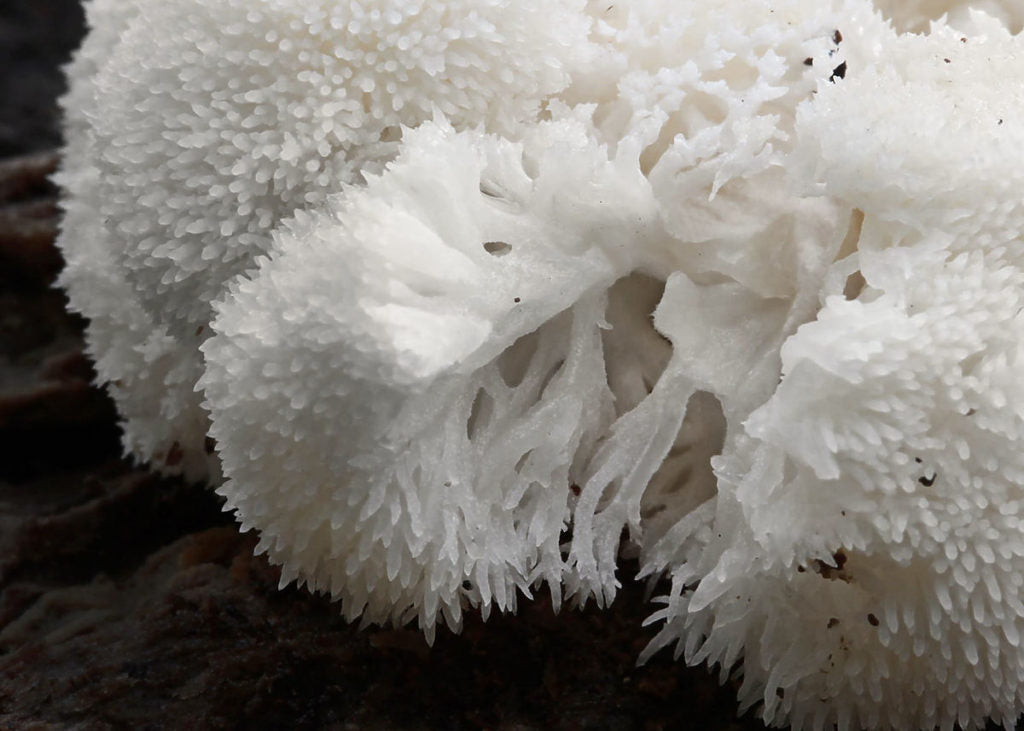 Hericium erinaceus. By Christine Braaten at Mushroom Observer. <CC BY-SA 3.0(6)>, via Wikimedia Commons(10)
Lion's Mane Mushroom has a long history of traditional use and is now studied for neurotrophic and neuroprotective pathways.
As food, Hericium erinaceus (Lion's Mane Mushroom) is prized for its distinctive flavor. In recent decades, it has also attracted research interest for compounds and extracts studied in relation to nerve-growth and neuroprotective pathways.
Here's what the evidence cited in this article suggests about Lion's Mane and neurotrophic support:
Lion's Mane Mushroom boosts Nerve Growth Factor (NGF).
In an in-vitro neuronal model, Lion's Mane extract used with exogenous NGF increased neurite outgrowth by 60.6%.(11) Separate preclinical research has examined related effects on myelination and nerve recovery:
- Enhanced formation and regulation of myelin sheaths around nerve cells.(12)
- Quicker speed of neural recovery following neuronal injury.(13)
These findings are mechanistic and preclinical. They support interest in Lion's Mane as a neurotrophic ingredient, but they do not establish that Lion's Mane regrows brain cells or repairs brain injury in humans.
Lion's Mane Mushroom supplies Hericonenes and Erinacines.
Which active compounds in Lion's Man Mushroom are responsible for its neuroregenerative status? Until we receive more exact science on the mushroom, it's hard to say at this point. Currently, the compounds hericenones(14) and erinacines(15) seem to significantly stimulate NGF synthesis, which in turn promotes neurogenesis
For nootropic purposes, it's best to supplement a Full Spectrum Extract of Lion's Mane Mushroom, so as not to miss out on any of its neuroregenerative and neuroprotective bio-activities.
Other Lion's Mane Mushroom research: One small human study cited here examined mood-related outcomes after Lion's Mane intake.(16)
More on Mind Lab Pro® Lion's Mane Mushroom.
Maritime Pine Bark Extract
 Pinus pinaster. By Jean-Pol GRANDMONT <CC BY-SA 3.0(6)>, via Wikimedia Commons(17)
Supplying a rich complex of active proanthocyanidins, Maritime Pine Bark Extract supports mental performance and brain longevity through multiple antioxidant and neurotrophic pathways.
Lion's Mane Mushroom is mostly brain-building, but also brain-protective. Maritime Pine Bark Extract, on the other hand, supplies more balanced brain building and protective benefits. This is due to the botanical's rich spectrum of bio-active proanthocyanidin antioxidants.
Maritime pine bark is rich in proanthocyanidin flavonoids and is discussed here primarily for antioxidant and neuroprotective pathways relevant to brain health.
Maritime Pine Bark flavonoids are discussed for pathways relevant to neuroprotection and brain plasticity.
General flavonoid research cited here describes several mechanisms that may be relevant to brain health. These mechanisms should not be interpreted as direct proof that Maritime Pine Bark grows new neurons in humans:
- Improved neural connectivity and strength.
- Enhanced Brain-Derived Neurotrophic Factor (BDNF) activity.
- Reduced apoptosis by neurotoxic species.
- Increased rate of neuronal survival.(18)
Flavonoid research has also explored relationships with memory, learning, and cognitive performance.(19) The evidence cited here is broader flavonoid research rather than direct proof of adult human neurogenesis from Maritime Pine Bark.
Other Maritime Pine Bark Extract Benefits: Brain restoration is only one of maritime pine bark extract's many benefits. It is also good for attention, cerebral circulation, and brain energy.
More on Mind Lab Pro® Maritime Pine Bark Extract
Phosphatidylserine (PS)
 Premium phosphatidylserine supplements extract PS from sunflowers rather than the standard soy sources. Image By 3268zauber <CC BY-SA 3.0(6)>, via Wikimedia Commons(20)
Naturally concentrated in the brain, phosphatidylserine (PS) is a cell membrane phospholipid required for the formation and maintenance of fluid, strong cell membranes and healthy neurotransmissions.
As a phospholipid concentrated in brain-cell membranes, phosphatidylserine is relevant to membrane structure, fluidity, signaling, and age-related brain health.
Its relevance to brain-cell maintenance includes:
- PS supplies cell membrane building blocks - phospholipid units required for brain regeneration and repair, as well as synaptic plasticity and myelin sheath formation.(21)
- PS maintains cell membrane fluidity and permeability - cell membrane optimization for stronger cell-to-cell transmissions required for memory, learning, thinking, etc.(22)
The gradual decline in phospholipids like PS has been associated with age-related brain degeneration.
Phosphatidylserine supplementation has been studied in relation to age-related membrane and cognitive changes. The inline source here discusses PS deficiency or imbalance in that broader context.
PS exposure on apoptotic cells also participates in microglial signaling in laboratory research.(23) That mechanistic finding should not be interpreted as proof that PS supplements "clean out" dead neurons in the human brain.
Other Phosphatidylserine Benefits: In addition to its age-related memory benefits, phosphatidylserine may also double as a sports nutrition nootropic(24) for its noted reduction in perceived stress by golfers.
More on Mind Lab Pro® Phosphatidylserine
Vitamin B12
Vitamin B12 is an essential nutrient involved in normal energy metabolism and nervous-system function. That makes adequate B12 status relevant to general brain health, but this article does not establish that B12 supplementation directly increases adult neurogenesis.
Vitamin B12 is also a raw material nootropic vitamin that is used to form myelin, the fatty sheathing that surrounds and protects brain cells.
Vitamin B12 is also discussed in aging and brain-health research, although any connection to adult neurogenesis should be treated as indirect rather than established here.
More on Mind Lab Pro® Vitamin B12
How to Grow Brain Cells with Lifestyle Changes
Lifestyle matters alongside nutrition and supplements. One of the most relevant strategies discussed in neurogenesis and brain-plasticity research is regular aerobic exercise.
Start an aerobic exercise program.
Aerobic exercise has been studied in relation to neurotrophic signaling, including BDNF-related pathways, as well as synaptic plasticity and overall brain health. The article's existing reference list does not include a dedicated exercise citation, so this point is kept general rather than presented as a quantified effect.
A brain-healthy lifestyle therefore provides the foundation. Supplements may complement that foundation, but the evidence in this article does not establish that combining Lion's Mane with exercise maximizes neurogenesis.
Frequently Asked Questions
How can you regenerate brain cells naturally?
Adult neurogenesis refers to the formation of new neurons from neural stem cells after brain maturity. A brain-healthy lifestyle may support the broader environment involved in neural maintenance and plasticity. Some nootropics are studied for related pathways such as NGF, BDNF, membranes, or neuroprotection, but that is not the same as proving they regenerate human brain cells.
Can you grow new brain cells as an adult?
New neurons were reported in adult human hippocampal tissue in a landmark 1998 study, challenging the older belief that neuron number was completely fixed after maturity.(2) This article discusses nootropic ingredients that affect pathways relevant to neural maintenance, but it does not establish that supplements reliably increase adult human neurogenesis.
How can you increase brain cells quickly?
Neurogenesis is not an instant process, and this article does not support a way to increase brain cells quickly. The more defensible goal is to support overall brain health through exercise, nutrition, sleep, and—when appropriate—ingredients studied for neurotrophic, membrane, energy, or neuroprotective pathways.
How can you grow more neurons in the hippocampus?
Hippocampal neurogenesis has been studied in relation to memory and learning. BDNF, NGF, exercise, and other biological factors are relevant to neural plasticity, but the evidence presented here does not prove that a particular nootropic increases new hippocampal neurons in humans.
How can you increase neurogenesis naturally?
Natural support for brain plasticity and neural maintenance starts with lifestyle. Nootropics can be discussed in three relevant categories—neurotrophic/building-block support, neuroprotection, and brain-energy support—but the evidence here does not show that supplements directly increase adult human neurogenesis.
How can you support more brain cells for better memory?
Hippocampal neurogenesis has been studied in relation to memory and learning. Supporting overall brain health with exercise, proper nutrition, sleep, and adequate building-block nutrients is a more defensible goal than trying to force new brain-cell growth with supplements.
Mind Lab Pro® for Brain Health, Plasticity and Neurogenesis-Related Support

Mind Lab Pro® is not proven to make adults grow new brain cells. A more realistic way to connect it to this topic is through several ingredients that support brain-health pathways discussed throughout this article.
For example, phosphatidylserine is an important structural phospholipid in brain-cell membranes; Citicoline supplies choline used to make phosphatidylcholine and supports brain-energy metabolism; Lion's Mane Mushroom has been studied for neurotrophic pathways including nerve growth factor (NGF); and nutrients such as Vitamin B12 support normal nervous-system function and myelin formation.
Full ingredient list: Citicoline (CDP Choline) dosage 250mg per serving, Phosphatidylserine (PS) 100mg (from sunflower lecithin), Bacopa monnieri 150mg (24% bacosides, 9 bioactives), Organic Lion's Mane Mushroom 500mg (fruit and mycelium), Maritime Pine Bark Extract 75mg (Standardized to 95% proanthocyanidins), N-Acetyl L-Tyrosine 175mg, L-Theanine 100mg per serving, Rhodiola rosea 50mg (Standardized to 3% rosavins and 1% salidrosides), NutriGenesis® Vitamin B6 (2.5 mg), Vitamin B9 (100 mcg), Vitamin B12 (7.5 mcg)
Mind Lab Pro is a "Universal Nootropic" that supports cognition and brain health in many ways. It includes mechanisms that are relevant to neural maintenance, plasticity, and the biological environment in which healthy brain function occurs.
Mind Lab Pro® Human Research
Mind Lab Pro® has also been evaluated in three human studies. These trials measured cognitive performance and brain-network activity rather than neurogenesis itself, so they support the product's broader cognitive positioning rather than a claim that it grows new neurons.
- Information processing: In a 2023 double-blind, placebo-controlled study, 30 days of Mind Lab Pro® was associated with improvements in information-processing performance versus placebo, including measures of response speed.(25)
- Memory: A separate 2023 double-blind, placebo-controlled study reported improvements across several memory measures after 30 days, with particularly strong gains in immediate and delayed recall.(26)
- Brain-network activity: In a 2025 randomized, double-blind, placebo-controlled study, 60 days of Mind Lab Pro® did not produce faster or more accurate perceptual decision-making versus placebo, but EEG findings showed differences in brain-network interdependencies, suggesting changes in how brain regions coordinated activity.(27)
Read more about the Mind Lab Pro® clinical studies
Summary
Adult neurogenesis changed the old idea that the mature brain is completely static. At the same time, the science is more nuanced than the phrase "regrowing brain cells" can make it sound.
Many factors, including environmental factors, affect how the brain grows. But nootropics are not big players in this process. Nootropic ingredients can still be relevant when they support the nutritional, membrane, energy, or neurotrophic pathways that healthy neural tissue depends on.
In conclusion, an overall brain-healthy lifestyle—including aerobic exercise—provides the foundation. Nootropics may complement that foundation, but this article does not establish that supplements directly grow new brain cells in humans.
“I’ve definitely seen a positive impact on my mental clarity, my cognitive thinking, retention—everything.”
References
- Center on the Developing Child at Harvard University. “Brain Architecture.” Link
- Eriksson PS, Perfilieva E, Björk-Eriksson T, Alborn AM, Nordborg C, Peterson DA, Gage FH. Neurogenesis in the adult human hippocampus. Nature Medicine. 1998;4(11):1313-1317. doi:10.1038/3305. Link
- Spalding KL, Bergmann O, Alkass K, Bernard S, Salehpour M, Huttner HB, Boström E, Westerlund I, Vial C, Buchholz BA, Possnert G, Mash DC, Druid H, Frisén J. Dynamics of hippocampal neurogenesis in adult humans. Cell. 2013;153(6):1219-1227. doi:10.1016/j.cell.2013.05.002. Link
- Performance Lab®. Omega-3. Official product page. Link
- National Institutes of Health. Stem Cell Basics. Link
- Creative Commons. Attribution-ShareAlike 3.0 Unported (CC BY-SA 3.0). Link
- Wikimedia Commons. File: Neurogenesis.png. Link
- Stangl D, Thuret S. Impact of diet on adult hippocampal neurogenesis. Genes & Nutrition. 2009;4(4):271-282. doi:10.1007/s12263-009-0134-5. Link
- Secades JJ, Frontera G. CDP-choline: pharmacological and clinical review. Methods and Findings in Experimental and Clinical Pharmacology. 1995;17 Suppl B:1-54. Link
- Wikimedia Commons. File: 2012-10-02 Hericium erinaceus (Bull.) Pers 268395 crop.jpg. Link
- Lai PL et al. Neurotrophic properties of the Lion's mane medicinal mushroom, Hericium erinaceus (Higher Basidiomycetes) from Malaysia. International Journal of Medicinal Mushrooms. 2013;15(6):539-554. Link
- Kolotushkina EV et al. The influence of Hericium erinaceus extract on myelination process in vitro. Fiziologichnyi Zhurnal. 2003;49(1):38-45. Link
- Wong KH et al. Neuroregenerative potential of lion's mane mushroom, Hericium erinaceus, in the treatment of peripheral nerve injury (review). International Journal of Medicinal Mushrooms. 2012;14(5):427-446. Link
- Kawagishi H, Ando M, Sakamoto H, Yoshida S, Ojima F, Ishiguro Y, Ukai N, Furukawa S. Hericenones C, D and E, stimulators of nerve growth factor (NGF)-synthesis, from the mushroom Hericium erinaceum. Tetrahedron Letters. 1991;32(35):4561-4564. doi:10.1016/0040-4039(91)80039-9. Link
- Kawagishi H, Shimada A, Shirai R, Okamoto K, Ojima F, Sakamoto H, Ishiguro Y, Furukawa S. Erinacines A, B and C, strong stimulators of nerve growth factor (NGF)-synthesis, from the mycelia of Hericium erinaceum. Tetrahedron Letters. 1994;35(10):1569-1572. doi:10.1016/S0040-4039(00)76760-8. Link
- Nagano M et al. Reduction of depression and anxiety by 4 weeks Hericium erinaceus intake. Biomedical Research. 2010;31(4):231-237. Link
- Wikimedia Commons. File: Pinus pinaster JPG2.jpg. Link
- Vauzour D et al. The neuroprotective potential of flavonoids: a multiplicity of effects. Genes & Nutrition. 2008;3(3-4):115-126. Link
- Spencer JPE et al. Flavonoids and cognition: the molecular mechanisms underlying their behavioural effects. Archives of Biochemistry and Biophysics. 2009;492(1-2):1-9. Link
- Wikimedia Commons. File: Sonnenblume mit verschiedenen Insekten.JPG. Link
- Glade MJ, Smith K. Phosphatidylserine and the human brain. Nutrition. 2015;31(6):781-786. Link
- Hanahan DJ, Nelson DR. Phospholipids as dynamic participants in biological processes. Journal of Lipid Research. 1984;25:1528-1535. Link
- De Simone R et al. Apoptotic PC12 cells exposing phosphatidylserine promote the production of anti-inflammatory and neuroprotective molecules by microglial cells. Journal of Neuropathology & Experimental Neurology. 2003;62(2):208-216. Link
- Jäger R, Purpura M, Geiss KR, Weiß M, Baumeister J, Amatulli F, Schröder L, Herwegen H. The effect of phosphatidylserine on golf performance. Journal of the International Society of Sports Nutrition. 2007;4:23. doi:10.1186/1550-2783-4-23. Link
- Utley A, Gonzalez Y, Imboden CA. The efficacy of a nootropic supplement on information processing in adults: a double blind, placebo controlled study. Biomedical Journal of Scientific & Technical Research. 2023;49(1). doi:10.26717/BJSTR.2023.49.007746. Link
- Abbott-Imboden C, Gonzalez Y, Utley A. Efficacy of the nootropic supplement Mind Lab Pro on memory in adults: double blind, placebo-controlled study. Human Psychopharmacology: Clinical and Experimental. 2023;38(4):e2872. doi:10.1002/hup.2872. Link
- O’Reilly D, Bolam J, Delis I, Utley A. Effect of a plant-based nootropic supplement on perceptual decision-making and brain network interdependencies: a randomised, double-blinded, and placebo-controlled study. Brain Sciences. 2025;15(3):226. doi:10.3390/brainsci15030226. Link