L-tyrosine dosage is one of those topics where a small unit mistake can change the answer dramatically. Human studies on cognitive performance often use milligrams per kilogram of body weight—sometimes 100–150 mg/kg—not a flat 100–150 mg dose per serving.
That difference is key. A systematic review of 15 human studies found that tyrosine was most consistently useful when cognition was challenged by demanding conditions such as cold, sleep loss, or intense thinking, rather than as a universal “brain booster” under normal conditions.
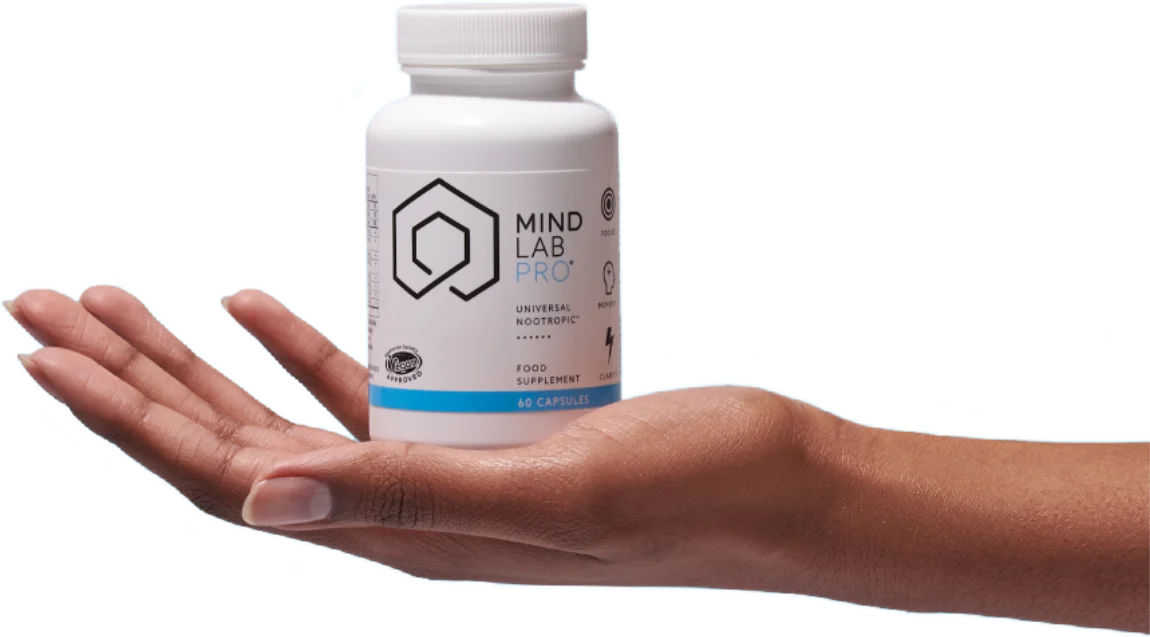
This guide explains what those research doses actually mean, how to convert mg/kg into a total amount, when lower supplement doses may make sense, what the evidence says for focus, working memory, mental alertness, exercise, timing and safety. We'll also touch on how L-tyrosine is used in ultramodern supplements like Mind Lab Pro®, Performance Lab® Caffeine 2™, and Pre Lab Pro®. Let's get to it!
Key Takeaways
- Do not confuse 150 mg with 150 mg/kg: for a 70 kg adult, 150 mg/kg equals 10,500 mg, or 10.5 g.
- The strongest cognitive evidence is situational: L-tyrosine may help preserve performance during acute stress, sleep deprivation, cold exposure, or demanding multitasking.
- There is no universally established everyday nootropic dose: research protocols range from fixed 2 g doses to 100–150 mg/kg and higher.
- Higher is not necessarily better: high doses have worsened some cognitive outcomes in older adults and in at least one demanding cognitive study.
- Exercise evidence is weaker: a recent meta-analysis found no meaningful endurance-performance benefit.
-
Timing is usually short-range: many studies administer L-tyrosine roughly 60–120 minutes before the stressor or cognitive task.
Disclaimer
This article is for educational purposes only and is not medical advice. L-tyrosine supplements are not intended to diagnose, treat, cure, or prevent ADHD, depression, cognitive decline, thyroid disease, or other health conditions. High-dose research protocols should not be copied without medical supervision. Talk with a healthcare professional before using L-tyrosine if you are pregnant or breastfeeding, have thyroid, liver, cardiovascular, or blood-pressure concerns, or take monoamine oxidase inhibitors (MAOIs), thyroid hormone, levodopa, prescribed stimulants, or other medications.
What Is L-Tyrosine?

L-tyrosine is a nonessential amino acid. Your body can make it from phenylalanine. You can also get dietary tyrosine from protein-rich foods such as meat, poultry, fish, dairy, soy, seeds, and nuts.
Its nootropic relevance comes from its role as a neurotransmitter precursor. Tyrosine is used to make L-DOPA, which can then be converted into dopamine, norepinephrine, and epinephrine (classified as catecholamine neurotransmitters).
L-Tyrosine helps form brain chemicals that drive attention, motivation, arousal, working memory, stress responses and more.
A systematic review of human research concluded that tyrosine supplementation is most likely to help cognition when environmental or cognitive demands temporarily strain catecholamine-related performance. Benefits were much less consistent under ordinary, unstressed conditions.(1)
L-tyrosine is also available as N-acetyl L-tyrosine (NALT), an acetylated form used in some nootropic formulas. The two forms should not automatically be treated as milligram-for-milligram equivalents in a dosage discussion.
For more detail on form differences and formulation use, check out our N-acetyl L-tyrosine guide.
How Does L-Tyrosine Work?
Tyrosine can cross the blood-brain barrier. Once available in catecholamine-producing neurons, an enzyme called tyrosine hydroxylase converts tyrosine into L-DOPA.(2)(3)
Here's the catch. Raising blood levels of tyrosine can make it more available to the brain, but dopamine synthesis still remains normal under normal conditions. More of the tyrosine "raw material" for dopamine (and other brain chemicals) doesn't mean dopamine levels go up.
Stress is where the process becomes more interesting. Under demanding conditions, the brain "burns through" catecholamine neurotransmitters more quickly. Kind of like accelerating while driving a car burns through gas more quickly.
Supplemental tyrosine may provide more precursor when cognitively demanding pathways are working hard, helping to support brain chemicals that preserve sharp mental function under conditions when performance would otherwise decline.
L'Tyrosine Dosage Basics: The 150 mg Research Context
The first thing to know is that there is no official L-tyrosine dosage for cognitive enhancement. Dietary supplements are not dosed like approved medications, and research protocols vary widely.
Classic stress-performance research frequently uses 100–150 mg/kg of body weight. Modern laboratory studies have also used fixed doses such as 2 g. These are research protocols—not automatic recommendations for everyday supplementation.
Did you know? A “150 mg” serving and a “150 mg/kg” research dose are completely different. For a 154-pound (70 kg) person, 150 mg/kg equals 10.5 grams—70 times more than 150 mg.
150 mg/kg Versus 150 mg
Surprisingly, this is one of the easiest tyrosine dosage details to misread.
- 150 mg: a fixed amount equal to 0.15 g.
- 150 mg/kg: 150 mg for every kilogram of body weight.
- For a 70 kg adult: 150 × 70 = 10,500 mg = 10.5 g.
The well-known multitasking study by Thomas and colleagues used 150 mg/kg of L-tyrosine one hour before testing in 20 healthy adults. Tyrosine improved working-memory performance during the demanding multitask condition, but not because participants took a simple 150 mg capsule. The dose was much larger.(4)
Likewise, a sleep-deprivation study used 150 mg/kg and reported improvements in several cognitive and motor tasks after overnight sleep loss.(5)
Discover today's top natural sleep supplements.
L-Tyrosine Dosage by Body Weight
The research formula is pretty straightforward:
Body weight in kilograms × study dose in mg/kg = total milligrams.
At the commonly studied 150 mg/kg level:
- 50 kg / 110 lb: 7,500 mg = 7.5 g
- 60 kg / 132 lb: 9,000 mg = 9 g
- 70 kg / 154 lb: 10,500 mg = 10.5 g
- 80 kg / 176 lb: 12,000 mg = 12 g
- 90 kg / 198 lb: 13,500 mg = 13.5 g
- 100 kg / 220 lb: 15,000 mg = 15 g
These calculations explain research doses. They are not instructions to take those amounts. High-dose trials are conducted under controlled conditions, often in healthy screened adults exposed to unusual stressors.
For self-directed supplementation, a conservative strategy is to follow the labeled serving of a reputable product rather than translating a 150 mg/kg military, sleep-deprivation, or cold-exposure protocol directly into your routine. If you are considering gram-level dosing, it's best to do so under the direction of your doctor.
L-Tyrosine for Cognitive Function, Mental Performance, and Mental Clarity

The best-supported use for tyrosine is not “more brainpower all the time.” It is maintaining cognitive performance when stress or cognitive demands are pushing it down.
Working Memory During Multitasking
In a randomized, placebo-controlled study, 20 healthy adults took 150 mg/kg L-tyrosine supplementation one hour before either a multitask battery or simpler cognitive tasks. Tyrosine significantly improved working-memory accuracy during multitasking. The finding supports a stress-demand model: tyrosine appeared more useful when cognitive resources were under heavy demands.(4)
Read about nootropics that help with memory.
Extended Wakefulness and Sleep Deprivation
In a double-blind sleep-loss study, participants remained awake through the night and received 150 mg/kg tyrosine or placebo after several hours of testing. Tyrosine reduced performance decline on a psychomotor task and lowered lapse probability (likelihood someone will briefly lose attention or get distracted) on an alertness task, with effects lasting roughly three hours.(5)
That does not mean L-tyrosine beneficial effects can replace sleep. It suggests the amino acid may temporarily support mental performance when sleep deprivation increases catecholamine demand.
Noise and Acute Stress
Sixteen healthy adults received a single oral dose of 100 mg/kg tyrosine or placebo before completing stress-sensitive cognitive tasks during 90 dB noise exposure. Tyrosine appeared to help improve performance on two tasks measured one hour after administration. It did not change heart rate or systolic blood pressure in that experiment.(6)
Cold Stress
In eight male volunteers exposed to a 4°C (39.2 degrees farenheit) environment, 150 mg/kg L-tyrosine given two hours before testing improved working-memory accuracy on the most difficult delay condition compared with placebo under cold exposure.(7)
These stress studies are why L-tyrosine is better regarded as a performance-maintaining nootropic under pressure than as a general stimulant.
For condition-specific context and appropriate claim limits, see our separate evidence review of L-tyrosine and ADHD research.
Higher Doses Are Not Always Better
Tyrosine sits inside a tightly regulated neurotransmitter system. Pushing precursor availability higher does not guarantee better cognition.
- A double-blind crossover study in 17 adults ages 60–75 tested single doses of 100, 150, and 200 mg/kg. Blood tyrosine levels increased dose dependently, but working-memory performance became worse at higher doses, especially in older adults with the biggest plasma response. Seventeen younger adults were also tested at 150 mg/kg for comparison.(8)
- Another randomized double-blind study in 70 healthy volunteers used a much lower fixed dose of 2 g. Contrary to the researchers’ hypothesis, tyrosine worsened cognitive flexibility under the high-cognitive-load condition.(9)
Key dosage lesson: tyrosine does not have a simple linear dose-response where more equals better. Baseline dopamine levels, age, stress intensity, task type, and individual responses all impact how well it may (or may not) work for cognition.
Short-Term Use for Mental Alertness and Energy
L-tyrosine is not a stimulant like caffeine. It does not block adenosine receptors, help create ATP cell energy, or produce any noticeable stimulant “kick.” Its energy angle is better understood as mental capacity under stress or fatigue.
Most short-term cognitive studies dose tyrosine about 60–120 minutes before a stressful activity or testing period. Plasma tyrosine can remain elevated for hours, but the exact timing of effects depends on dose, food intake, and the individual.
Tip: take a labeled serving before the period of time when you expect to be under pressure, stress or high cognitive demand rather than treating tyrosine as an all-day energy booster. If it makes you feel wired or disrupts sleep, move it earlier or reduce the amount.
Many supplement directions suggest taking tyrosine on an empty stomach. The logic: tyrosine shares a blood-brain barrier transporter with other large amino acids, so a large protein meal would compete with tyrosine transport.(3) But there is no proof that food always cancels out tyrosine's effects.
For another dosage context, see our L-tyrosine dosage and weight-management guide.
L-Tyrosine and Exercise Performance

Tyrosine is common in pre-workout supplements because intense training combines physical stress, heat, fatigue, decision-making, and sustained attention. However, it appears more promising for preserving performance under specific forms of stress than for generally increasing endurance, strength, power, or sprint performance.
The strongest overall is a 2024 review and meta-analysis that pooled 10 interventions from eight studies in physically active people. Tyrosine did not significantly improve time to exhaustion or endurance time-trial performance, and the authors rated the evidence as moderate quality.(10)
One positive study involved eight moderately trained men who took 150 mg/kg L-tyrosine or placebo one hour before cycling at a fixed workload in 30°C (86°F) heat. In the randomized crossover trial, participants cycled significantly longer after tyrosine—80.3 versus 69.2 minutes. The result supports a possible benefit for prolonged exercise tolerance under heat stress, although the study was very small.(11)
A later study from the same research group was not so encouraging. Seven endurance-trained men took the same 150 mg/kg dose before completing 60 minutes of steady cycling followed by a self-paced time trial in 30°C heat. Tyrosine increased its availability in the blood but did not improve time-trial performance or meaningfully change perceived exertion, heart rate, or body temperature.(12)
Likewise, a 2025 crossover study tested 150 mg/kg in eight trained male soccer players completing a 92-minute high-intensity intermittent cycling and sprint protocol in 32°C (89.6°F) heat. Tyrosine did not improve peak power, soccer-specific decision-making, cognitive appraisal, or affective state.(13)
A small 2026 study identified a more specific situation in which tyrosine may help. Twelve recreational cyclists first completed a 60-minute mentally fatiguing task and then cycled to exhaustion at 80% of maximal endurance power. A 300 mg/kg dose increased time to exhaustion by approximately 16% compared with placebo—459.9 versus 398.7 seconds—and slowed the rise in perceived exertion. Because the study was small, used a very high dose, and tested mentally fatigued recreational cyclists, its findings should be considered preliminary.(14)
Taken together, tyrosine's most possible sports role seems to be helping preserve focus or exercise tolerance when mental fatigue or environmental stress is high.
If you use L-tyrosine around training, pair the timing with the session rather than treating it as a substitute for hydration, electrolytes, carbohydrate availability, sleep, or other more studied sport-performance ingredients.
Discover today's top pre-workout with L-Tyrosine
Safety, Interactions, and Health Conditions
Short-term L-tyrosine appears to be reasonably well tolerated in healthy adults, but high-dose cognitive studies should not be mistaken for proof of safety.
Medical guidance recommends discussing tyrosine with a healthcare professional if you use thyroid hormone, monoamine oxidase inhibitors (MAOIs), or levodopa. Cleveland Clinic specifically flags those medication categories as potential interactions, while clinical monographs also caution against use with hyperthyroidism or Graves disease.(15)
Extra caution is also reasonable with cardiovascular or blood-pressure concerns, liver disease, pregnancy, and breastfeeding. Safety data for supplemental tyrosine during pregnancy and lactation are limited, so clinician guidance is appropriate.(15)
For a deeper discussion of stress, blood pressure, and overstimulation concerns, see our guide to L-tyrosine and anxiety.
Side Effects and Tolerability
Tyrosine is often well tolerated, but side-effect reporting is less standardized than it is for approved medications. If a dose produces headache, nausea, gastrointestinal discomfort, unusual agitation, palpitations, sleep disruption, or another unwanted effect, do not assume you need to “push through.” Reduce the dose or stop and reassess.
The older-adult dose-response study is particularly relevant here: more tyrosine produced higher plasma levels but worse working-memory performance at higher doses.(8) Tolerability and cognitive response are separate questions, and both are important to dosing considerations.
Timing, Stacking, and Formulation Tips

When to Take L-Tyrosine
For short term cognitive use, the research pattern is usually pre-task. Many studies test cognition one to two hours after tyrosine administration. Commercial products may use shorter lead times depending on the full formula.
Morning or early-afternoon use makes sense if you are sensitive to anything that increases mental alertness. There is no strong evidence that every user needs to avoid evening tyrosine, but protecting sleep is more important than chasing an extra productivity window.
Can You Take L-Tyrosine Every Day?
Most of the strongest cognition research is acute or short-term. That means there is much better evidence for situational use under stress than for taking high-dose L-tyrosine every day on an ongoing basis.
Daily low-dose use inside a multi-ingredient supplement is a different scenario from taking 10–15 g of isolated L-tyrosine. Do not use high-dose research-grade protocols as a long-term maintenance dose without medical supervision.
What Can You Stack With L-Tyrosine?
L-tyrosine is commonly paired with:
- L-theanine: for calm focus, especially when caffeine is present. More L-Theanine Benefits.
- Caffeine: for acute alertness, with tyrosine positioned as catecholamine precursor support during demanding stimulation.
- Rhodiola rosea: in stress-performance nootropic formulas.
- B vitamins: Overall brain function; cofactors and nervous-system nutrients.
Be cautious with stimulant-heavy stacks. Combining caffeine, prescribed stimulants, multiple pre-workouts, and tyrosine can make it difficult to tell which ingredient is driving elevated heart rate, blood pressure, anxiety, or insomnia.
How to Track Cognitive Performance and Find Your Lowest Useful Dose
Because tyrosine response varies, subjective impressions alone can be misleading. A simple tracking method is more useful than changing the dose every day.
- Record the dose and form: L-tyrosine versus NALT.
- Record timing: how long before work, study, or training you took it.
- Note whether you took it with food or on an empty stomach.
- Rate alertness, mental clarity, stress, mood, and sleep on a consistent 1–10 scale.
- Use one repeatable test if you want objective data: typing accuracy, a short reaction-time task, working-memory test, or standardized work block.
- Compare performance under stressful versus ordinary conditions.
The goal is not to find the maximum tolerable dose. It is to find the lowest amount that produces a useful effect—if you notice a useful effect at all.
Frequently Asked Questions
What is a typical L-tyrosine dosage?
There is no universally established nootropic dose. Human cognitive studies range from fixed doses around 2 g to body-weight doses of 100–150 mg/kg or more. Commercial supplement servings are often much lower. Research doses should not automatically be copied for everyday use.
Is 150 mg of L-tyrosine enough?
It may be a reasonable low supplemental amount in a formula, but it is not the same as the classic 150 mg/kg research dose. For a 70 kg adult, 150 mg/kg is 10.5 g.
How long before a stressful task should I take L-tyrosine?
Many human studies administer tyrosine about 60–120 minutes before testing. Some commercial formulas are taken 15–60 minutes before a task or workout. Follow the product label unless a clinician recommends otherwise.
Should L-tyrosine be taken on an empty stomach?
It is commonly taken away from dietary protein because tyrosine competes with other large neutral amino acids for transport across the blood-brain barrier. An empty stomach may make dosing more predictable, but food does not simply switch tyrosine “off.”
Does L-tyrosine improve exercise performance?
The evidence for direct endurance performance is not convincing. A 2024 meta-analysis found no significant improvement in time to exhaustion or endurance time-trial performance.(10) Its more plausible sports role is supporting focus during demanding training.
Do older adults need a different dose?
Potentially. In a small dose-response study, older adults had larger plasma tyrosine responses and worse working-memory performance as the dose increased from 100 to 200 mg/kg.(8) That is a strong reason not to assume higher doses are better with age.
Is NALT the same dose as L-tyrosine?
No. N-acetyl L-tyrosine is a different chemical form, and milligram amounts should not automatically be treated as equivalent to free L-tyrosine doses used in research. Product-specific dosing should be evaluated in the context of the full formula.
L-Tyrosine in Caffeine 2™, Pre Lab Pro®, and Mind Lab Pro®
Research doses of isolated L-tyrosine can be large. Finished formulas take a different approach: use a lower amount of tyrosine alongside complementary ingredients for a specific context.
Performance Lab® Caffeine 2™

Caffeine 2™ supplies 250 mg L-tyrosine per capsule alongside 50 mg natural caffeine, 100 mg L-theanine, and NutriGenesis® vitamins B2, B6, B9, and B12. The tyrosine is included as catecholamine-precursor support during a stimulated state rather than to mimic the multi-gram doses used in stress research.
This makes Caffeine 2 a controlled-stimulation application of tyrosine: a modest caffeine dose for alertness, L-theanine for calmer focus, and L-tyrosine as precursor support during demanding stimulation.
Learn more about Performance Lab® Caffeine 2™.
Performance Lab® Pre Lab Pro®

Pre Lab Pro® provides 400 mg L-tyrosine per scoop along with 80 mg natural caffeine, 160 mg L-theanine, 2,200 mg Setria® for Sport (L-citrulline + glutathione), 1,500 mg red beet powder, electrolytes, and supporting vitamins and minerals. The label recommends taking one scoop before training.
Here, tyrosine sits inside a sport-nutrition stack aimed at both mental and physical demands. The evidence does not support L-tyrosine itself as a reliable endurance enhancer, but its stress-cognition profile makes sense in a formula where focus during hard training matters.
Get Performance Lab® Pre Lab Pro®.
Mind Lab Pro®

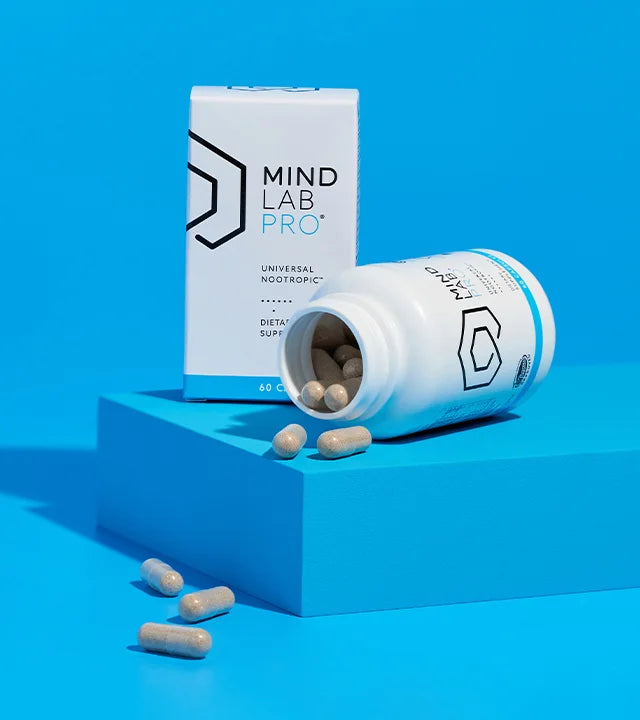
Mind Lab Pro® uses 175 mg N-acetyl L-tyrosine (NALT) per two-capsule serving as part of an 11-ingredient, caffeine-free nootropic formula. Its current formula includes:
- Citicoline (Cognizin®) — 250 mg
- Phosphatidylserine — 100 mg
- Bacopa monnieri full-spectrum extract — 150 mg, standardized to 24% bacosides with 9 bioactives
- Organic Lion’s Mane Mushroom — 500 mg
- Rhodiola rosea — 50 mg, standardized to 3% rosavins and 1% salidrosides
- N-Acetyl L-Tyrosine — 175 mg
- L-Theanine — 100 mg
- Maritime Pine Bark Extract — 75 mg, standardized to 95% proanthocyanidins
- Vitamin B6 — 2.5 mg
- Vitamin B9 — 100 mcg
- Vitamin B12 — 7.5 mcg
Within that stack, NALT is most relevant to maintaining mental performance under pressure, while Rhodiola and L-theanine address complementary aspects of stress resilience and calm focus. Citicoline, phosphatidylserine, Bacopa, Lion’s Mane, pine bark, and B vitamins broaden the formula beyond one catecholamine pathway.
Mind Lab Pro has also been tested as a complete formula in three human studies:
- Information processing: In a pseudo-randomized, double-blind, placebo-controlled 30-day study, 105 healthy adults completed simple reaction time, choice reaction time, and anticipation tasks. The Mind Lab Pro group improved significantly on all three measures, with significant between-group differences.(16)
- Memory: In a separate 30-day pseudo-randomized, double-blind, placebo-controlled trial, 49 healthy adults completed the Wechsler Memory Scale. The supplement group improved across all measured memory subtests, with significant between-group differences for immediate and delayed recall.(17)
- Brain-network activity: A randomized, double-blind, placebo-controlled study assessed healthy adults before and after 60 days of supplementation using a visual categorization task and EEG. Researchers found broader increases in brain-network information sharing and synergy, but no significant improvement in choice accuracy or reaction time.(18)
The key dosage point is that 175 mg NALT inside Mind Lab Pro is not intended to reproduce a 100–150 mg/kg isolated L-tyrosine research protocol. It is one component of a wider daily nootropic strategy.
Summary
L-tyrosine dosage depends heavily on context. The most famous cognitive studies often use 100–150 mg/kg under unusual stress conditions, while newer research may use fixed amounts such as 2 g. Those protocols are very different from the 150–500 mg quantities commonly seen in multi-ingredient supplements.
The evidence is strongest for preserving working memory, vigilance, or other cognitive functions when stress, sleep deprivation, cold, or heavy mental demands would otherwise impair performance. It is much weaker as a universal cognitive enhancer or endurance supplement.
Most importantly, do not assume more is better. High doses have produced worse cognitive results in some studies, particularly in older adults. Start with the product’s labeled serving, track response, protect sleep, and involve a healthcare professional before experimenting with gram-level dosing or combining tyrosine with medications that affect catecholamines or thyroid function.
References
- Hase, A., Jung, S. E., & aan het Rot, M. (2015). Behavioral and cognitive effects of tyrosine intake in healthy human adults. Pharmacology Biochemistry and Behavior, 133, 1–6. Link
- Fernstrom, J. D., & Fernstrom, M. H. (2007). Tyrosine, phenylalanine, and catecholamine synthesis and function in the brain. Journal of Nutrition, 137(6 Suppl 1), 1539S–1547S. Link
- Fernstrom, J. D. (2013). Large neutral amino acids: Dietary effects on brain neurochemistry and function. Amino Acids, 45(3), 419–430. Link
- Thomas, J. R., Lockwood, P. A., Singh, A., & Deuster, P. A. (1999). Tyrosine improves working memory in a multitasking environment. Pharmacology Biochemistry and Behavior, 64(3), 495–500. Link
- Neri, D. F., Wiegmann, D., Stanny, R. R., Shappell, S. A., McCardie, A., & McKay, D. L. (1995). The effects of tyrosine on cognitive performance during extended wakefulness. Aviation, Space, and Environmental Medicine, 66(4), 313–319. Link
- Deijen, J. B., & Orlebeke, J. F. (1994). Effect of tyrosine on cognitive function and blood pressure under stress. Brain Research Bulletin, 33(3), 319–323. Link
- Shurtleff, D., Thomas, J. R., Schrot, J., Kowalski, K., & Harford, R. (1994). Tyrosine reverses a cold-induced working memory deficit in humans. Pharmacology Biochemistry and Behavior, 47(4), 935–941. Link
- van de Rest, O., Bloemendaal, M., de Heus, R., & Aarts, E. (2017). Dose-dependent effects of oral tyrosine administration on plasma tyrosine levels and cognition in aging. Nutrients, 9(12), 1279. Link
- Lim, L. W., Aquili, L., & Holliday, C. (2019). Tyrosine negatively affects flexible-like behaviour under cognitively demanding conditions. Journal of Affective Disorders, 260, 329–333. Link
- Solon-Júnior, L. J. F., Alvarez, D. A. B., Gonzalez, B. M., Machado, D. G. S., Lima-Junior, D., & Fortes, L. S. (2024). The effect of tyrosine supplementation on whole-body endurance performance in physically active population: A systematic review and meta-analysis including GRADE qualification. Journal of Sports Sciences, 41(22), 2045–2053. Link
- Tumilty, L., Davison, G., Beckmann, M., & Thatcher, R. (2011). Oral tyrosine supplementation improves exercise capacity in the heat. European Journal of Applied Physiology, 111(12), 2941–2950. Link
- Tumilty, L., Davison, G., Beckmann, M., & Thatcher, R. (2014). Failure of oral tyrosine supplementation to improve exercise performance in the heat. Medicine & Science in Sports & Exercise, 46(7), 1417–1425. Link
- Donnan, K. J., Williams, E. L., & Stanger, N. (2025). Tyrosine supplementation is ineffective in facilitating soccer players’ physical and cognitive performance during high-intensity intermittent exercise in hot conditions. PLOS ONE, 20(1), e0317486. Link
- Solon-Júnior, L. J. F., Boullosa, D., Dias, C. V., & Fortes, L. S. (2026). Effects of L-tyrosine ingestion on endurance performance in mentally fatigued cyclists. European Journal of Sport Science, e70150. Link
- Cleveland Clinic. (2023). L-Tyrosine benefits and side effects. Link
- Utley, A., Gonzalez, Y., & Abbott Imboden, C. (2023). The efficacy of a nootropic supplement on information processing in adults: A double blind, placebo controlled study. Biomedical Journal of Scientific & Technical Research, 49(1), 40297–40305. Link
- Abbott-Imboden, C., Gonzalez, Y., & Utley, A. (2023). Efficacy of the nootropic supplement Mind Lab Pro on memory in adults: Double blind, placebo-controlled study. Human Psychopharmacology: Clinical and Experimental, 38(4), e2872. Link
- O’Reilly, D., Bolam, J., Delis, I., & Utley, A. (2025). Effect of a plant-based nootropic supplement on perceptual decision-making and brain network interdependencies: A randomised, double-blinded, and placebo-controlled study. Brain Sciences, 15(3), 226. Link