Multitasking is usually task switching—rapidly shifting attention between demands. It can feel productive, but the brain pays a measurable “switching cost” in focus, accuracy, and mental energy. This guide explains what multitasking does to attention control, why it drains cognition, and how to reduce it with systems that actually stick.
How Does Multitasking Affect Cognition?
Multitasking occurs mainly in the prefrontal cortex, which controls human cognition, including the ability to work on multiple different tasks.
Contrary to what many believe, multitasking is less common than simply switching between different tasks quickly.<1> Actually, we often mistake our ability to switch between tasks for multitasking: the act of simultaneously working on multiple tasks.
However, there are specific instances when we can work on multiple tasks at once.
For example, if we are working on a task that doesn't require much thought, we are usually able to do another task at the same time. This can happen when:
- we have practiced the task so much that we can unconsciously remember and accomplish it
- when the task is so easy it doesn't require much practice or thought
- when two tasks require two completely different brain functions
Otherwise, we're probably just switching back and forth between tasks, whether we know it or not.
Why Multitasking Feels Productive (But Usually Isn’t)
Research shows the brain splits its gray matter in two when working on two different tasks. Instead of using all gray matter to work on one task, the brain uses half of its gray matter on one task and the other half on another.
- Gray matter collects and modifies information in the brain. It includes the cerebral cortex, the basal ganglia and hypothalamus.
Essentially, this means multitasking isn't always the best way to get things done. It takes part of our full attention away from one task and gives it to another.
Many scientists say multitasking reduces productivity instead of increasing it.
Studies even show correlations between lower IQ, bad performance and higher levels of multitasking. Ultimately, the brain isn't wired for this type of multi-functioning.
- To illustrate, multitasking can actually increase the production of the stress hormone cortisol in the brain.
Multitasking may be Difficult for the Brain, but it is Often Required
Even though multitasking can reduce focus and accuracy, task switching has become hard to avoid. Between office jobs, technology and social media, we may find ourselves working on multiple tasks simultaneously or switching between tasks quickly for the better part of every day.

“Sitting in back-to-back meetings all day is mentally draining…”
If we want to work with less friction in our day-to-day routines, we need to find ways to get better at working on multiple tasks at once and switching between tasks. Luckily, studies show we can actually get better.
That's right, we can train our brains, specifically our prefrontal cortex, to increase the speed of information processing for specific tasks. This may help us switch tasks with less cognitive ‘drag.'
Below, we'll get into exactly how multitasking works in the brain and how we might be able to improve related brain functions for optimal function.
If you want to learn more about how nootropics can help you with getting more done, check out our nootropics for productivity post.
Benefits of Multitasking
While multitasking can be bad for attention control, some studies prove that specific multitasking can improve task switching.
Studies on Multitasking
For example, one study showed that people riding an in-place cycling bike while completing a cognitive task actually improved their cycling speed.
This exemplifies how focused multitasking requires tasks that either use adequately different parts of the brain or don't require much thought. It seemed as though doing the task made them forget about the cycling.
In addition, other studies show we can train our brains to increase output while multitasking by simply practicing the tasks.<2>
Increase Attention Control While Multitasking
If we want to be efficient multitaskers, we need to improve our ability to switch between different tasks and work on multiple tasks efficiently. This means we may need to enhance our memory and attention while reducing stress reactions to achieve optimal output.
How are Memory and Multitasking Linked?
Executive brain functions in the frontal lobe control multiple cognitive functions associated with multitasking, including memory.
Memory allows us to encode and recall specific tasks. Thus, we wouldn't be able to successfully work on or switch between multiple tasks at once without it.
Seeing as men and women tend to experience declines in executive functions-specifically in memory- as they age, enhancing memory may be helpful.
Boosting memory may help replenish declines in cognitive processing that occur as a result of aging and other reasons.
For example, one study shows our ability to multitask declines as our memory declines with age.<3> So, if we want to multitask as we age, enhancing our memory and overall cognition may help counteract cognitive declines that hinder our ability to do so.
On the contrary, certain forms of multitasking may actually harm our memory.
A study shows that media multitasking, for instance, had negative effects on working memory.
- Media multitasking is the act of using more than one form of media simultaneously.
Thus, limiting media multitasking may improve working memory to increase our ability to focus on other tasks.
As you can see, memory is an important piece to the puzzle of multitasking. We can't recall how to complete tasks without an adequate working memory, especially multiple tasks at once. In addition, the wrong types of multitasking may be harmful to our memory.
Attention Also Plays a big Role in Multitasking
Attention is intimately linked to memory and multitasking. After all, we can't remember anything if we can't pay enough attention to it in the first place, right? So, improving our ability to focus may enhance our memory and output while multitasking.
How are attention and memory linked?
Essentially, attention is vital for memory encoding and recall. Encoding is the process of recognizing and storing memories in the brain and recall is the process of remembering those encoded memories.
Since memory is also vital for multitasking, attention is just as important. Thus, we should do whatever we can to enhance our focus if we want to be better at multitasking.
We may want to start by avoiding media multitasking to enhance our focus.
- Research shows that media multitasking can actually reduce our ability to focus because we are constantly splitting our attention between media.<4>
Specifically, media multitasking has shown to reduce students' ability to concentrate and ignore irrelevant information. This is because media multitaskers are constantly searching for quick social rewards.
Luckily, if we avoid media multitasking, we may be able to train our brains to carry out multiple tasks without the distraction costs.
- For instance, one study shows that mindfulness training can enhance focus and fluid switching between tasks.
In other words, mindfulness training may help improve our attention and our ability to switch between different tasks at a rapid pace.
Mediate Cortisol and Catecholamines to Multitask With Less Stress
Multitasking tends to initiate cortisol secretion in the brain. So, mediating cortisol may be one of the most important factors in regards to improving multitasking abilities.
- Studies show that both men and women tend to experience increases in the stress hormone cortisol while multitasking.
This proves that humans aren't necessarily built or trained to multitask; it stresses us out. And, seeing as women tend to multitask more often than men, they also tend to be more stressed out from increased cortisol.<5>
- An animal study shows that catecholamines get secreted in the brain when it experiences stress. Catecholamines are organic compounds that include combinations of the neurotransmitters dopamine, epinephrine and norepinephrine.
This chronic secretion can ultimately deplete catecholamine levels. And when we're low on catecholamines, we can experience burn out, which can make us even more sensitive to stressors while multitasking.
As such, mediating our stress response might be an effective strategy to improve our cognitive ability while multitasking. If we are less stressed out, our brains may be better at adapting to working on multiple tasks at once.
After all, adaptation is human nature. But, if mediating our stress response doesn't help, we might try reducing the number of tasks to a minimum to decrease focus fragmentation and reduce stress.
Studies show that those who are physically fit tend to have a larger anterior cingulate cortex. Essentially, the anterior cingulate cortex tells the prefrontal cortex what to do. It is responsible for multitasking and task-switching with connections to cognition in the prefrontal cortex and emotion in the limbic system.
As such, it has been concluded that being physically fit somehow increases the size of the anterior cingulate cortex, making multitasking much easier.
How to Reduce Multitasking at Work (Systems That Actually Stick)
- Time-box task switching: group similar tasks and switch only at set times (e.g., every 30–60 minutes).
- Batch communications: check email/messages in blocks instead of “always on.”
- Single capture list: write down interruptions so you don’t keep them in working memory.
- Notification rules: turn off non-urgent alerts during deep work windows.
- One active tab: reduce context switching by limiting open tools to what the current task needs.
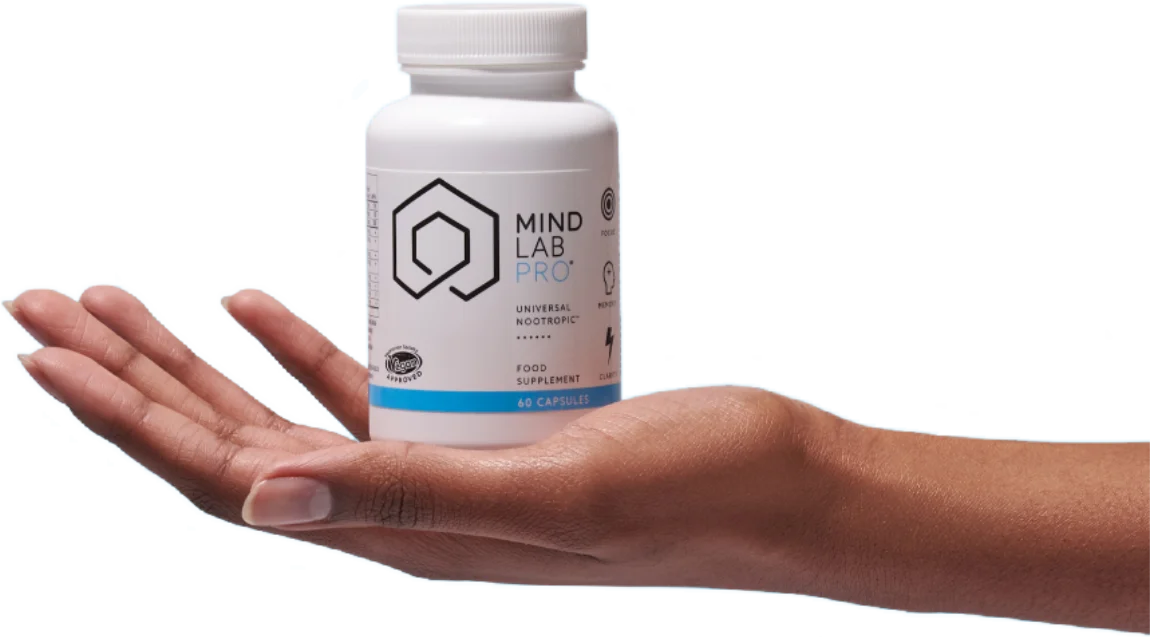
Mind Lab Pro® Nootropics for Multitasking

Mind Lab Pro® all natural nootropics provide ingredients that address the entire brain for 100% brainpower.
- They may be helpful for those who need to multitask to get through their work or school days.
- They may also help aging men and women looking to counteract age-related cognitive declines that can affect multitasking abilities.
N-Acetyl L-Tyrosine (NALT)

N-Acetyl L-Tyrosine is Mind Lab Pro®'s preferred version of L-Tyrosine. It's the only nootropic ingredient with proven positive effects on multitasking.
To illustrate, scientists tested L-Tyrosine on the performance of 10 men and 10 women while working on a Multiple Task and a Simple Task battery computer test. The Multiple Task test was to test working memory, arithmetic skills, visual monitoring and auditory monitoring at the same time. Meanwhile, the Simple Task test was to test working memory and visual monitoring only.
Some participants took L-Tyrosine while others took a placebo before completing the two tests. The results showed that participants who took L-Tyrosine beforehand had "enhanced accuracy" and "decreased frequency of list retrieval."
- This benefit happened specifically on the working memory section of the Multiple Task test.
In the end, L-Tyrosine proved to help participants sustain working memory for multitasking and efficient task-switching. Thus, we know L-Tyrosine is an effective nootropic for maintaining cognitive load while multitasking.
Speculations on NALT for Multitasking
- A separate study shows L-Tyrosine may help reverse the effects of sleep deprivation and a heavy workload.<6> So, it may be perfect for multitasking students or CEOs with heavy workloads and strict deadlines.
- Yet another study confirms tyrosine can reduce reactions to physical and psychological stress by increasing catecholamines. This may also help with attention control while multitasking by mediating stress.
More on Mind Lab Pro® N-Acetyl L-Tyrosine
L-Theanine

L-Theanine is a calming amino acid known for its positive effects on attention and relaxation. It can be found in green tea; actually, monks have used it for centuries to help with flow state for meditation and mindfulness.
- One study on L-Theanine shows it can increase alpha wave activity and moderate our ability to pay attention, especially when we're working on long, difficult tasks.
- L-Theanine has also proven it can reduce the effects of stress by blocking excitatory cortical neurons.<7>
- Another study shows L-Theanine may reduce the effects of cognitive decline associated with aging.
Overall, L-Theanine is a natural ingredient that may help multitasking individuals increase their output by reducing stress, increasing focus and helping reverse cognitive declines.
More on Mind Lab Pro® L-Theanine
Phosphatidylserine

We can speculate the nootropic Phosphatidylserine may boost cognitive load for multitaskers by mediating stress reactions, optimizing memory and counteracting cognitive declines.
- For example, one study shows PS can mediate responses to stress. Specifically, it improved mood during stressful situations.
- Another shows Phosphatidylserine supports cognition, especially short-term and long-term memories and our ability to create and recall memories.<8>
More on Mind Lab Pro® Phosphatidylserine
Rhodiola Rosea and Bacopa Monnieri
Multitasking can be difficult for those experiencing chronic stress. However, Rhodiola Rosea and Bacopa Monnieri are an adaptogen herb combination that may help relieve symptoms associated with it.
- One study confirms Rhodiola Rosea and Bacopa Monnieri together may help decrease symptoms of chronic stress, including depleted focus and memory.
More on Mind Lab Pro® Rhodiola Rosea and Bacopa Monnieri
Frequently Asked Questions
What is the difference between task switching and multitasking?
True multitasking, or working on multiple tasks simultaneously, is rare and usually only happens with very simple or well-practiced tasks. What people usually call multitasking is actually task switching, where the brain rapidly shifts attention between different demands instead of using full cognitive resources on one task.
Which types of tasks can multitasking be useful for?
Multitasking can be useful when combining tasks that do not require much thought, use different brain functions, or pair physical and cognitive activities together. For example, some studies suggest people cycling while completing cognitive tasks improved their cycling speed because the mental task distracted them from the physical effort.
Can cognitive support supplements improve multitasking?
While the brain is not naturally wired for multitasking, it may be possible to train the prefrontal cortex to increase processing speed for specific tasks and reduce cognitive drag when switching between them. Supporting executive brain functions, particularly memory and focus, may help maintain the cognitive flexibility needed for more efficient task switching.
Does multitasking increase cortisol?
Yes, multitasking may increase production of the stress hormone cortisol, contributing to mental fatigue and reduced performance. This stress response is one reason multitasking often feels draining and why stress management is important for maintaining cognitive performance during task switching.
How does multitasking affect the brain?
When multitasking, the brain divides its resources between tasks instead of dedicating full resources to a single one. This division happens primarily in the prefrontal cortex, which controls executive functions like attention control and working memory, often resulting in reduced accuracy and greater mental energy expenditure.
Is multitasking good for your brain?
While multitasking can reduce focus and accuracy, certain forms may be helpful when tasks use different brain functions or require minimal thought. However, frequent task switching creates a switching cost that can drain mental resources and correlate with lower performance, making focused single-tasking generally more productive for complex cognitive work.
How can nootropics enhance daily productivity when multitasking is required?
Since modern life often demands task switching, supporting the prefrontal cortex and executive functions becomes important for maintaining productivity. Enhancing cognitive processing speed and memory may help reduce the cognitive drag that occurs when switching between tasks, potentially making unavoidable multitasking more efficient.
“I became more productive, handled my workload better…”
FINAL THOUGHTS
Mind Lab Pro®'s all natural, Univeral Nootropic™ targets every aspect of cognition to initiate 100% Brainpower™ for multitasking.
Its whole-brain-boosting ingredients may help multitaskers increase their context-switching ability to get more done while multitasking.
- Our Universal Nootropic™ supports memory, enhances attention and mediates responses to stress, which can all be hindered by multitasking, aging and more.
Keep in mind, however, that multitasking isn't always the best way to get things done. Sometimes, it can be more efficient to set aside specific times for each task, as not to interfere with our attention on important, complex tasks.
References
- Multitasking: Switching costs. American Psychological Association. March 20, 2006.
- Multitasking ability can be improved through training. Vanderbilt News. Jul. 15, 2009.
- McAlister C and Schmitter-Edgecombe M.Naturalistic Assessment of Executive Function and Everyday Multitasking in Healthy Older Adults. Neuropsychol Dev Cogn B Aging Neuropsychol Cogn. 2013 Nov; 20(6): 735–756.
- Dzubak C.M. Does Multitasking Interfere with Learning?
- Cabrera B. Women Need Mindfulness Even More than Men Do. Harvard Business Review. 2016, June 21.
- Neri DF et al. The effects of tyrosine on cognitive performance during extended wakefulness. Aviat Space Environ Med. 1995 Apr;66(4):313-9.
- Kimura K et al. L-Theanine reduces psychological and physiological stress responses. Biol Psychol. 2007 Jan;74(1):39-45.
- Glade MJ and Smith K. Phosphatidylserine and the human brain. Nutrition. 2015 Jun;31(6):781-6.