Sulbutiamine is a synthetic derivative of thiamine (vitamin B1) that has developed a following among nootropic users for its potential benefits for mental energy, motivation, focus and memory.
The interest is understandable. According to the Council for Responsible Nutrition's 2024 Consumer Survey, conducted by Ipsos, 27% of U.S. supplement users cited energy as a reason for taking supplements. For someone looking for more mental stamina or relief from fatigue, a synthetic vitamin B1 analogue designed to reach the brain can sound intriguing. But unlike classic nootropic dietary supplements, sulbutiamine exists in murkier scientific and regulatory waters.
Sulbutiamine is not simply "better vitamin B1." Human evidence for enhancing cognitive function is limited; much of it involves medical populations rather than healthy people. Complicating matters further, the FDA has challenged sulbutiamine's status as a dietary ingredient. In this article, we cover what sulbutiamine is, how it may work, what the research actually shows and why it deserves more caution than a conventional nutritional nootropic. Let's get to it!
Key Takeaways
- Sulbutiamine is a synthetic, fat-soluble derivative of vitamin B1 rather than an ordinary form of dietary thiamine like those found in foods and supplements.
- It is mainly associated with reducing fatigue and supporting mental energy, with secondary interest in memory, attention and motivation.
- Human cognitive evidence is limited and comes largely from small or disease-specific studies rather than trials in healthy high-performing adults.
- Animal research suggests effects involving brain thiamine metabolism and dopaminergic and glutamatergic signaling, but these mechanisms do not prove human cognitive benefits.
- The FDA stated in a 2025 warning letter that sulbutiamine does not qualify as a dietary ingredient under federal dietary-supplement law.(2)
- There is no established U.S. dietary-supplement dose or well-defined long-term safety profile for sulbutiamine.
Disclaimer
This article is for educational purposes only and is not medical advice or a recommendation to use sulbutiamine. Sulbutiamine is not approved as a drug for any use in the United States, and FDA has challenged its status as a dietary ingredient. Do not use it to self-treat chronic fatigue, multiple sclerosis, Alzheimer's disease, depression, bipolar disorder or another medical condition. Consult a qualified healthcare provider before using any experimental or drug-like nootropic, particularly if you take medications, have a psychiatric or neurological condition, or are pregnant or breastfeeding.
Important Medical Context: Is Sulbutiamine Legal?
Sulbutiamine's U.S. status is one of the most important things to understand before considering the compound.
In an April 2025 warning letter involving a product marketed as a dietary supplement, the FDA stated that sulbutiamine is not a dietary ingredient as defined by the Federal Food, Drug, and Cosmetic Act. FDA said the product was misbranded because it was represented as a dietary supplement despite containing sulbutiamine.(2) FDA continued to identify sulbutiamine on its dietary-supplement ingredients information page in 2026.(3)
There is an important nuance: the warning letter did not address whether sulbutiamine could ever be lawfully used in a dietary supplement as a non-dietary ingredient under a valid food-additive, GRAS or other applicable legal pathway
So it is more accurate to say sulbutiamine does not have straightforward "legal" status as a supplement than to claim that possession of sulbutiamine is categorically illegal.
Sulbutiamine also has not been approved by FDA as a drug for any use in the United States. In some other countries, however, it has been marketed as the drug Arcalion and used for weakness or lack of energy. The U.S. Department of Defense's Operation Supplement Safety program lists sulbutiamine among ingredients prohibited in dietary supplements for service members.(4)
Did you know? FDA's 2025 action was not simply a warning about exaggerated advertising claims: the agency specifically stated that sulbutiamine itself does not meet the statutory definition of a dietary ingredient.(2)
Safety data for sulbutiamine is also on the weak side. Operation Supplement Safety notes reported adverse effects including headache, nausea, insomnia, diarrhea, tremor, agitation and palpitations, while emphasizing that long-term safety has not been established.(4) A published case report also described problematic sulbutiamine use in a patient with bipolar disorder, although a single case cannot establish how frequently such reactions occur.(12)
This combination of uncertain regulatory footing, insufficient long-term evidence and possible mild stimulant effects makes sulbutiamine very different from an ordinary vitamin B1 supplement.
What Is Sulbutiamine?

Sulbutiamine is a synthetic derivative of thiamine. Chemically, two modified thiamine molecules are joined to create a more fat-soluble compound. This gives sulbutiamine different pharmacological behavior from ordinary water-soluble vitamin B1 and allows it to reach nervous-system tissues more easily.(5)
The compound was developed in Japan during the 1960s as researchers explored synthetic thiamine for concerns associated with vitamin B1 deficiency. It later became a pharmaceutical product in several countries and eventually attracted interest from the nootropics community for fatigue, motivation and cognitive function.(5)
One early indication that sulbutiamine might affect memory came from animal research. In a 2005 study, rats received daily sulbutiamine for nine weeks. Chronic treatment improved performance in object recognition but did not improve performance in another memory task; it also reduced some experimentally induced amnesic effects. Because this was animal research using injected sulbutiamine, it supports a memory hypothesis rather than proving that oral sulbutiamine improves memory in people.(8)
A Note on Synthetic/Pharmaceutical-Style Nootropics
Sulbutiamine sits in a loosely defined group of compounds that experienced nootropic users often encounter online but that should not be treated like ordinary over-the-counter nutrients or herbal supplements.
Sulbutiamine is in the same gray-area as racetams: a separate family of synthetic nootropic compounds that includes piracetam, aniracetam and pramiracetam. They became prominent in the history of experimental cognitive enhancement, but their chemistry is unrelated to sulbutiamine. Sulbutiamine belongs in the same broad conversation only because both are synthetic, pharmaceutical-style nootropics rather than ordinary nutritional supplements. See our broader list of nootropics for more examples.
Other examples include racetams, certain experimental peptides and compounds such as centrophenoxine. Some peptides promoted for cognition, including compounds discussed in connection with attention and focus, have similarly complicated evidence and regulatory profiles; our review of nootropic peptides such as Semax illustrates the distinction.
These substances are not one chemical family. What they share is a need for extra scrutiny around regulatory status, sourcing, product purity, human evidence and long-term safety. Availability online should not be mistaken for FDA approval, dietary-supplement status or proof that a compound is safe or works.
How Does Sulbutiamine Work?
It Changes How Thiamine Reaches the Brain
Ordinary thiamine is water-soluble. Sulbutiamine's modified structure is more lipid-soluble, which appears to help it cross biological membranes and increase thiamine-related compounds in nervous-system tissue.(5)
Animal experiments found that administration of sulbutiamine increased thiamine triphosphate in rat tissues.(6) Thiamine and its phosphorylated derivatives participate in cellular metabolism and nervous-system function, providing a plausible biochemical reason why researchers became interested in sulbutiamine for brain energy and fatigue.
That does not mean more brain thiamine automatically produces better focus or memory in people who are not thiamine deficient.
It May Influence Dopamine and Glutamate Signaling
One of sulbutiamine's more interesting nootropic mechanisms comes from animal research. In rats, chronic administration altered dopamine D1 receptor binding and measures related to glutamatergic signaling in cortical brain regions. Researchers interpreted the results as evidence for a modulatory effect on dopaminergic and glutamatergic cortical transmission.(7)
This may help explain why users associate sulbutiamine with motivation, mental activation or mild stimulant effects. But it would be inaccurate to reduce sulbutiamine to a "dopamine booster." The findings are preclinical, and the same response has not been established in healthy humans.
Cholinergic Effects May Also Be Relevant
Older research has also raised the possibility of cholinergic mediation in some of sulbutiamine's memory effects. Acetylcholine is deeply involved in attention, learning and long-term memory formation, making this a biologically interesting mechanism. Still, the exact human mechanism of sulbutiamine remains incompletely characterized, and mechanistic plausibility is not the same thing as demonstrated cognitive enhancement.
Sulbutiamine Research: Possible Benefits

The most important limitation in the sulbutiamine story is straightforward: there are surprisingly few strong human clinical trials for a compound with such a large nootropic reputation. A 2020 scientific review concluded that sulbutiamine has interesting potential but emphasized the limited evidence base and need for better randomized controlled trials.(5)
Fatigue and Mental Energy
Reducing fatigue is probably sulbutiamine's best-known practical use.
In a 2017 study, 26 adults with multiple sclerosis and significant fatigue received 400 mg of sulbutiamine once daily for two months. Average Fatigue Impact Scale scores fell from 77 at baseline to 60.5 after 60 days, with improvement across physical, cognitive and psychosocial subscales. No serious adverse events were reported.(9)
The result is interesting, but the study was small and had no placebo control. It involved people with multiple sclerosis rather than healthy adults seeking more mental energy, so it cannot establish that sulbutiamine reduces everyday fatigue or enhances performance in healthy nootropic users.
For less experimental approaches, see our guides to nootropics for fatigue and more conventional supplements for energy.
Memory and Cognitive Function
A small randomized, double-blind study investigated sulbutiamine in 40 people with Alzheimer's disease over six months. Participants initially received either sulbutiamine or donepezil before the protocol moved into combination treatment. Researchers reported improvements in some attention measures and later found advantages in episodic memory and activities of daily living with sulbutiamine plus donepezil compared with donepezil plus placebo.(10)
This is sometimes cited as evidence that sulbutiamine improves memory, but that interpretation goes too far. The trial was very small, involved people with Alzheimer's disease, and incorporated prescribed treatment. It does not demonstrate that sulbutiamine enhances memory in healthy adults.
The animal object-recognition findings discussed earlier add "how it works" support, but the gap between rat memory tasks and real-world human cognitive performance remains large.(8)
Read about today's top nootropics for memory.
Motivation and Depressive Episodes
Sulbutiamine has also been studied in relation to reduced drive and psycho-behavioral inhibition during major depressive episodes.
In an eight-week multicenter, randomized, double-blind, placebo-controlled study, patients receiving clomipramine were additionally given sulbutiamine or placebo. Depression itself improved similarly between groups, meaning sulbutiamine did not demonstrate an antidepressant effect. However, researchers reported greater improvement in several measures of psycho-behavioral inhibition after four weeks in the sulbutiamine group.(11)
Key Takeaway: sulbutiamine shows some promising results for fatigue and selected cognitive or behavioral outcomes, but the evidence remains insufficient to establish it as a reliable cognitive enhancer for healthy people. The best human findings come from specific medical populations, while several of the mechanisms popular in nootropic discussions come primarily from animal research.
A More Conventional Nootropic Alternative
If you are interested in sulbutiamine because you want better mental energy, focus, memory and cognitive performance, it is possible to target those goals without moving into a synthetic compound whose U.S. regulatory position and long-term safety are uncertain.
Mind Lab Pro

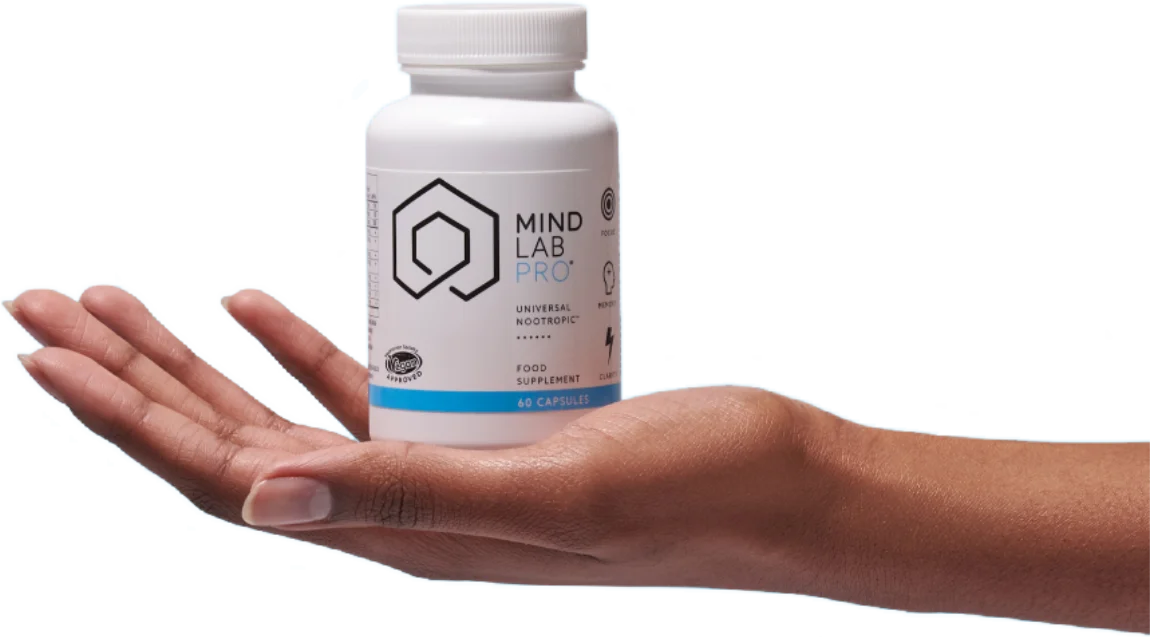
Mind Lab Pro takes a different approach. It is a caffeine-free dietary supplement built from established nutritional, amino-acid, phospholipid, mushroom and botanical nootropics rather than sulbutiamine or another experimental synthetic nootropic.
Its current two-capsule serving contains Citicoline 250 mg, Phosphatidylserine 100 mg, Bacopa Monnieri 150 mg standardized to 24% bacosides, Organic Lion's Mane Mushroom 500 mg, Rhodiola Rosea 50 mg standardized to 3% rosavins and 1% salidrosides, N-Acetyl L-Tyrosine 175 mg, L-Theanine 100 mg, Maritime Pine Bark Extract 75 mg standardized to 95% proanthocyanidins, Vitamin B6 2.5 mg, Vitamin B9 100 mcg and Vitamin B12 7.5 mcg.
The formula has also been studied as a complete stack.
- A 30-day placebo-controlled study involving 105 healthy adults reported improvements in simple reaction time, choice reaction time and anticipation measures.(13)
- A separate four-week placebo-controlled study in 49 healthy adults reported improvements across several tested memory domains.(14)
- In a third randomized, double-blind, placebo-controlled 60-day study involving 32 participants, Mind Lab Pro did not make perceptual decisions faster or more accurate than placebo, but EEG analysis found increased brain-network interdependence, particularly in delta-band activity.(15)
Mind Lab Pro offers a more conventional nootropic route for supporting several of the same broad goals people pursue with sulbutiamine: memory, focus, mental energy and performance under stress. Readers especially interested in the latter can also explore adaptogens for stress resilience.
Frequently Asked Questions About Sulbutiamine
Is sulbutiamine legal in the United States?
Sulbutiamine's status is complicated. FDA stated in a 2025 warning letter that sulbutiamine does not qualify as a dietary ingredient, and it is not FDA-approved as a drug in the United States.(2) The warning letter did not establish a blanket prohibition on possession or address every possible non-dietary-ingredient pathway. Therefore, describing sulbutiamine simply as "legal" or "illegal" misses important regulatory nuance.
Is sulbutiamine a racetam?
No. Sulbutiamine is a synthetic derivative of vitamin B1. Racetams such as piracetam and pramiracetam are a chemically separate family of synthetic nootropics. They are commonly discussed together because both have histories in experimental cognitive enhancement, not because sulbutiamine is related to racetams chemically.
What are the main benefits associated with sulbutiamine?
Sulbutiamine is mainly associated with reduced fatigue and increased mental energy. Memory, attention, motivation and cognitive function are also frequently discussed, but human evidence supporting those benefits in healthy people is limited.
What is the appropriate sulbutiamine dose?
There is no established FDA-approved or U.S. dietary-supplement dose for cognitive enhancement. Human studies have commonly investigated doses around 400–600 mg per day in specific medical populations, but those research doses should not be interpreted as recommendations for self-use.(9)(11) A healthcare professional familiar with the compound and your medical history is the appropriate source of individualized guidance.
How quickly does sulbutiamine work?
There is no well-established onset time for cognitive enhancement in healthy adults. Some users describe acute effects, but controlled human research has generally evaluated outcomes after weeks rather than proving a predictable same-day nootropic effect. The available evidence does not justify promising a specific time to noticeable benefit.
Can you take sulbutiamine every day?
Long-term daily safety has not been adequately established. Operation Supplement Safety states that there is insufficient evidence to determine a safe amount and notes that long-term safety information is lacking.(4) That is particularly important for anyone considering chronic treatment or regular stacking with other medications or stimulating compounds.
Will sulbutiamine show up on a drug test?
Being prohibited in dietary supplements for U.S. service members is not the same thing as being proven to trigger a standard drug-test result. There is insufficient evidence to promise that sulbutiamine cannot create testing or policy issues. Military personnel, competitive athletes and anyone subject to occupational drug-testing rules should follow the requirements of the organization performing the testing rather than relying on supplement marketing.
Summary
Sulbutiamine is an unusual nootropic: a synthetic vitamin B1 derivative with plausible brain mechanisms and some interesting clinical research, but a much stronger reputation than evidence base. Fatigue and mental energy are its most credible areas of interest, while memory, motivation and other cognitive benefits remain preliminary or population-specific.
Its FDA status is also a major consideration. Sulbutiamine is not recognized by FDA as a dietary ingredient, is not approved as a U.S. drug and lacks a well-established long-term safety profile. For advanced nootropic users, that makes sulbutiamine scientifically interesting—but difficult to place in the same category as conventional nutritional supplements.
References
- Council for Responsible Nutrition. (2024). CRN survey shows consistent supplement usage with increase of specialty product use over time. Link
- U.S. Food and Drug Administration. (2025). Gluten Free Remedies LLC warning letter, April 15, 2025. Link
- U.S. Food and Drug Administration. (2026). Select dietary supplement ingredients and other substances. Link
- Operation Supplement Safety. Sulbutiamine in dietary supplements. U.S. Department of Defense / Uniformed Services University. Link
- Starling-Soares, B., Carrera-Bastos, P., & Bettendorff, L. (2020). Role of the synthetic B1 vitamin sulbutiamine on health. Journal of Nutrition and Metabolism, 2020, 9349063. Link
- Bettendorff, L., Weekers, L., Wins, P., & Schoffeniels, E. (1990). Injection of sulbutiamine induces an increase in thiamine triphosphate in rat tissues. Biochemical Pharmacology, 40(11), 2557–2560. Link
- Trovero, F., Gobbi, M., Weil-Fuggazza, J., Besson, M. J., Brochet, D., & Pirot, S. (2000). Evidence for a modulatory effect of sulbutiamine on glutamatergic and dopaminergic cortical transmissions in the rat brain. Neuroscience Letters, 292(1), 49–53. Link
- Bizot, J. C., Herpin, A., Pothion, S., Pirot, S., Trovero, F., & Ollat, H. (2005). Chronic treatment with sulbutiamine improves memory in an object recognition task and reduces some amnesic effects of dizocilpine in a spatial delayed-non-match-to-sample task in rats. Progress in Neuro-Psychopharmacology and Biological Psychiatry, 29(6), 928–935. Link
- Sevim, S., Kaleağası, H., & Taşdelen, B. (2017). Sulbutiamine shows promising results in reducing fatigue in patients with multiple sclerosis. Multiple Sclerosis and Related Disorders, 16, 40–43. Link
- Ollat, H., Laurent, B., Bakchine, S., Michel, B. F., Touchon, J., & Dubois, B. (2007). Effects of the association of sulbutiamine with an acetylcholinesterase inhibitor in early stage and moderate Alzheimer disease. L'Encéphale, 33(2), 211–215. Link
- Lôo, H., Poirier, M. F., Ollat, H., & Elatki, S. (2000). Effects of sulbutiamine on psycho-behavioral inhibition in major depressive episodes. L'Encéphale, 26(2), 70–75. Link
- Douzenis, A., Michopoulos, I., Lykouras, L., & Tzeferakos, G. (2006). Sulbutiamine, an 'innocent' over the counter drug, interferes with therapeutic outcome of bipolar disorder. World Journal of Biological Psychiatry, 7(3), 183–185. Link
- Utley, A., Gonzalez, Y., & Imboden, C. A. (2023). The efficacy of a nootropic supplement on information processing in adults: A double blind, placebo controlled study. Biomedical Journal of Scientific & Technical Research, 49(1). Link
- Abbott-Imboden, C., Gonzalez, Y., & Utley, A. (2023). Efficacy of the nootropic supplement Mind Lab Pro on memory in adults: Double blind, placebo-controlled study. Human Psychopharmacology: Clinical and Experimental, 38(4), e2872. Link
- O'Reilly, D., Bolam, J., Delis, I., & Utley, A. (2025). Effect of a plant-based nootropic supplement on perceptual decision-making and brain network interdependencies: A randomised, double-blinded, and placebo-controlled study. Brain Sciences, 15(3), 226. Link