

Neuroplasticity sounds like a buzzword until you see it in real life: a stroke patient relearning speech, a beginner guitarist building new brain-body pathways, a seeker getting better at emotional regulation, or a student learning a new language and suddenly “hearing” the rhythm of it everywhere.
That’s the core idea behind neural plasticity: the human brain changes with experience.Neuroplasticity reflects the brain’s capacity to adapt and stay sharp—and a lot of adults feel that slipping: (according to) CDC/BRFSS-based reporting, 16.6% of Americans age 45+ report subjective cognitive decline, while an AARP survey reports 26% of adults age 50+ say take one or more supplements for brain health specifically.
If you clicked this article, you’re probably looking for examples of the neuroplasticity that drives cognitive function and brain health. Not vague “the brain can change” motivation. You want to know: what brain plasticity actually looks like, what kinds of changes happen, what drives it, and how you can apply it to learning, recovery, mental health, and cognitive function. We're digging into all these topics in this article. Let's get to it!
Key Takeaways
- Neuroplasticity is the brain’s ability to change its structure, connections, or activity in response to experience, learning, or injury.
- It shows up as skill learning (motor, language, music), habit building, memory formation, and recovery after brain injury.
- Some plasticity examples we will cover include juggling-related gray matter changes,(1) navigation-linked brain changes in taxi drivers,(3) and stroke rehab therapies that promote neural healing and reorganization.(4)
- Plasticity is strongest when practice is focused, repeated, progressively challenging, and paired with sleep/recovery.
- Mindset matters: “plastic” doesn’t mean “limitless”—it means trainable. You still have to apply the right stimulus and lifestyle changes consistently.
- We also discuss dietary supplement supports that may help create a better environment for plasticity, including Omega-3s, cocoa flavanols, citicoline and lion's mane mushroom.
Disclaimer
This article is for educational purposes only and is not medical advice. Always consult a qualified healthcare professional before using any supplement or making major changes to exercise, diet, or mental health treatment—especially if you have a medical condition (including neurological diseases and neurodegenerative disorders), take prescription medications, or are in recovery from traumatic brain injury or neurological illness. Supplements are not drugs and are not intended to diagnose, treat, cure, or prevent any disease.
What is brain plasticity?
Brain plasticity (also called neuroplasticity or neuronal plasticity) is the nervous system’s ability to change its activity and organization in response to internal or external stimuli—by reorganizing its structure, functions, or connections.(2) In other words, your brain rewires based on what you repeatedly do, think, practice, and experience.
Some plasticity is fast and functional (brain activity shifts during learning). Some is slower and structural (changes in synapses, dendrites, or even measurable gray matter differences over time). And some is “repair-oriented” after injury, where the brain recruits alternate pathways to regain function.
Two main types of neuroplasticity
1) Functional plasticity: changing brain activity
This is the “software” layer: brain networks change their activation patterns as you learn, adapt, and recover. Early in learning, the brain often uses more effort and broader network resources; with practice, this activation becomes more efficient and task-specific.
2) Structural plasticity: changing brain structure
This is the “hardware” layer: synapses strengthen or weaken, dendrites branch, myelination (fatty sheathing that surrounds and protects nerves) adapts, and—over time—MRI-detectable brain changes can appear.
Real-Life Examples of Brain Plasticity

Below are some classic examples of what harnessing neuroplasticity looks like across learning, aging, injury recovery, and mental health.
Learning a physical skill reshapes the adult brain (juggling)
Researchers used MRI to track adults learning to juggle and observed training-related changes in gray matter in areas involved in visual motion processing.(1) The take-home isn’t “juggling makes you smarter.” It’s that structured juggling practice creates measurable brain changes—and when practice stops, some of those changes fade.
The “taxi driver hippocampus” effect (navigation)
In one of the most famous neuroplasticity examples, London taxi drivers—who must master intense navigation training—showed differences in hippocampal structure compared with controls, with a greater hippocampal volume reported in taxi drivers.(3) This example is often used as shorthand for “your brain adapts to what you repeatedly demand of it.”
Stroke recovery and neural reorganization
Brain plasticity is not just learning. It’s also recovery. Constraint-induced movement therapy (CIMT)—where the unaffected limb is constrained to force use of the affected limb—has been associated with functional improvements and signs consistent with neural reorganization after stroke in research settings.(4)
Blindfold training recruits visual brain regions for touch
Plasticity can be very fast. In a study using blindfolded sighted adults, researchers observed rapid recruitment of early visual cortex for tactile processing during Braille-like training. The effect was reversible when normal vision returned—evidence for flexible “repurposing” of sensory cortex when input changes.(5)
Meditation and brain structure (stress + attention training)
Mindfulness-based stress reduction (MBSR) has been associated with gray matter density changes in regions related to learning/memory and emotion regulation in a widely cited neuroimaging study.(6) Whatever your stance on meditation culture, the core lesson is simple: repeated attention training can leave biological fingerprints.
Therapy and brain networks (emotion regulation plasticity)
Cognitive behavioral therapy (CBT) is essentially “neural retraining” through thought and behavior practice. A systematic review/meta-analysis examining CBT-related brain changes across psychiatric disorders identified consistent patterns of neural effects across brain regions and networks relevant to symptom change.(7)
Music training and the brain (long-term wiring)
Musicians are a classic example of experience-dependent plasticity. An early MRI study found differences in the brain's corpus callosum size in musicians—particularly those who began training earlier—suggesting long-term adaptation in interhemispheric connectivity.(8) Read more: Nootropics for Musicians
Aerobic exercise increases hippocampal volume
In a randomized trial in older adults, a year of aerobic exercise was associated with increased hippocampal volume and improved memory-related outcomes—suggesting exercise can support structural brain plasticity even later in life.(9)
Learning a second language reshapes brain networks
Second-language acquisition is linked to changes in brain structure and function—especially in regions involved in language processing and executive control—showing that sustained learning can remodel cognition-related circuits across adulthood.(10) Read more: Nootropics for Verbal Fluency & Language
Sleep-dependent memory consolidation (plasticity “offline”)
Some of the most important brain rewiring happens after practice. Sleep supports memory consolidation—stabilizing and strengthening newly learned information and skills—showing that plasticity isn’t just “training time,” it’s also recovery time.(11)
Sensory remapping after limb loss (phantom limb + rehabilitation)
After amputation, the brain can reorganize sensory and motor maps—sometimes contributing to phantom limb sensations. Targeted rehabilitation approaches can influence these maps, highlighting plasticity in the adult somatosensory system.(12)
Learning to read changes the brain’s visual processing circuits
Literacy training builds specialized brain circuitry for recognizing written symbols (often discussed as the “visual word form” system), demonstrating how culture-driven skills can create new functional specializations in the brain.(13)
Video game training improves attention and visual processing
Some controlled studies suggest action video game training can improve aspects of visual attention and processing speed, consistent with experience-driven tuning of attention networks.(14)
Chronic pain and the brain (maladaptive plasticity)
Plasticity isn’t always beneficial. Chronic pain can be linked to persistent changes in brain networks and pain-processing pathways, illustrating how repeated signals can “train” the nervous system in unhelpful directions.(15)
Hearing loss and auditory cortex adaptation
When hearing input changes (or declines), the brain adapts—sometimes by recruiting auditory regions differently or increasing reliance on other sensory cues. Hearing interventions may help reshape these pathways over time.(16)
Recovery after traumatic brain injury (TBI) through rehab
After a concussion or TBI, the brain can gradually “re-route” function by strengthening alternate networks. Cognitive rehab (attention, memory, executive function training) helps drive this recovery by repeatedly practicing the exact skills that need rebuilding. Read more: Nootropics for TBI recovery support
Aphasia recovery after stroke (relearning language)
Some stroke survivors regain speech through intensive therapy that retrains language circuits. Improvements often reflect the brain recruiting nearby regions or even opposite-hemisphere language networks to compensate.
Hearing loss and new hearing aids (auditory “re-learning”)
With hearing aids, the brain has to learn to interpret restored frequencies and filter background noise again. Many people notice speech clarity improves over weeks because the auditory system is adapting to the new input.
Learning a new hobby with fine motor skill
Hobbies like drawing, knitting and calligraphy can train precision, hand-eye coordination, and error correction. Your brain literally improves at translating visual goals into smooth motor output—often noticeable as steadier lines, cleaner stitches, or better control under speed.
Learning a complex sport skill
Sports skills, such as learning a tennis serve, golf swing, or martial arts combo, are plasticity-rich because they demand repetition plus feedback. Small adjustments get “saved” into motor memory, and performance becomes more stable under pressure as your brain refines the movement map.
Adapting to a new keyboard layout or tool
Learning Dvorak, coding shortcuts, new software can stimulate plasticity. The clumsy phase is your brain building new procedural memory. Once it’s wired, you stop “thinking” about the keys or commands—and speed shows up almost automatically.
Breaking bad habits; building healthy habits (behavioral plasticity)
Habits live in repeating brain loops. Changing them is plasticity: weakening the old cue→routine pathway and reinforcing a new one through repetition, reward, and consistent context.
Learning to regulate emotion (stress resilience training)
Practices like cognitive reframing, exposure work, or mindfulness build better top-down control over stress reactions. Over time, you become less reactive thanks to plasticity, as the brain's regulation pathways get stronger with use.
What brain plasticity “feels like” in everyday life
People often think plasticity should feel dramatic. Usually it doesn’t. It feels like:
- Early awkwardness: you’re slow, effortful, inconsistent.
- Chunking: your brain starts grouping steps into smoother units.
- Automation: the task becomes less mentally expensive.
- Transfer: you notice small benefits seeping into adjacent skills (e.g., better typing fluency after piano, better balance after martial arts).
And here’s the real secret: plasticity is often invisible until you look back two weeks later and realize you can do something that used to be hard.
What increases neuroplasticity?
Plasticity isn’t luck. It has drivers. The biggest ones are:
- Repetition + consistency. The brain strengthens what it repeats. No hack replaces reps. Consistency is the “compound interest” of neuroplasticity.
- Progressive challenge. Plasticity increases when the task is difficult enough to force adaptation—but not so difficult you fail constantly. The sweet spot is often called “desirable difficulty.”
- Focused attention. Attention is the spotlight that tells the brain, “this matters.” Distracted practice produces weaker wiring.
- Recovery and sleep. Sleep is where the brain consolidates learning—strengthening relevant connections and pruning noise. Chronic sleep debt is like training with the brakes on.
- Movement and exercise. Exercise reliably supports an internal environment that favors plasticity (growth factors, blood flow, inflammation balance). You don’t need to be an athlete—you need consistency.
- Brain nourishment. Certain nutrients, nootropics and supplements help to promote brain plasticity, supplying building blocks and energy support that drive the process. Read more on those in a moment, or check out our full article on nootropics for plasticity.
What reduces neuroplasticity?
- Chronic stress overload without recovery
- Sleep deprivation
- Excess alcohol and poor metabolic health over time
- Sedentary lifestyle (less growth-factor signaling and vascular support)
- “Same-level” practice (no progressive challenge)
How to train brain plasticity on purpose (practical protocol)
If you want more plasticity, don’t chase novelty. Chase structured learning. Here’s a simple system:
- Pick one plasticity target. Choose one: language, an instrument, a sport skill, memory training, emotional regulation, etc.
- Practice 4–6 days/week, 20–45 minutes. Short daily practice beats long sporadic sessions.
- Make it progressively harder. Increase speed, complexity, or accuracy demands weekly.
- Protect sleep. If you want plasticity, sleep is part of the program. Discover today's top natural sleep supplements.
- Add light exercise most days. Even brisk walking helps create a better “learning environment.”
Read more about brain training techniques & strategies
Nootropics for brain plasticity
Nootropics don’t “force” neuroplasticity. What they may do is support the biological conditions that make plasticity easier: membrane fluidity, blood flow, growth-factor signaling, inflammation regulation, and calm focus for better learning reps. Following are some nootropics that may have potential to support brain plasticity:
Omega-3 DHA/EPA

Omega-3 fatty acids—especially DHA—are building blocks of brain cell membranes, especially in the developing brain. They help keep synapses flexible and signaling efficient. Omega-3s support BDNF (a key growth factor) and neurogenesis (creation of new neurons)—central to learning and memory.
In an animal study, DHA supplementation boosted “brain-rewiring” signals and improved maze learning. Plus, DHA synergized with exercise: the combo produced larger gains in synaptic plasticity and cognition than either alone.(17)
Discover today's top vegan-friendly Omega-3 supplement
Cocoa Flavanols

Cocoa flavanols are natural plant compounds in cocoa that are studied for supporting blood flow, vascular function, and brain health—one reason “high-flavanol cocoa” is used in cognition research.
Relevant to plasticity, in a randomized study of adults aged 50–69, daily high-flavanol cocoa for ~3 months associated with memory improvements and increased blood flow in the dentate gyrus (a plasticity-sensitive hippocampal region).(18)
Resveratrol

Resveratrol is a polyphenol antioxidant discussed for brain longevity. In humans, it has been linked to hippocampal function, brain blood-flow, and brain energy metabolism—factors that help neural networks to "rewire."
In a controlled human trial in healthy older adults, resveratrol supplementation improved memory performance and glucose metabolism (for brain energy) and increased hippocampal functional connectivity (how well the hippocampus syncs up with other parts of the brain).(19)
Curcumin (from turmeric)

Curcumin can cross the blood–brain barrier and appears to influence multiple systems tied to plasticity: BDNF-related signaling, oxidative stress balance, and neuroinflammation regulation.
In middle-aged and older adults with memory issues, Curcumin (as Theracumin) shows promising memory/attention signals in adults over weeks-to-months and influences biology relevant to synaptic health and brain plasticity.(20)
Bacopa monnieri (Brahmi)

Bacopa is a traditional Ayurvedic herb often used for memory and learning. Its active compounds, called bacosides, are discussed for supporting synaptic signaling and possibly nerve growth in preclinical research.
Over 12 weeks, Bacopa improved learning rate, memory consolidation, and reduced anxiety relative to placebo—an early trial that helped establish the “weeks, not days” timeline.(21) It seems biologically plausible that Bacopa's activities may contribute to some of its cognitive benefits.
Lion’s Mane Mushroom (Hericium erinaceus)

Lion’s mane is studied for compounds (hericenones and erinacines) that may support Nerve Growth Factor (NGF) signaling—often described as “fertilizer” for nerve cells and connectivity. may support neuroplasticity by influencing NGF-related pathways tied to nerve cell maintenance and connection-building.
In a double-blind randomized clinical trial in older adults with mild cognitive impairment, 16 weeks of lion’s mane supplement improved cognitive scores versus placebo; benefits tailed off after subjects stopped taking the lion's mane.(22)
Read more on Lion's Mane Mushroom
Citicoline (Cognizin®, CDP-Choline)

Citicoline supports neuroplasticity plausibility by providing choline/cytidine building blocks for neuronal membrane repair and acetylcholine production—supporting learning and attention systems. Citicoline’s best-supported benefits cluster around attention and memory with mechanism-of-action support (membrane turnover/energetics) consistent with a plasticity story.
Human spectroscopy work shows citicoline can influence markers of membrane turnover and bioenergetics; clinical studies report attention and memory support in adults, suggesting “circuit tune-ups” rather than stimulant effects.(23)
Magnesium

Magnesium is a “gatekeeper” mineral for synaptic signaling, helping regulate receptor activity and synaptic strengthening—key for learning-related plasticity. In rats, raising brain magnesium using magnesium-L-threonate increased synapse number, enhanced hippocampal LTP (long-term potentiation, where repeated or strong stimulation makes a connection between two neurons stronger for a long time), and improved multiple learning/memory measures.(24)
B-Vitamins

B-vitamins—especially folate (B9), B12, and B6—provide foundational support for plasticity and brain volume. They help brain energy, neurotransmitter production, and healthy blood flow—plus they help regulate homocysteine, a biomarker linked with faster brain aging when elevated.
In one controlled trial in older adults with mild cognitive impairment, daily high-dose B-vitamin supplementation (folic acid 0.8 mg/day, vitamin B12 0.5 mg/day, vitamin B6 20 mg/day) for 24 months was associated with a significantly slower rate of brain atrophy on MRI compared with placebo, especially in those with elevated homocysteine.(25) B-vitamins may help preserve brain volume and support a good environment for neuroplasticity.
Discover How to Grow Fresh Brain Cells with Nootropics
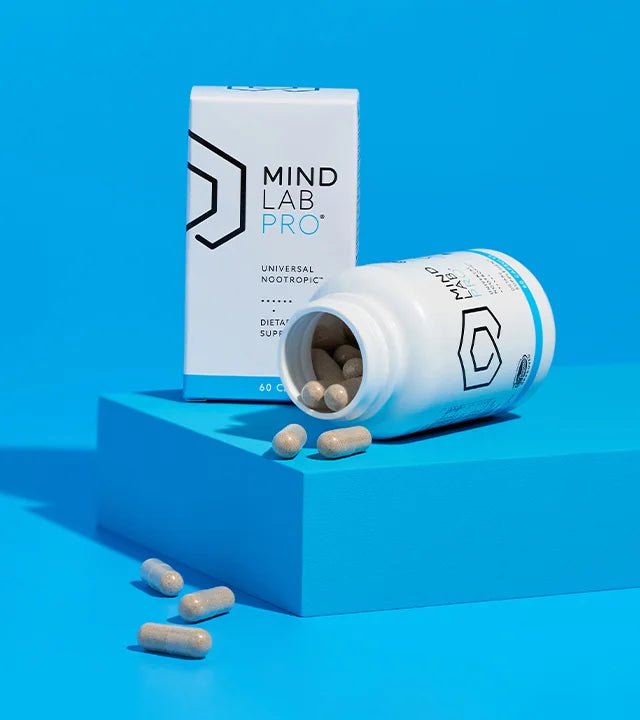
Mind Lab Pro®: a daily stack that supports a “plasticity-friendly” brain environment

If you like the neuroplasticity concept for real-world performance—learning, memory, calmer focus, and long-range brain health—the simplest approach is to build a routine that supports the foundations: membrane health, stress resilience, neurotransmitter balance, and consistent daily cognition support.
Mind Lab Pro® Ingredients (per serving): Citicoline (CDP Choline) 250mg, Phosphatidylserine (from sunflower lecithin) 100mg, Bacopa monnieri 150mg (24% bacosides), Organic Lion’s Mane Mushroom 500mg (fruit and mycelium), Maritime Pine Bark Extract 75mg (95% proanthocyanidins), N-Acetyl L-Tyrosine 175mg, L-Theanine 100mg, Rhodiola rosea 50mg (3% rosavins and 1% salidrosides), NutriGenesis® Vitamin B6 2.5mg, Vitamin B9 100mcg, Vitamin B12 7.5mcg.
MLP includes multiple ingredients that map well to a plasticity narrative—citicoline for membrane turnover and attention support, bacopa for multi-week learning/memory support, lion’s mane for NGF-linked nerve support, and calming-focus support (L-theanine + rhodiola), and more. As a result, it promotes many cognitive benefits while nourishing the physical structure of gray matter for long-term brain health.
Mind Lab Pro® has also been evaluated as a finished stack in three randomized, double-blind, placebo-controlled human studies—supporting benefits in information processing and several types of memory, as well as promoting efficient signaling throughout brain regions and neural networks (via EEG measures) in longer use.(26)(27)(28)
Read more on the Mind Lab Pro® studies
Summary
Brain plasticity is not a motivational poster. It’s a biological reality: your brain changes with experience, learning, and recovery. The clearest examples range from training-linked gray matter changes (juggling), to experience-linked hippocampal differences (taxi navigation), to rehabilitation-associated neural rewiring after stroke and brain injury.
If you want more plasticity and healthier neural connections in your own life, the formula is simple: structured practice + progressive challenge + focused attention + recovery. And if you want nutritional support, think of nootropics as “environment shapers” that may help the brain stay adaptable—especially when paired with the most proven plasticity driver of all: consistent training and exercise.
References
- Draganski, B., Gaser, C., Busch, V., Schuierer, G., Bogdahn, U., & May, A. (2004). Neuroplasticity: Changes in grey matter induced by training. Nature, 427(6972), 311–312. Link
- Puderbaugh, M., & Emmady, P. D. (2023). Neuroplasticity. StatPearls. Link
- Maguire, E. A., Gadian, D. G., Johnsrude, I. S., Good, C. D., Ashburner, J., Frackowiak, R. S. J., & Frith, C. D. (2000). Navigation-related structural change in the hippocampi of taxi drivers. PNAS, 97(8), 4398–4403. Link
- Sawaki, L., Butler, A. J., Leng, X., et al. (2014). Differential patterns of cortical reorganization following constraint-induced movement therapy during early stroke recovery. Neurorehabilitation and Neural Repair. Link
- Merabet, L. B., Hamilton, R., Schlaug, G., et al. (2008). Rapid and reversible recruitment of early visual cortex for tactile processing in sighted individuals. PNAS. Link
- Hölzel, B. K., Carmody, J., Vangel, M., et al. (2011). Mindfulness practice leads to increases in regional brain gray matter density. Psychiatry Research: Neuroimaging, 191(1), 36–43. Link
- Yuan, S., Gong, M., Wang, K., et al. (2022). Neural effects of cognitive behavioral therapy in psychiatric disorders: A systematic review and activation likelihood estimation meta-analysis. Molecular Psychiatry. Link
- Schlaug, G., Jäncke, L., Huang, Y., Staiger, J. F., & Steinmetz, H. (1995). Increased corpus callosum size in musicians. Neuropsychologia, 33(8), 1047–1055. Link
- Erickson, K. I., Voss, M. W., Prakash, R. S., Basak, C., Szabo, A., Chaddock, L., Kim, J. S., Heo, S., Alves, H., White, S. M., Wojcicki, T. R., Mailey, E., Vieira, V. J., Martin, S. A., Pence, B. D., Woods, J. A., McAuley, E., & Kramer, A. F. (2011). Exercise training increases size of hippocampus and improves memory. Proceedings of the National Academy of Sciences, 108(7), 3017–3022. Link
- Osterhout, L., Poliakov, A., Inoue, K., McLaughlin, J., Valentine, G., Pitkanen, I., Frenck-Mestre, C., & Hirschensohn, J. (2008). Second-language learning and changes in the brain. Journal of Neurolinguistics, 21(6), 509–521. Link
- Walker, M. P., & Stickgold, R. (2004). Sleep-dependent learning and memory consolidation. Neuron, 44(1), 121–133. Link
- Guémann, M., Cogné, M., & Nicolas, B. (2022). Effect of mirror therapy in the treatment of phantom limb pain in amputees: A systematic review. Annals of Physical and Rehabilitation Medicine. Link
- Dehaene, S., & Cohen, L. (2011). The unique role of the visual word form area in reading. Trends in Cognitive Sciences, 15(6), 254–262. Link
- Green, C. S., & Bavelier, D. (2003). Action video game modifies visual selective attention. Nature, 423(6939), 534–537. Link
- Apkarian, A. V., Hashmi, J. A., & Baliki, M. N. (2011). Pain and the brain: specificity and plasticity of the brain in clinical chronic pain. Pain, 152(3 Suppl), S49–S64. Link
- Kral, A., & Sharma, A. (2023). Crossmodal plasticity in hearing loss. Trends in Neurosciences. Link
- Wu, A., Ying, Z., & Gomez-Pinilla, F. (2008). DHA dietary supplementation enhances the effects of exercise on synaptic plasticity and cognition. Neuroscience. Link
- Brickman, A. M., Khan, U. A., Provenzano, F. A., et al. (2014). Enhancing dentate gyrus function with dietary flavanols improves cognition in older adults. Nature Neuroscience. Link
- Witte, A. V., Kerti, L., Margulies, D. S., & Floel, A. (2014). Effects of resveratrol on memory performance, hippocampal functional connectivity, and glucose metabolism in healthy older adults. Journal of Neuroscience, 34(23), 7862–7870. Link
- Small, G. W., Siddarth, P., Li, Z., et al. (2018). Memory and brain amyloid and tau effects of a bioavailable form of curcumin in non-demented adults. American Journal of Geriatric Psychiatry. Link
- Raghav, S., Singh, H., Dalal, P. K., Srivastava, J. S., & Asthana, O. P. (2006). Randomized controlled trial of standardized Bacopa monniera extract in age-associated memory impairment. Indian Journal of Psychiatry. Link
- Mori, K., Inatomi, S., Ouchi, K., Azumi, Y., & Tuchida, T. (2009). Improving effects of the mushroom Yamabushitake (Hericium erinaceus) on mild cognitive impairment: A double-blind placebo-controlled clinical trial. Phytotherapy Research. Link
- Silveri, M. M., Dikan, J., Ross, A. J., et al. (2008). Citicoline enhances frontal lobe bioenergetics as measured by phosphorus magnetic resonance spectroscopy. NMR in Biomedicine. Link
- Slutsky, I., Abumaria, N., Wu, L.-J., et al. (2010). Enhancement of learning and memory by elevating brain magnesium. Neuron, 65(2), 165–177. Link
- Smith, A. D., Smith, S. M., de Jager, C. A., Whitbread, P., Johnston, C., Agacinski, G., Oulhaj, A., Bradley, K. M., Jacoby, R., & Refsum, H. (2010). Homocysteine-Lowering by B Vitamins Slows the Rate of Accelerated Brain Atrophy in Mild Cognitive Impairment: A Randomized Controlled Trial. PLOS ONE, 5(9), e12244. Link
- Utley, A., Gonzalez, Y., & Imboden, C. A. (2023). The efficacy of a nootropic supplement on information processing in adults: A double blind, placebo controlled study. Biomed J Sci & Tech Res, 49(1). Link
- Abbott-Imboden, C., Gonzalez, Y., & Utley, A. (2023). Efficacy of the nootropic supplement Mind Lab Pro on memory in adults: Double blind, placebo-controlled study. Human Psychopharmacology: Clinical and Experimental, e2872. Link
- O’Reilly, D., Bolam, J., Delis, I., & Utley, A. (2025). Effect of a plant-based nootropic supplement on perceptual decision-making and brain network interdependencies: A randomised, double-blinded, and placebo-controlled study. Brain Sciences, 15(3), 226. Link
*These statements have not been evaluated by the Food and Drug Administration. This product is not intended to diagnose, treat, cure, or prevent any disease.